Vehicle thefts through distraction, such as simulated breakdowns or accidents, represent a complex modus operandi to investigate. The scene, often transient and in public roads, lacks lasting physical evidence. Traditional forensic documentation can miss critical details. This is where 3D analysis reveals itself as a fundamental tool to reconstruct, analyze, and understand the incident dynamics with unprecedented precision, transforming testimonies and scattered data into a verifiable spatial model.
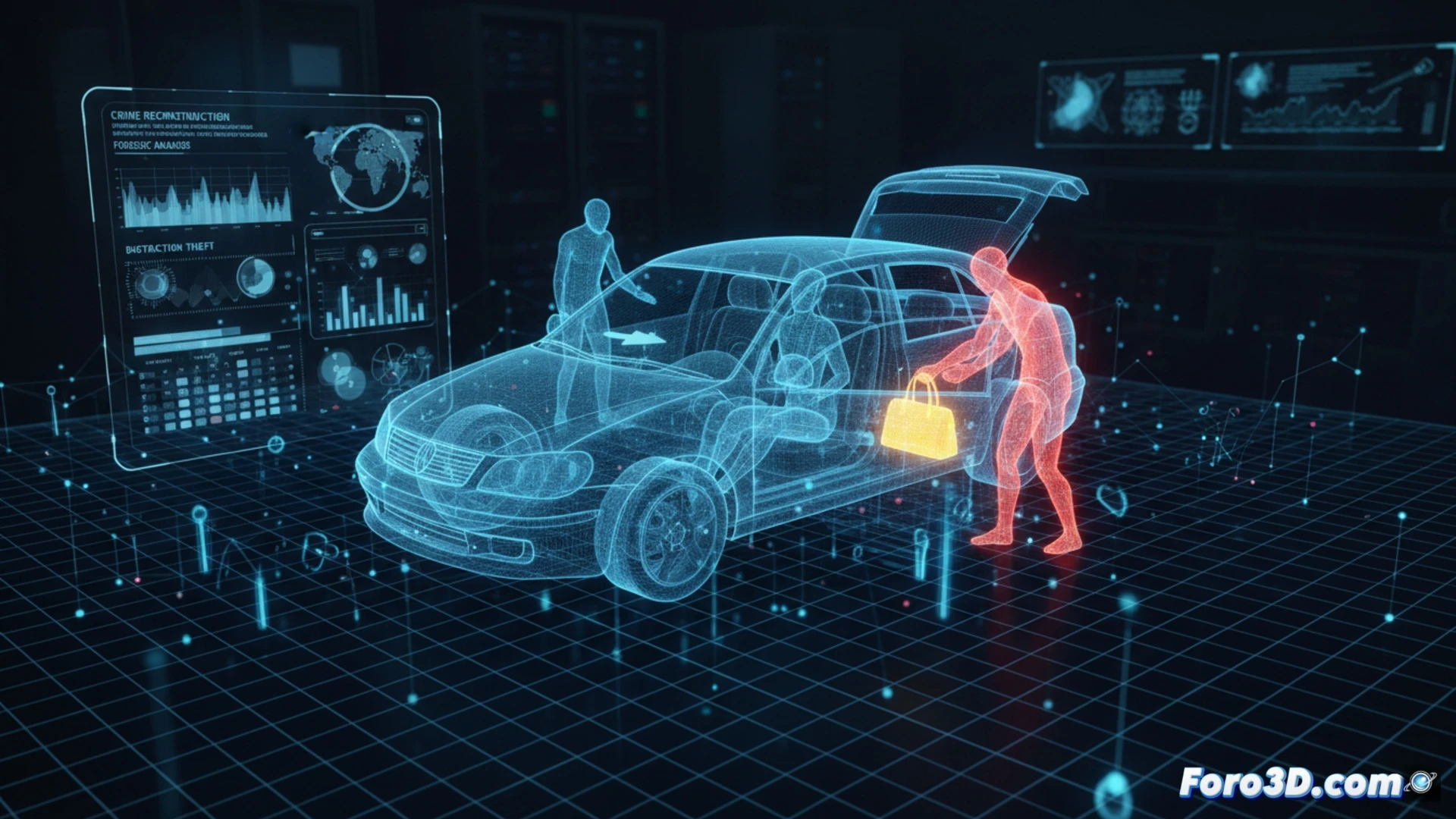
Digital forensic reconstruction: from the scene to the interactive model 🔍
The reconstruction begins with the capture of real scene data through photogrammetry or laser scanning, documenting the exact location of the vehicle, road signs, reference points, and lines of sight. This dataset is imported into a game engine or 3D modeling software to create a precise digital environment. The involved vehicles and actors (victim and suspects) are modeled, assigning them animations based on testimonies. This allows simulating trajectories, checking lines of sight from different perspectives (driver, pedestrian, virtual security cameras), and evaluating the feasibility of the accounts. The resulting 3D model is a probative and analytical resource that can be explored interactively to identify blind spots, time sequences, and the mechanics of distraction.
Beyond investigation: training and prevention 🛡️
The application of these models goes beyond police investigation. These 3D recreations are exceptional training material for law enforcement agencies, showing immersively the indicators of a potential trap. For citizen prevention, videos or interactive experiences can be generated that illustrate these criminal tactics, raising awareness about vulnerable points and risky behaviors. Thus, 3D technology not only helps to solve a crime, but becomes a proactive tool to deter it, closing the cycle between forensic analysis and public safety.
How can 3D crime scene analysis reconstruct and validate the feasibility of a distraction modus operandi for theft from vehicles?
(P.S.: In scene analysis, every scale witness is an anonymous little hero.)