The criminal tactic of individuals posing as tourists to steal without raising suspicion represents a challenge for security. Their success lies in blending into the environment and exploiting the trust and distraction of the victims. From the niche of scene analysis, we propose applying 3D documentation and reconstruction methodologies to dismantle this strategy, moving from anecdotal accounts to an analyzable model that reveals spatial and behavioral patterns.
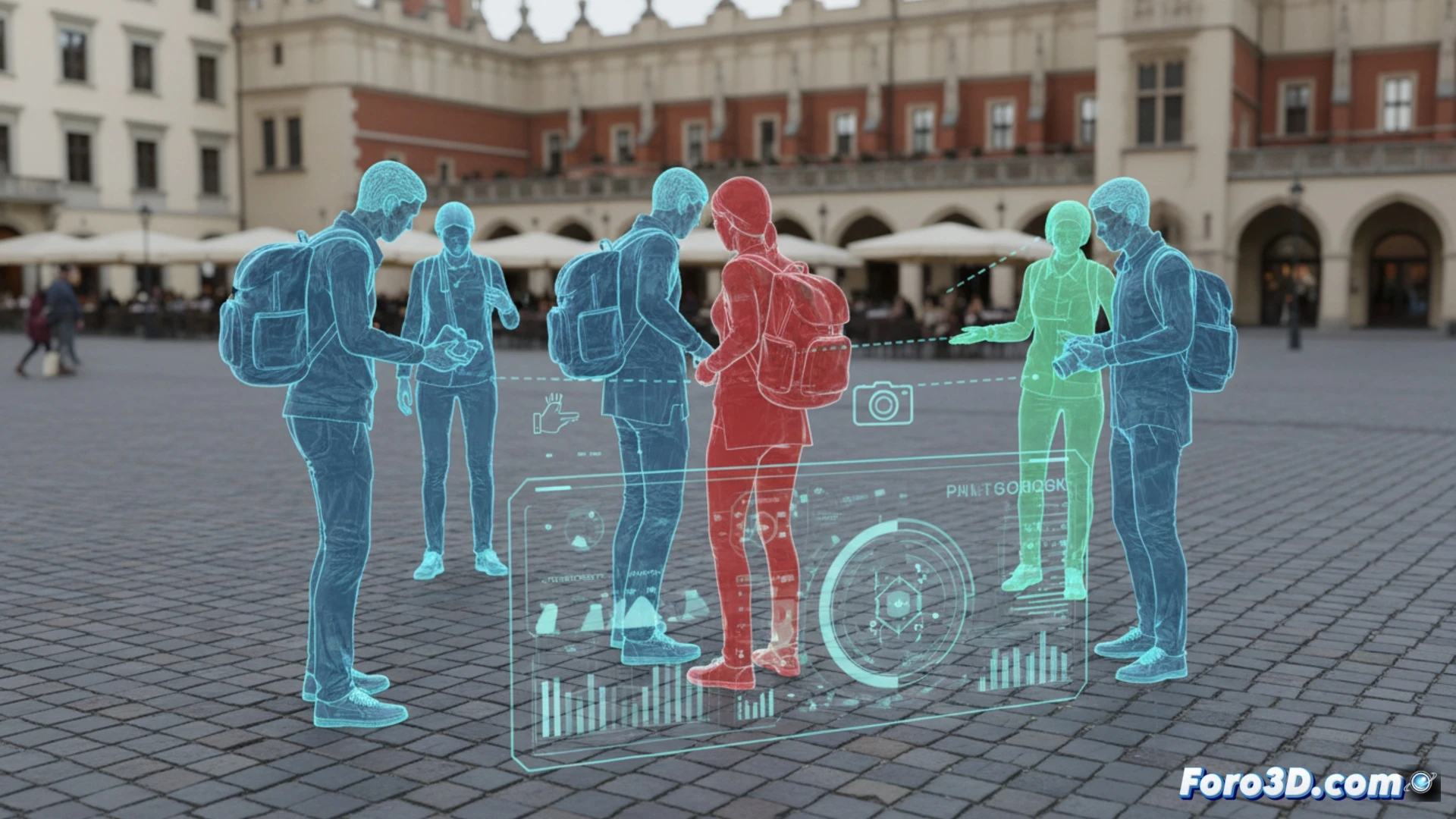
Forensic scene reconstruction technologies 🔍
Photogrammetry from security recordings or witness images allows reconstructing the exact 3D location of the incident, positioning victims and suspects. LIDAR scanning provides metric precision in complex spaces. Integrated into engines like Unreal Engine, these data generate an interactive digital replica. In this model, approach and escape routes, exploited blind spots, and high-traffic areas where they operate can be traced. This goes beyond simple description, enabling objective spatial analysis and identification of critical intervention points.
From simulation to active prevention 🛡️
The ultimate value of these 3D models is their capacity for training and deterrence. Security forces can conduct virtual drills in realistic scenarios, studying responses. For the public, visualizing these tactics in a familiar 3D environment is more impactful than a generic warning, fostering contextual alertness. Systematic technical documentation turns an opportunistic crime into an analyzable protocol, contributing to more proactive, data-based security.
How can 3D crime scene analysis reconstruct and evidence the movement patterns and blind spots used by fake tourists during the commission of robberies?
(P.S.: In scene analysis, every scale witness is an anonymous little hero.)