The incident protagonized by British skier Gabriel Gledhill at the Oslo World Cup, where he completed the race drunk after accepting drinks from the public, transcends the anecdotal. From the perspective of Sports and 3D Technology, this case offers a unique opportunity to use simulation and digital reconstruction as tools for objective analysis of an extreme sports event, evaluating risks and consequences beyond the media debate.
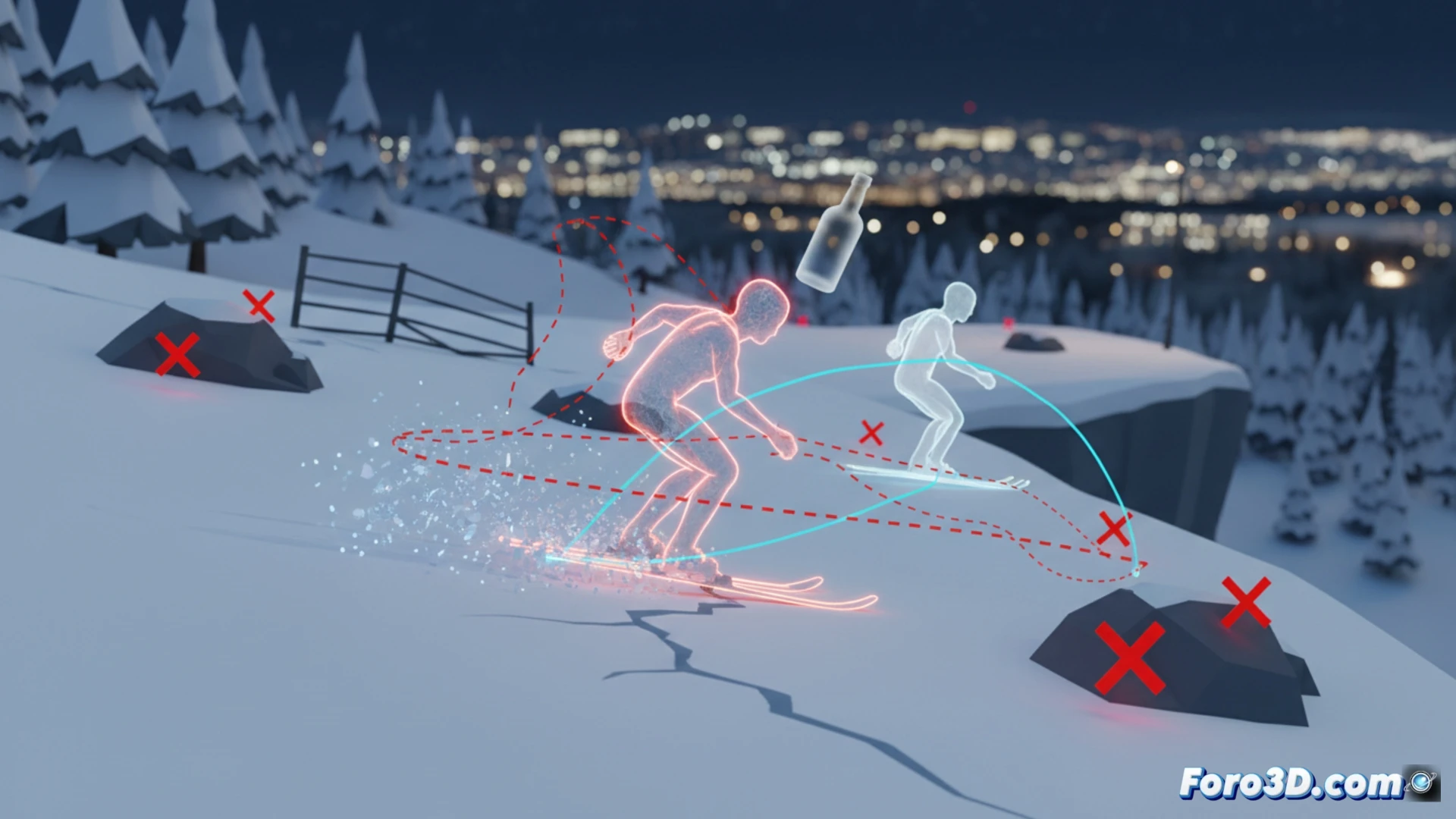
3D Reconstruction: Visualizing the Risk Trajectory 🎯
A 3D simulation of the race would allow precisely mapping Gledhill's trajectory, geolocating the points of interaction with the public where he received the drinks. The technology would enable overlaying his path with that of the female skiers who caught up to him, analyzing relative distances and speeds at that critical moment. Animated biomechanical models could illustrate the degradation of his technique and balance due to intoxication, quantifying the loss of efficiency and the increase in collision or fall risk in real time.
Simulation and Protocols: Lessons for the Sport of the Future 🤖
This technical analysis highlights the need to review safety protocols. 3D simulations not only serve to analyze what happened, but also to project control scenarios, such as identifying sensitive zones along the course or modeling virtual barriers. Technology thus becomes a key tool for balancing the festive spirit, the athlete's integrity, and collective safety in high-level competitions.
What cameras and angles would you need to capture enough information?