Pickpocket gangs operating in groups, with defined roles of distraction, theft, and escape, represent a challenge for security in crowded urban environments. Their effectiveness is based on the exploitation of predictable spatial and behavioral dynamics. Forensic analysis and traditional investigation can greatly benefit from the digital recreation of these crime scenes, allowing a meticulous deconstruction of the event to understand and, ultimately, counter their methodology.
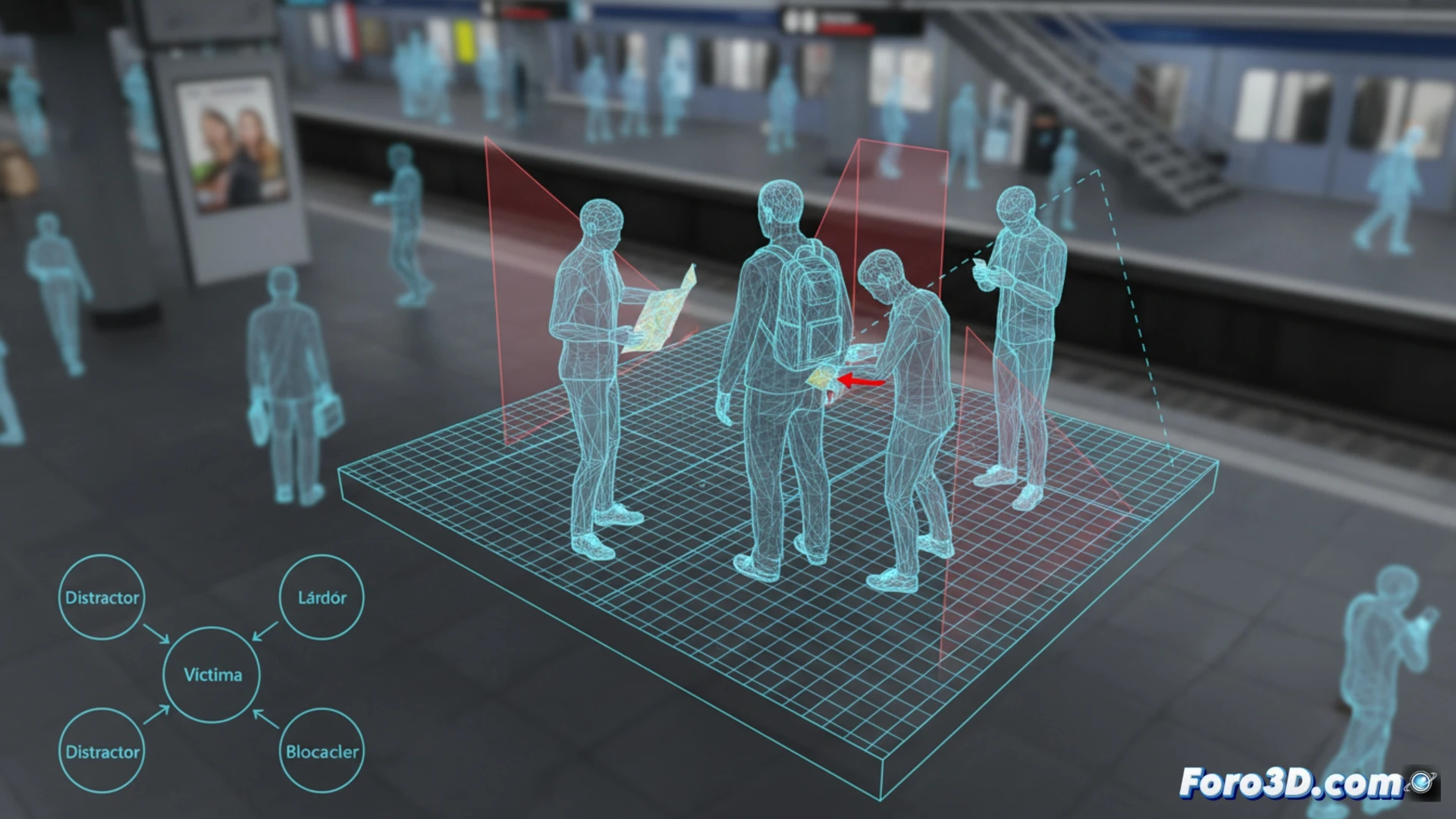
Spatial Forensic Reconstruction with 3D Tools 🔍
Through photogrammetry or laser scanning of the actual location (a subway station, a bus stop), a georeferenced and metrically accurate 3D model is generated. In engines like Unreal Engine or Unity, the crime scene is reconstructed. Avatars representing victims, suspects, and bystanders can be positioned, animating them according to testimonies or known patterns. This simulation allows analyzing visual angles, blind spots, critical distances between the distractor and the thief, and the most probable escape routes. The technology enables varying parameters such as pedestrian density or lighting to study their influence.
From Simulation to Operational Prevention 🚨
The ultimate value of this model goes beyond mere visualization. It serves as a powerful training tool for agents, allowing them to virtually navigate high-risk scenarios. For police planning, it identifies vulnerable areas where surveillance should be reinforced. Additionally, these simplified models can be turned into outreach material to raise public awareness, clearly showing how the crime unfolds and how to protect oneself. The 3D scene thus becomes a bridge between technical investigation and practical application in public safety.
How can 3D analysis of forensic recordings reconstruct and visualize the spatial choreography and defined roles within a pickpocket gang to improve prevention and police response?
(P.S.: In scene analysis, every scale witness is an anonymous little hero.)