The quarterfinals of the P1 in Miami bring together the elite of padel, with seven of the eight best teams qualified in both draws. The big surprise was the elimination of Salazar and Alonso by Goenaga and Caldera in an epic comeback. Favorites like Tapia/Coello and Brea/Triay suffered more than expected, winning their first sets in the tie-break. This high-level scenario is perfect for an in-depth analysis using 3D visualization and simulation technologies, which would allow dissecting the technical and tactical keys of these matches. 🎾
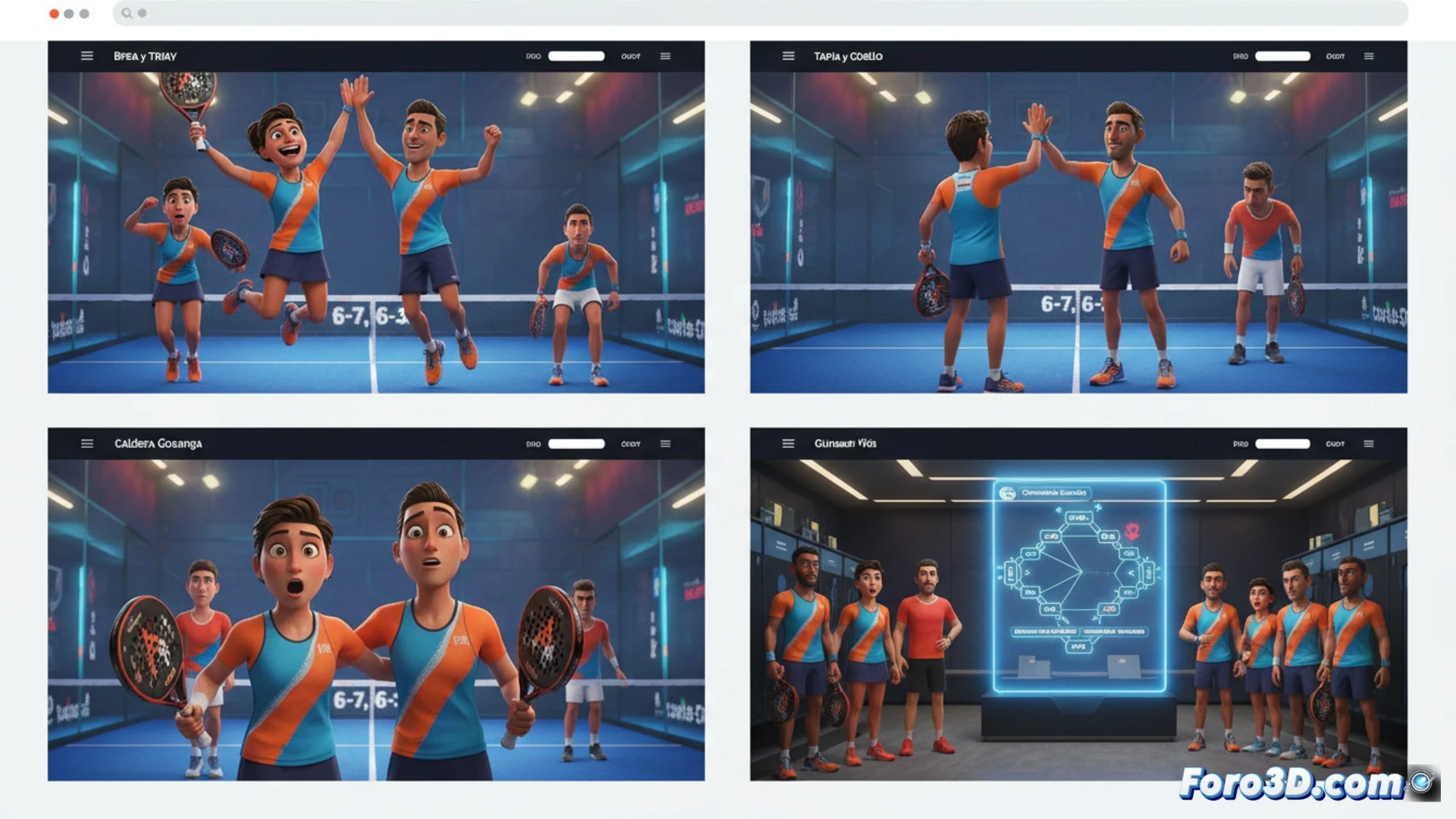
3D Visualization and Biomechanical Modeling to Break Down Key Plays 🔬
3D technology offers revolutionary tools for sports analysis. In the case of Goenaga and Caldera's comeback, the court and ball trajectory could be reconstructed in 3D to analyze the tactical shift that unbalanced the match. Likewise, three-dimensional biomechanical modeling would allow studying the stroke technique of pairs like Tapia/Coello, precisely identifying paddle angles, impact points, and weight transfer. This information, impossible to capture with the naked eye, would explain why their shots are so lethal or why, at certain moments, they encountered resistance. We could even simulate tactical variations to predict responses.
Tactical Simulation, the Future for Preparation and Broadcasting 🚀
Beyond post-match analysis, 3D tactical simulation has immense potential. Coaches could recreate specific scenarios based on real data to prepare strategies against specific opponents. For spectators, integrating 3D graphics into broadcasts would enrich the experience, showing the areas of greatest pressure on the court or the preferred attack routes of each pair. Elite padel, with its speed and strategic complexity, is an ideal field for 3D technology to help understand and enjoy the sport even more.
How can 3D analysis of trajectories and positions reveal the tactical keys that defined the surprises in the quarterfinals of the P1 in Miami?
(P.S.: 3D VAR: now with replays from angles that didn't even exist)