The P1 Miami finals have left two luxury matchups. In men's, the thirty-second edition of the classic Coello/Tapia vs Galán/Chingotto, with historical dominance by the former. In women's, a rematch of the supremacy battle between Triay/Brea and González/Josemaría, the latter after a notable comeback. Beyond the scores, these matches are a perfect laboratory for applying 3D analysis technologies, transforming observation into deep understanding of the tactical and technical keys.
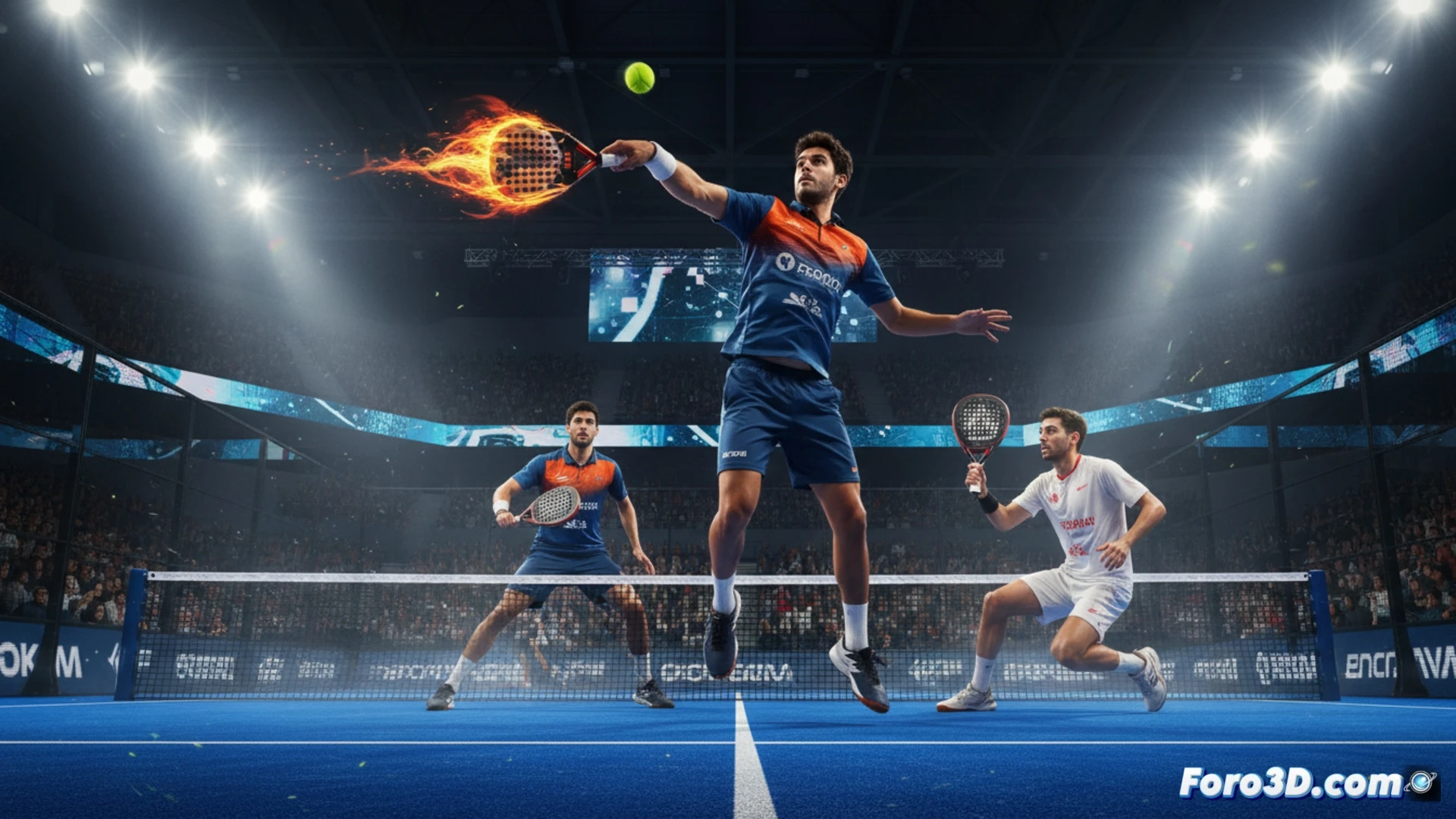
3D Reconstruction of Key Plays: Millimetric Precision for Analysis 🎯
Imagine a dynamic three-dimensional model of the Miami court. In it, we could recreate the comeback of Coello/Tapia against Lebrón/Augsburger, analyzing with millimetric precision the position changes, the depth of the lobs, and the attack angles that turned the match. For Galán/Chingotto's access to the final, 3D technology would allow visualizing their net dominance, overlaying heat maps of their volleys and showing the effectiveness of their block. This reconstruction not only enriches the broadcast but is an invaluable tool for training and tactical preparation, allowing players and technical staff to study game patterns from any perspective.
The Spectator Revolution: From Watching to Understanding 🧠
The implementation of these tools marks a turning point. The fan goes from being a mere spectator to an informed analyst, capable of understanding the strategic complexity behind a comeback like that of González/Josemaría. Visualizing in 3D the court positioning of Triay and Brea during their most solid points reveals their tactical machinery. This layer of accessible and visual technical information democratizes deep knowledge of padel and sets a new standard for elite sports coverage.
How can 3D analysis of biomechanics and on-court strategy reveal the invisible keys of the Coello/Tapia duel in the P1 Miami final? 🤔
(PS: at Foro3D we know that a 3D simulated penalty always goes in... unlike in real life)