The last matchday of LaLiga, with Elche's key victory and Getafe's triumph, was marked by decisive moments. These instances, such as the penalty missed by Muriqi or the goals disallowed to Espanyol, are ideal for an analysis that goes beyond the traditional report. Using 3D technology, we can reconstruct these plays with millimeter precision, offering an immersive perspective that reveals tactical details, positionings, and the nuances of refereeing decisions, taking sports analysis to a new dimension.
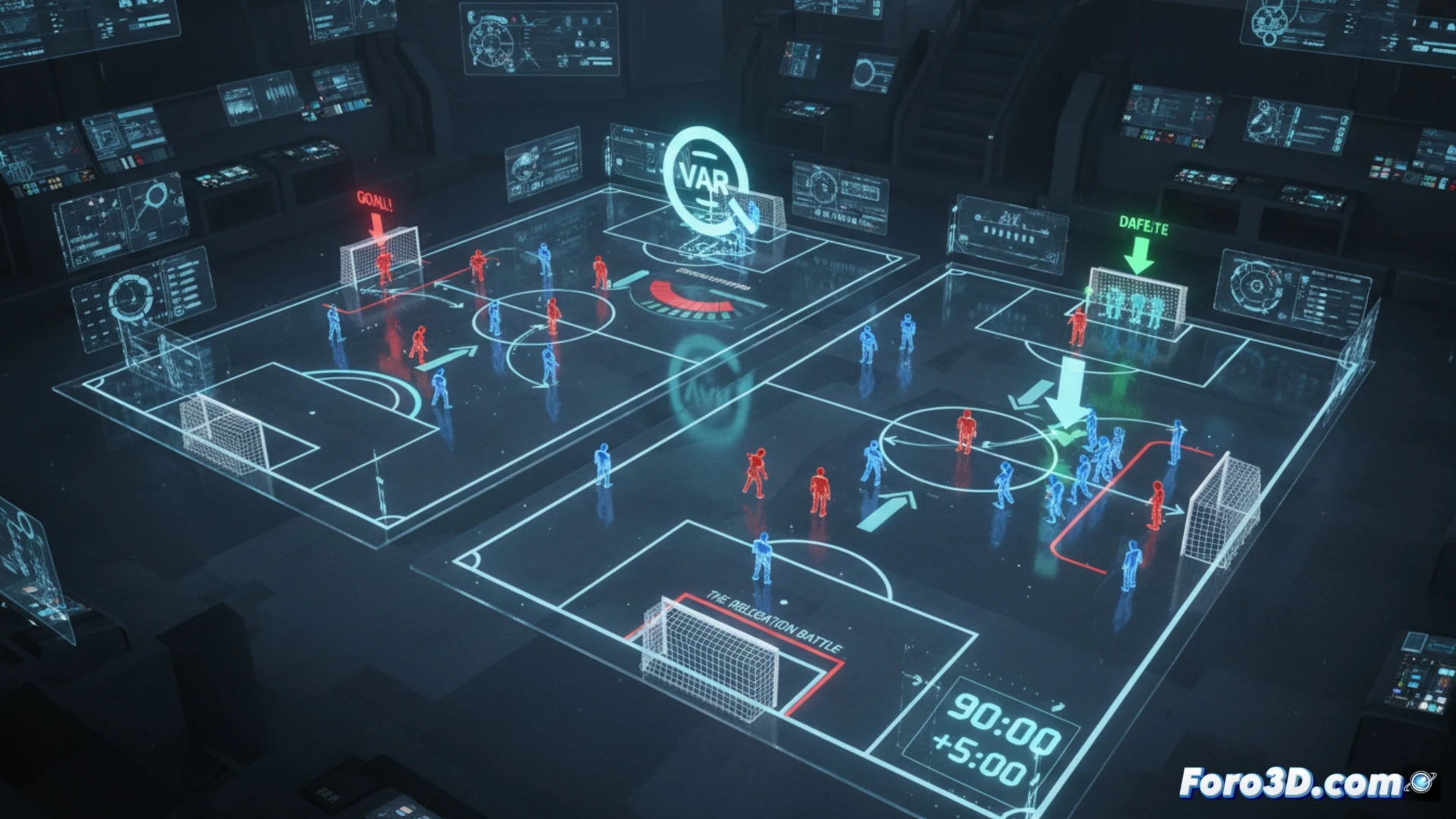
3D Reconstruction for Refereeing and Tactical Analysis 🎯
Imagine a three-dimensional model of the stadium, with player avatars recreating the action. We could visualize, from any angle, the ball's trajectory and the exact position of Vedat Muriqi's body in the missed shot against Elche. Similarly, the plays disallowed by VAR to Espanyol could be analyzed by superimposing layers of information: the 3D offside line, each player's position at the moment of the pass, and the assistant referee's perspective. This reconstruction offers an objective tool for debate and training, allowing coaches and fans to study errors and successes with unprecedented clarity.
Scenario Simulation: Beyond the League Table 📊
3D technology also transforms how we understand the standings. Instead of a flat table, we could interact with a dynamic model that simulates possible future outcomes. By entering variables such as upcoming opponents and form status, the model would visually project the probabilities of survival for teams like Mallorca or access to Europe for Getafe. This immersive visualization turns cold data into comprehensible spatial narratives, offering a unique strategic perspective on the competition's outcome.
How can 3D analysis of positioning and tactical movements explain the effectiveness of comeback strategies and the fight for survival in the last matchday of LaLiga?
(P.S.: 3D tactical simulation never fails, the players on the pitch do)