The recent KC-135 Stratotanker tanker plane accident in Iraq, with six U.S. casualties, is set in a context of contradictory versions. While official investigations rule out hostile fire, a militant group claims responsibility for the downing. In this scenario, 3D modeling and simulation technologies emerge as key forensic tools to analyze the incident, allowing digital reconstruction of the event and providing objective clarity beyond statements.
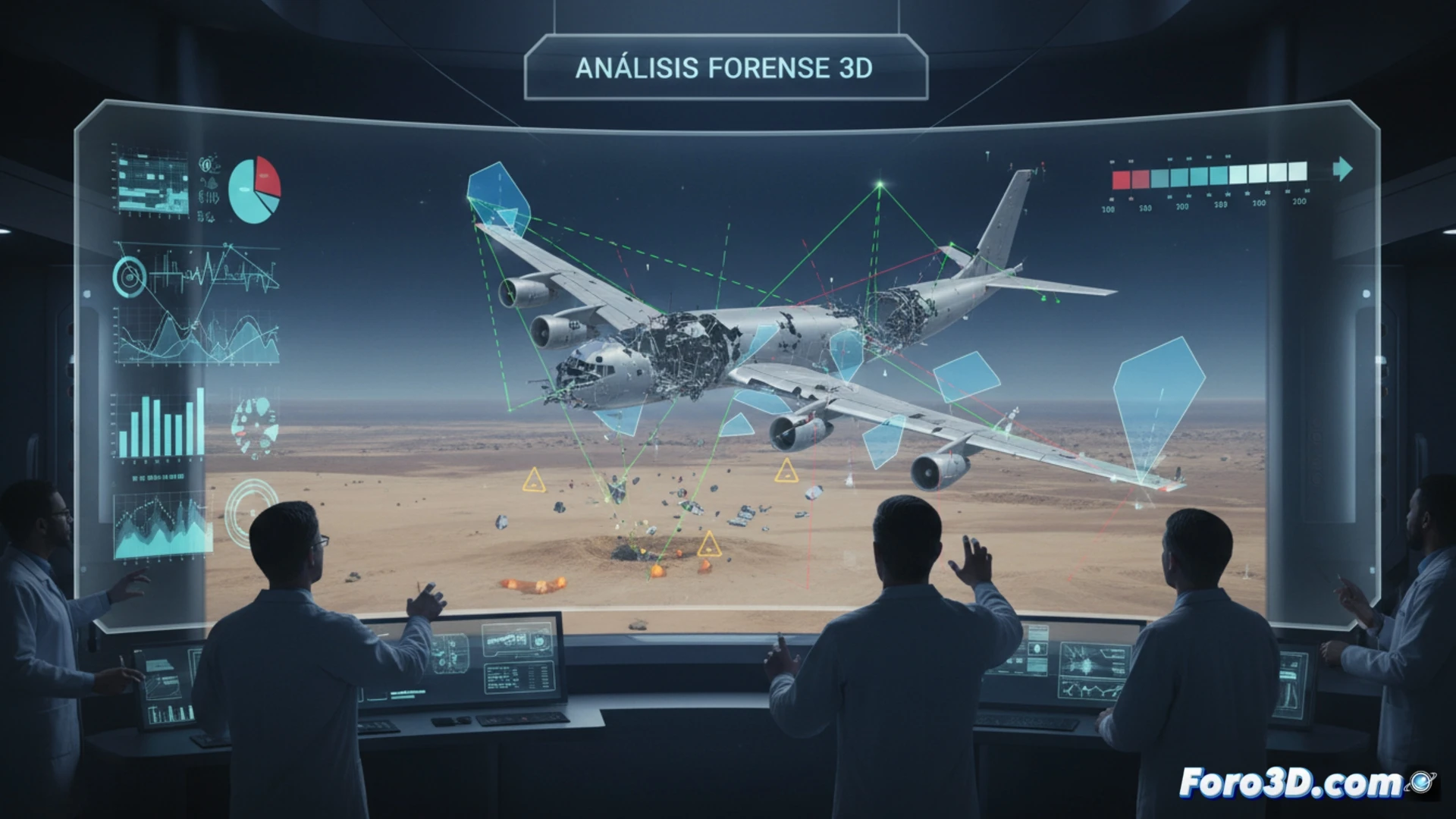
Digital forensic reconstruction: from 3D model to scenario simulation 🔍
A technical 3D analysis of this case would begin with the creation of a precise model of the KC-135 Stratotanker and its operational environment. Using telemetry data, meteorology, and possibly satellite images, the flight path and accident zone can be recreated. Computational simulation allows testing different hypotheses: a critical mechanical failure, such as loss of control or an engine fire, would manifest differently in the model than a kinetic impact or projectile. Visualization of damage on the virtual structure, compared to real wreckage, can indicate the point of origin of the failure, helping to discern between an accident and an attack.
3D visualization as a tool for analysis and critical disclosure 📊
Beyond technical investigation, 3D reconstruction serves as a powerful disclosure instrument. An interactive model or animation based on verifiable data can communicate complex findings accessibly, contrasting conflicting versions with visual evidence. In a military analysis niche, this capability is crucial for fostering informed understanding, transforming fragmented information from a tragic event into a visual and rigorous analysis of what really could have happened in the skies of Iraq.
Do you think digital twins can help in post-conflict reconstruction?