The 1-1 draw between Juventus and Sassuolo, with goals from Yildiz and Pinamonti, is a perfect case study for analysis with 3D technology. Beyond the result, Luciano Spalletti's pre-match statements reveal a terrain where digital visualization is crucial. From tactical simulation for the nine final matches to managing physical doubts like those of Vlahovic, 3D tools offer decisive support for technical decision-making in the final stretch of the season.
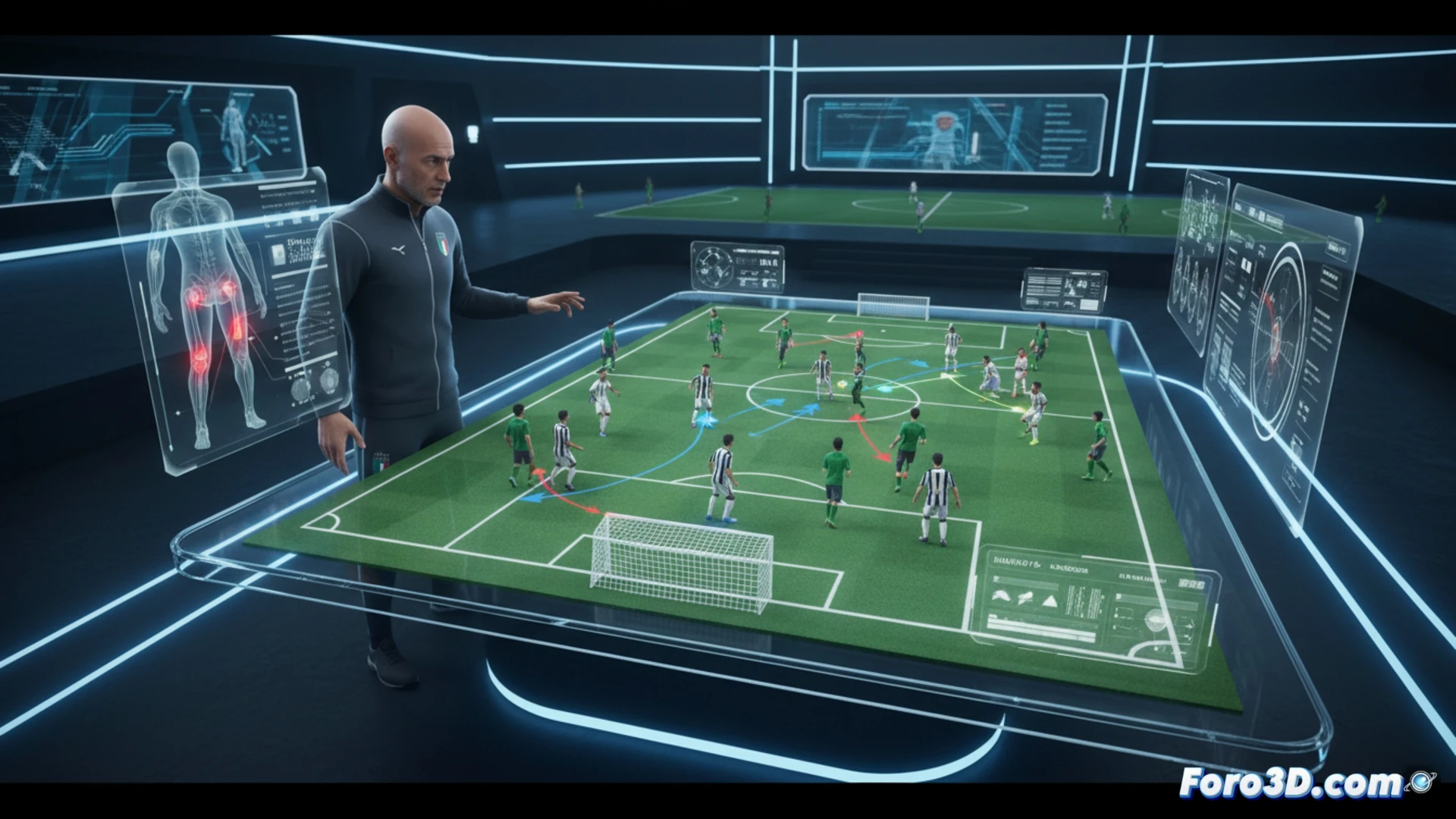
3D Tactical Reconstruction and Injury Management 🩺
3D technology allows recreating the goal play to analyze positioning and defensive errors. But its greatest value lies in simulating future scenarios. We can model the different tactical options that Spalletti is considering for key matches, visualizing the team's collective movement in each system. Regarding physical doubts, a basic 3D biomechanical model would help understand the impact of a possible discomfort. By mapping the technical gestures of a forward like Vlahovic, movements that generate stress in specific areas could be identified, providing visual data to decide his participation. Even the goalkeeping dilemma between Perin and Di Gregorio could be analyzed with simulations of exit styles and area coverage.
Visualization as a Competitive Advantage 🏆
Spalletti's approach, focused on the Champions League and on millimeter decisions, reflects the evolution of modern football. Traditional reports are no longer enough. The ability to visualize strategies and physical risks in a controlled 3D environment becomes a key competitive advantage. Transforming tactical and medical data into interactive models is the next step to optimize performance in a final phase where, as the coach said, every decision will be determinant.
How can 3D analysis of trajectories and positions reveal the tactical keys of the Juventus-Sassuolo draw that Spalletti's vision describes as a high-level match?
(PS: reconstructing a goal in 3D is easy, the difficult part is making it not look like it was scored with the leg of a Lego doll)