Iran's ballistic missile arsenal, although degraded after weeks of war, is far from exhausted. Claims of its total destruction contrast with ongoing attacks, now more selective and effective. With an estimated inventory between 2,500 and 6,000 units and unique diversity in the region, its threat persists. This scenario is ideal for analysis through 3D modeling, which would allow visualizing the evolution of its capabilities and strategies in a way impossible with flat data.
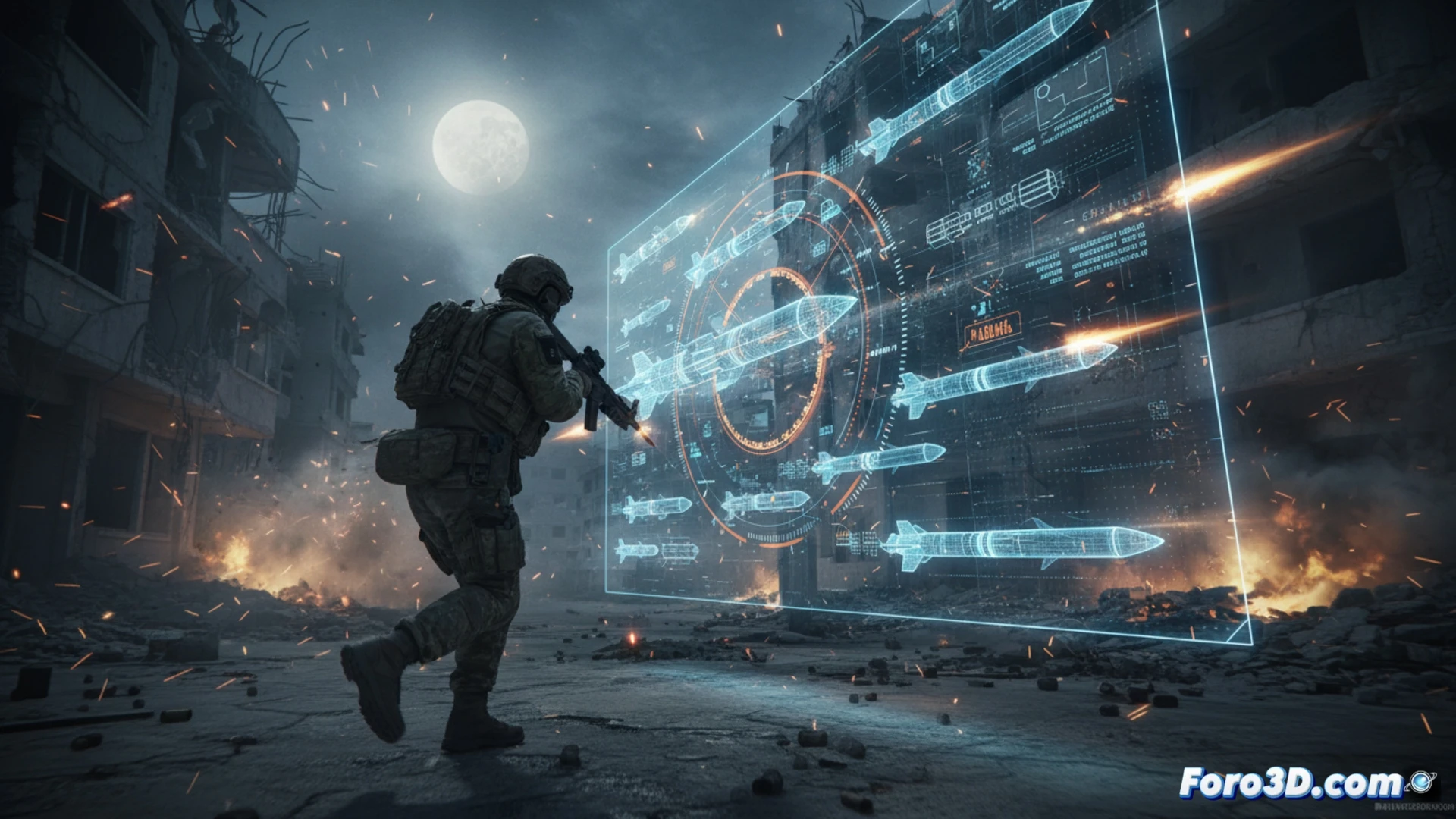
3D Modeling and Simulation to Understand Degradation and Strategy 🎯
An interactive 3D model of the Iranian arsenal would be crucial. We could visualize each missile family, classified by range, from short-range to those over 2,000 km, including possible undeclared models. Through simulation, the estimated degradation of the inventory after weeks of attacks could be represented, showing the reduction in operational units. Additionally, mapping in 3D the launch trajectories and attacked targets would reveal the tactical shift: from initial massive waves with low precision to recent pinpoint attacks with a higher impact rate, analyzing air corridors and points of origin.
3D Visualization as a Key Tool for Geopolitical Analysis 🗺️
Beyond the technical aspects, this approach underscores the value of 3D for geopolitical analysis. A dynamic model not only illustrates Iran's residual military capacity but also allows projecting future scenarios and evaluating the real effectiveness of countermeasures. It transforms abstract data and estimates into an understandable visual narrative, where the degradation of the threat and the change in operational doctrine can be appreciated at a glance, offering a unique perspective for strategic discussion forums.
How would you represent refugee and displacement data in a 3D model?