Xavi Hernández's recent statements have uncovered an internal conflict at FC Barcelona: president Joan Laporta's veto on Lionel Messi's possible return in 2023. According to the former coach, Laporta prioritized avoiding a new war with the star, halting an operation desired from the bench. This case, beyond the sports drama, is a perfect example to analyze how 3D and simulation technologies can help us understand and visualize the complex power dynamics and decision-making in elite organizations.
Digital twins and scenario simulation for sports management 🧠
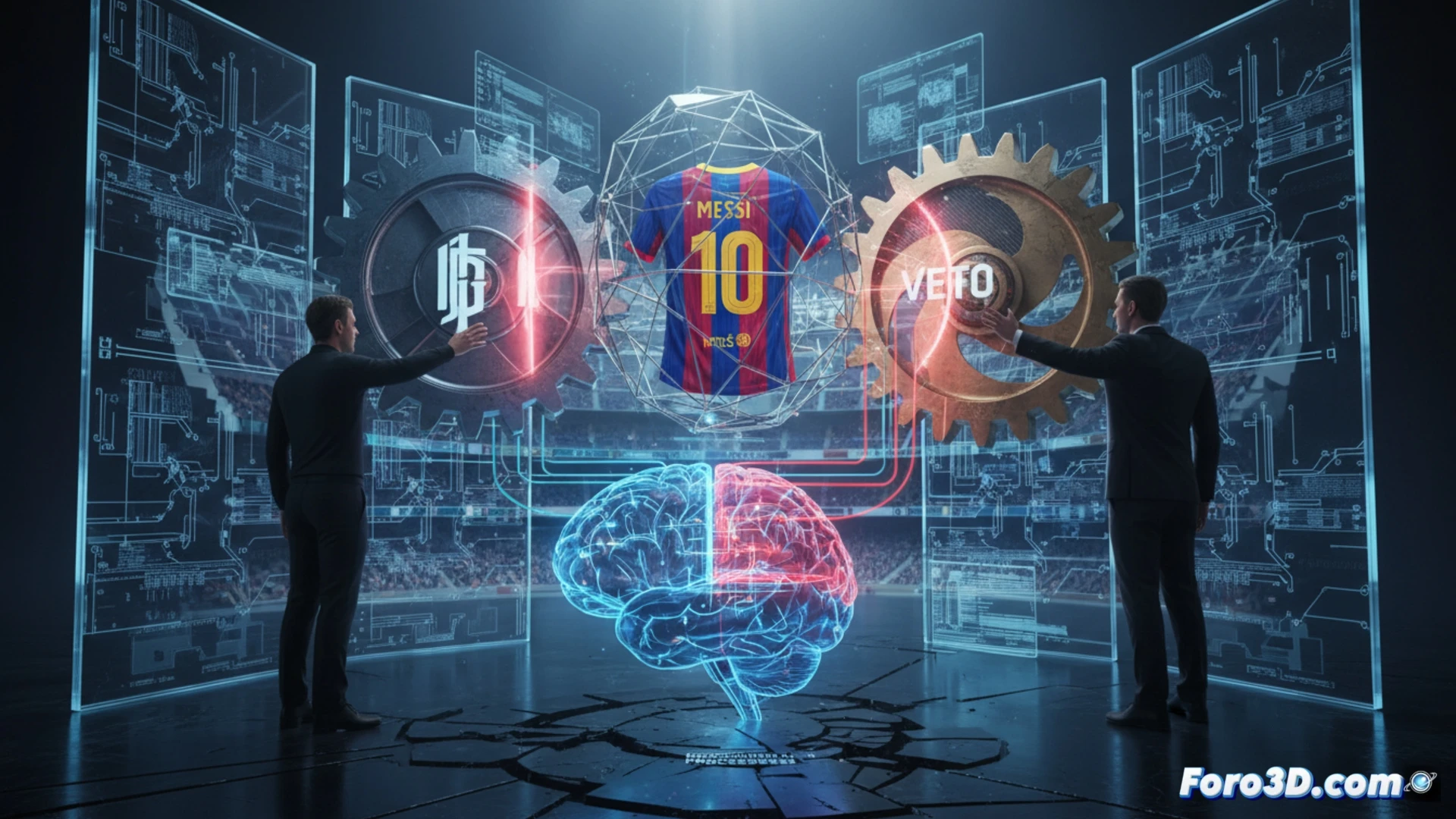
Imagine a digital twin of FC Barcelona, an interactive 3D model of its organizational structure. In it, we could map information flows, power centers, and key agents. By inputting the data from this case, we would visualize two conflicting narratives: the bench node (Xavi) promoting the Messi signing variable for sports performance, and the presidency node (Laporta) activating an avoid conflict protocol based on image management and past traumas. A simulation could quantify the media, morale, and sports impact of each scenario, offering executives a prospective analysis tool beyond intuition.
Rendering decision-making in the sports of the future 🚀
This technological approach does not seek to point fingers, but to render processes. Visualizing these internal tensions in 3D allows for an objective analysis, turning emotions and discrepancies into comprehensible data and spatial relationships. For clubs, federations, or media, these tools represent a revolution: moving from speculation to structured simulation. The Messi-Barça case illustrates how the future of sports management could integrate these models to better navigate between cold strategic calculation and the heat of the passions that define football.
Do you think VAR would improve with real-time 3D reconstructions?