Atlético de Madrid edges closer to the Copa de la Reina final after a tight 1-0 win against a highly defensive Costa Adeje Tenerife. The match, decided by a goal from Gio Garbelini in the 75th minute, is the perfect example for a technological analysis. Beyond the result, the goal play and the tactical structure of the match scream to be broken down using 3D visualization tools to understand what the human eye and traditional cameras cannot fully capture.
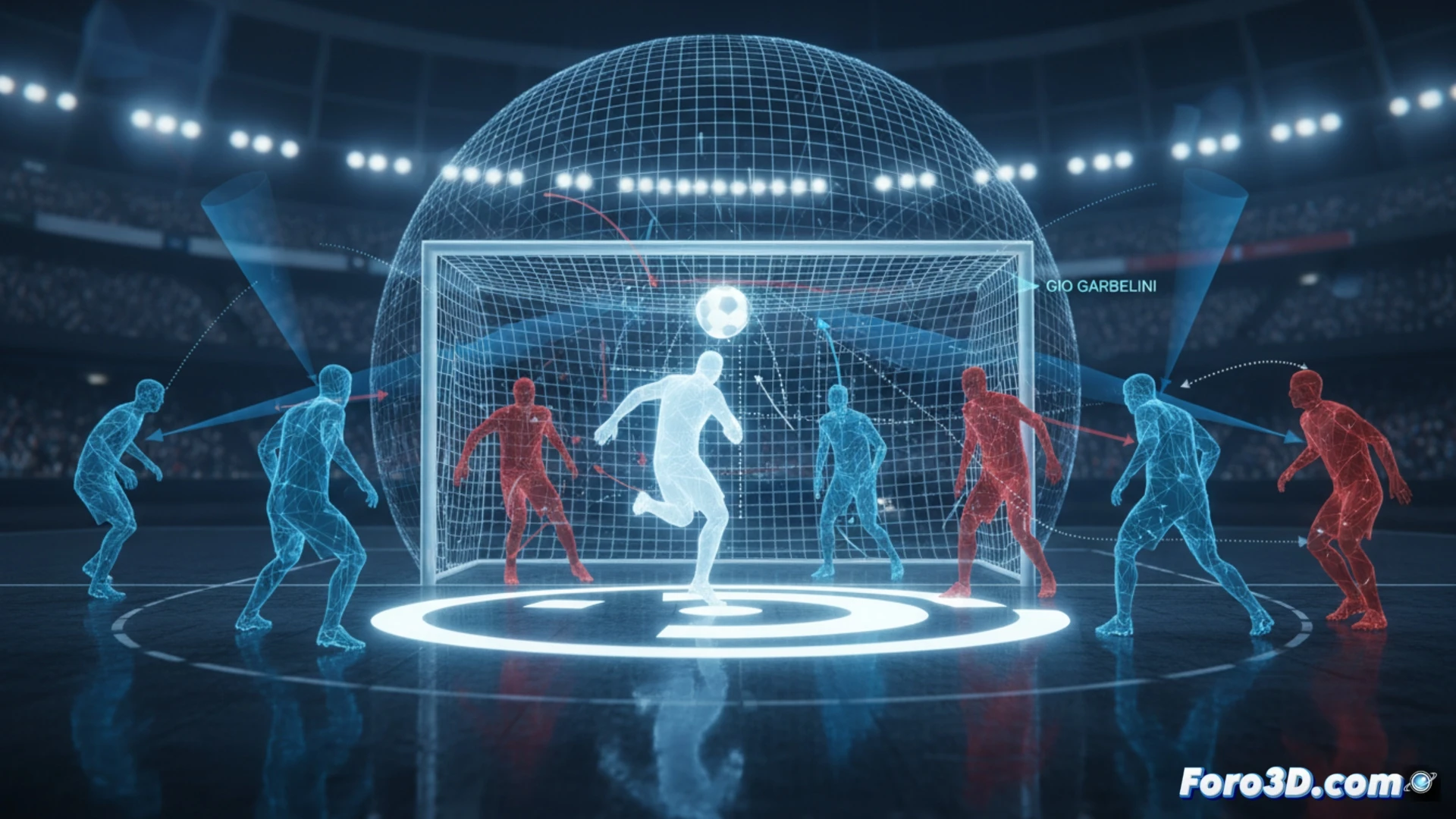
3D Reconstruction of the Goal Play: Dismantling the Block 🧩
The goal arose from a quick combination of three passes. A 3D simulation allows freezing the moment and analyzing key variables. First, the exact position of Tenerife's defensive block can be visualized, showing its compactness and the channels that remained closed. Second, by tracing the passing lines and the movement vectors of the attacking players, it reveals how the third pass sought and found the only gap in the line. From a top-down angle or one positioned behind the goal, the simulation would show the millimeter precision of Garbelini's run and how the pass filtered between two defenders who, apparently, were well positioned.
Tactical Simulation for the Return Leg 🔮
With the score in their favor, the scenario for the return leg changes. Here, 3D technology becomes predictive. Models can be generated that simulate different approaches from Tenerife, forced to attack, and the possible responses from Atlético. Visualizing in 3D how spaces could be generated on the counterattack or how to hold a mid-high block offers an invaluable layer of analysis. These tools not only explain what happened but project future scenarios, transforming the report into a tactical laboratory accessible to any fan.
How can 3D trajectory analysis be used to determine whether Atlético's goal was the product of a rehearsed play or individual improvisation against such a compact defensive block?
(P.S.: reconstructing a goal in 3D is easy, the hard part is making it not look like it was scored with the leg of a Lego doll)