The Carabao Cup final between Arsenal and Manchester City was not just another match. It was an encounter defined by technical details and split-second decisions. The traditional report narrates a mistake by goalkeeper Kepa Arrizabalaga and a precise header by Nico O'Reilly. But what if we could break down those plays millimeter by millimeter? 3D technology offers that possibility, transforming simple narration into a deep analysis of biomechanics and tactics.
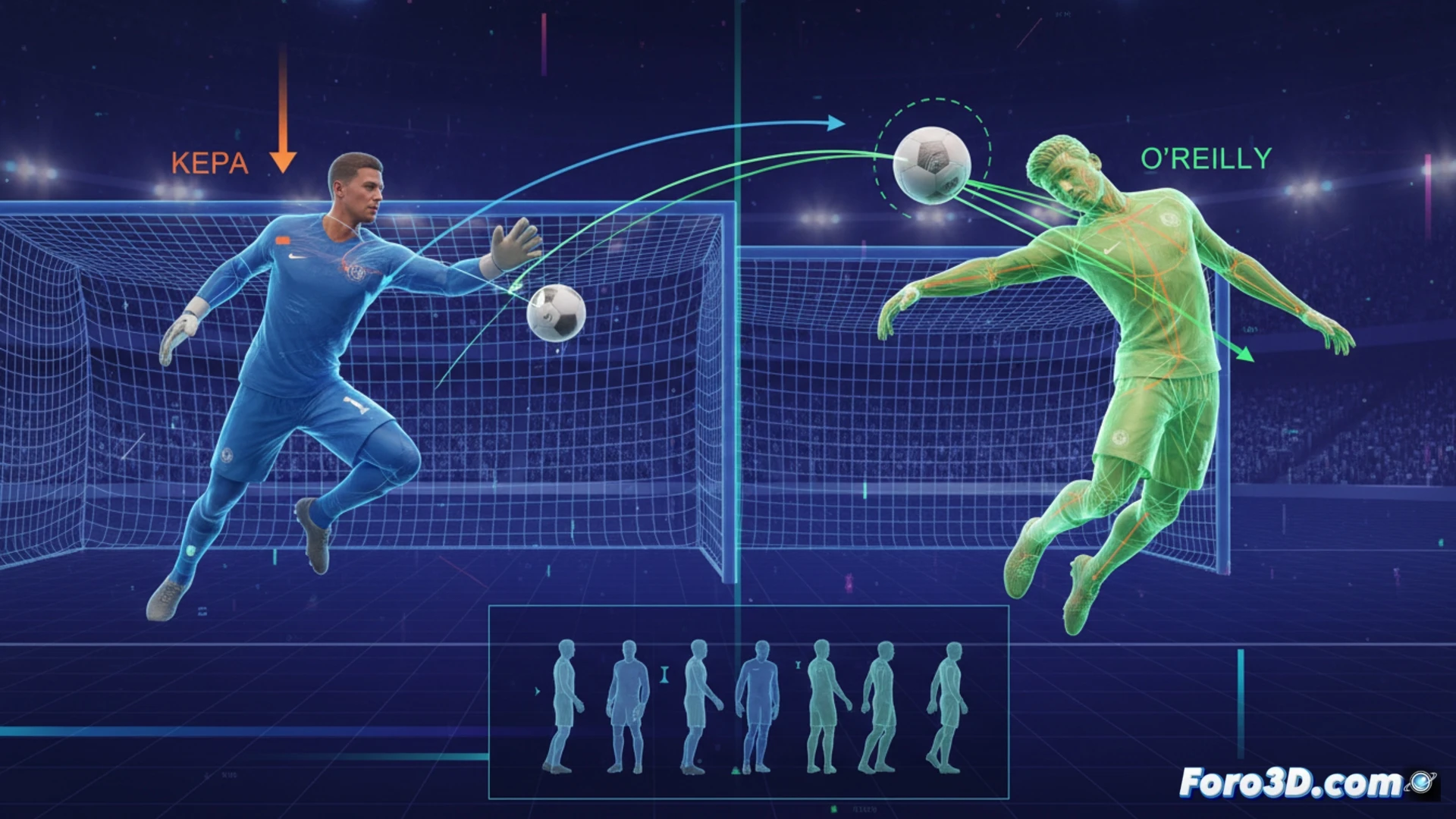
3D Reconstruction for Technical and Biomechanical Analysis 🧠
Imagine a precise three-dimensional model of Wembley Stadium, with avatars replicating the exact position of each player at the moment of the first goal. A 3D reconstruction of the shot and the goalkeeper's action would allow analyzing lines of sight, ball trajectory, and Kepa's movement biomechanics. Was there an initial positioning error? Was the decision-making (to come out or stay) correct? For the second goal, a 3D model of O'Reilly's jump and header against the defense would allow studying the angle of attack on the ball, the point of impact, and the effectiveness of the run. These tools provide technical staff with objective data to correct errors and enhance successes.
Beyond the Result: the Analytical Advantage in 3D 📊
This approach transcends the immediate result. For Arsenal, analyzing the error in 3D could be key to breaking their drought. For the media, it represents a revolution in narration, explaining the how with unprecedented clarity. And for fans, it is total immersion that turns every key play into a tactics lesson. 3D technology does not change the score, but it completely redefines our understanding of the game, offering an analytical advantage that will soon be indispensable.
How can 3D analysis of biomechanics and positioning precisely explain technical errors and key plays, such as Kepa's failure and O'Reilly's header, in a high-level final?
(PS: player tracking is like following your cat around the house: a lot of information and little control)