Valencia Basket was crowned champion of the Copa de la Reina 2026 after an intense final against Hozono Global Jairis. The 70-65 victory, with a comeback after halftime, is a perfect case study for sports analysis with 3D technology. This match, with its clear tactical turning point, invites decomposition through virtual reconstructions to understand how the taronja team went from a difficult first half to dominating the second half and claiming the title. 🏆
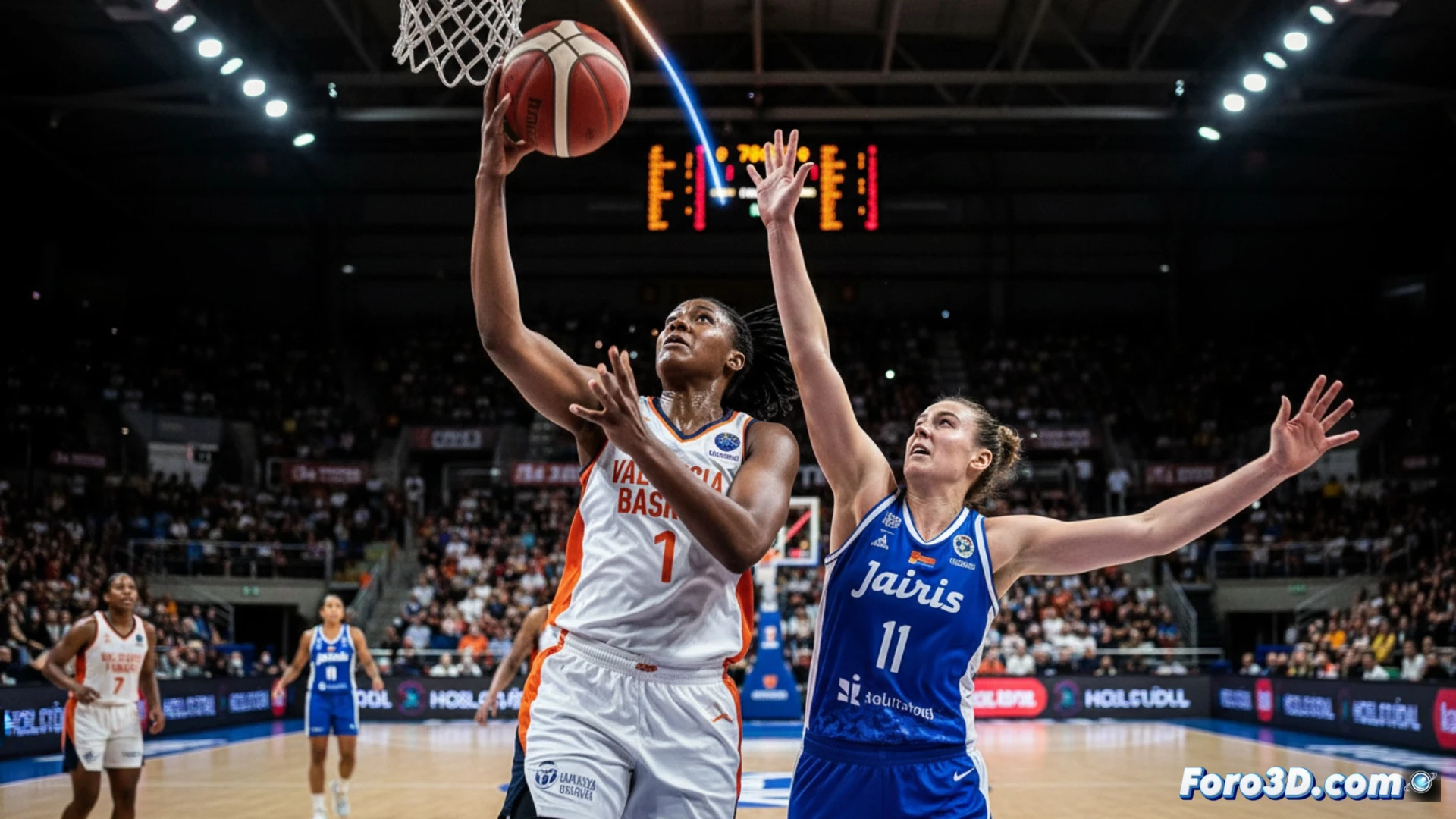
Virtual reconstruction of the tactical turning point 🧠
The key to the match was Valencia's defensive change after halftime, when they were losing 31-38. Using 3D technology, we could map the positions of all players on the court to visualize the evolution of their schemes. A three-dimensional model would allow analysis of how defensive distances were adjusted, how spaces for shooters like Alba Prieto were closed, and how rotation was improved to help in the post. Simultaneously, offensive movement heatmaps could be overlaid to show how Valencia generated better shots, with six players in double digits. The performance of the MVP, Khaalia Hillsman, could be studied with a volumetric model that analyzes her reception positions and her effectiveness in the paint.
Beyond the result: technology as a tool for understanding 📊
This technological approach transcends traditional reporting. Visualizing the comeback in an interactive 3D environment offers a deep understanding of tactical decisions and their execution. For coaches, fans, and analysts, these tools turn abstract concepts like defensive improvement into tangible representations. Valencia's victory is not just a statistic, but a strategic process that, thanks to 3D technology, we can unravel and learn from, reaffirming how digital innovation is transforming sports performance analysis.
How does the 3D analysis of tactical movements in the last five minutes reveal the decisive variation in the direct pick that allowed Valencia Basket's comeback?
(PD: at Foro3D we know that a 3D simulated penalty always goes in... unlike in real life)