Real Madrid's resounding victory over FC Barcelona at the Palau (76-95) was an exercise in tactical superiority and execution. Beyond the score, the second quarter, where the whites built an 18-point lead, is the key to the game. Analyzing this streak with 3D visualization tools allows decomposing the factors that tipped the match: outside shooting accuracy, rebound dominance, and the fluidity of Madrid's collective play against an overwhelmed Catalan defense.
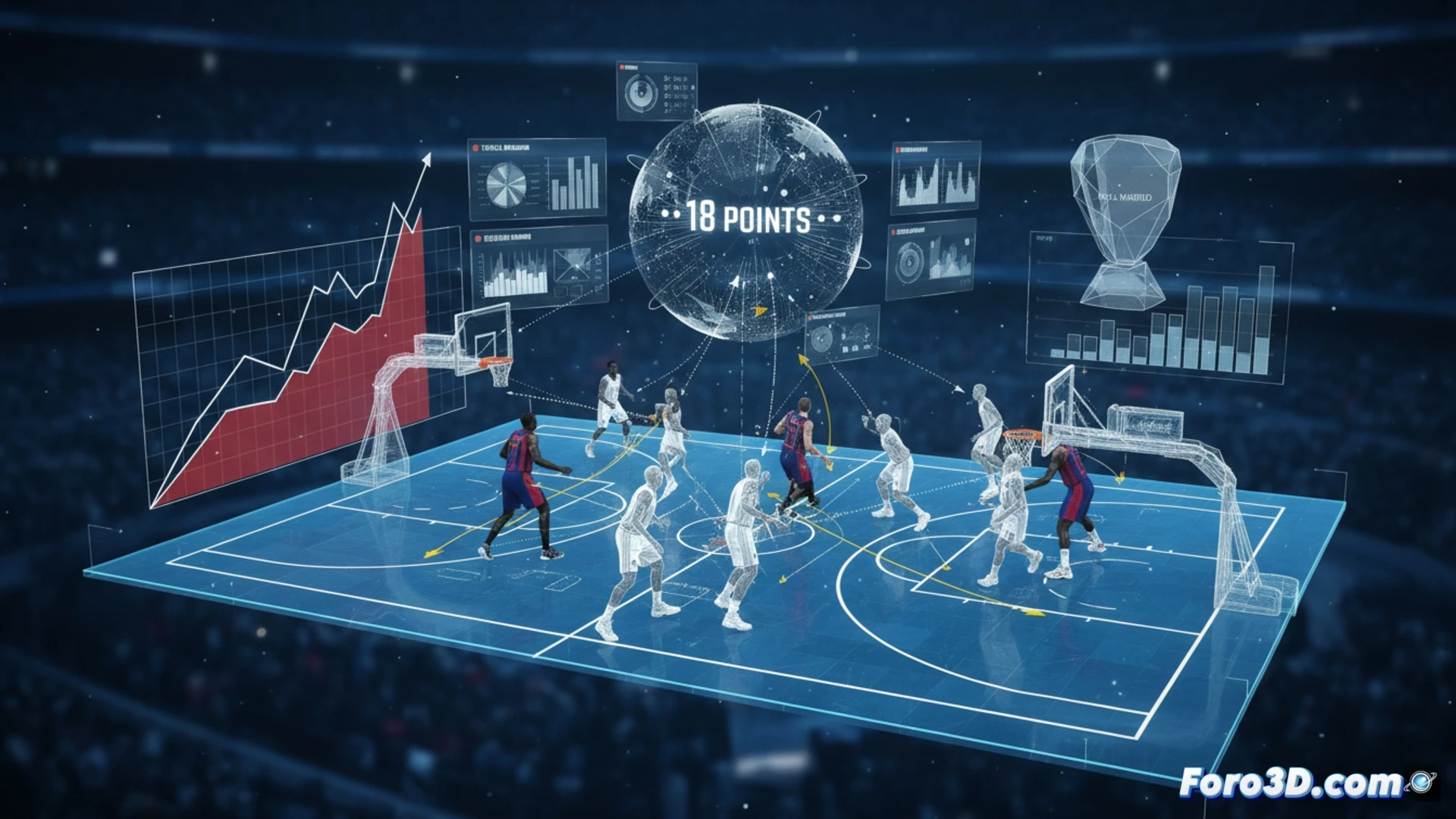
3D Reconstruction of the Decisive Streak: Shots, Rebounds, and Spaces 🏀
A 3D simulation of the second quarter would reveal decisive patterns. First, the trajectory of the balls in the threes scored by Campazzo, Maledon, and company, showing not only the accuracy but the prior creation of spaces through screens and quick passes. Second, a collision and trajectory model to analyze absolute rebound dominance, visualizing how Madrid players anticipated and cut off access lines to the basket. Third, the recreation of defense-attack transitions, where Madrid's decision speed and passing generated numerical advantages. An aggregated 3D model of possessions would evidence the white offensive efficiency and the Barça defensive disorganization during that period.
Tactical Simulation: Lessons for Sports Analysis 📊
This type of 3D technology analysis goes beyond the report. It allows turning a playing streak into an interactive model for study. Teams could simulate defensive variants against those Madrid plays or train positioning for rebounds. For the fan, it is a unique pedagogical tool to understand the tactical complexity behind an advantage that, on screen, seems just a succession of baskets. 3D technology brings us closer to the essence of basketball: space, time, and decision.
How can 3D analysis of movements and positions reveal the key tactical patterns that explain Real Madrid's superiority in the decisive streak of the last Clásico?
(PS: at Foro3D we know that a 3D simulated penalty always goes in... unlike in real life)