The Champions League offered a night of intense tactical analysis. PSG showed modelable 3D resilience by reacting twice to Chelsea's equalizer, culminating in a 5-2 thrashing. In Germany, Arsenal salvaged a point in extremis with a late penalty, a play of enormous psychological pressure. These key moments, plus Bodo/Glimt's resounding victory, are perfect material for dissection through simulation and three-dimensional reconstruction, transforming the report into an advanced tactical laboratory.
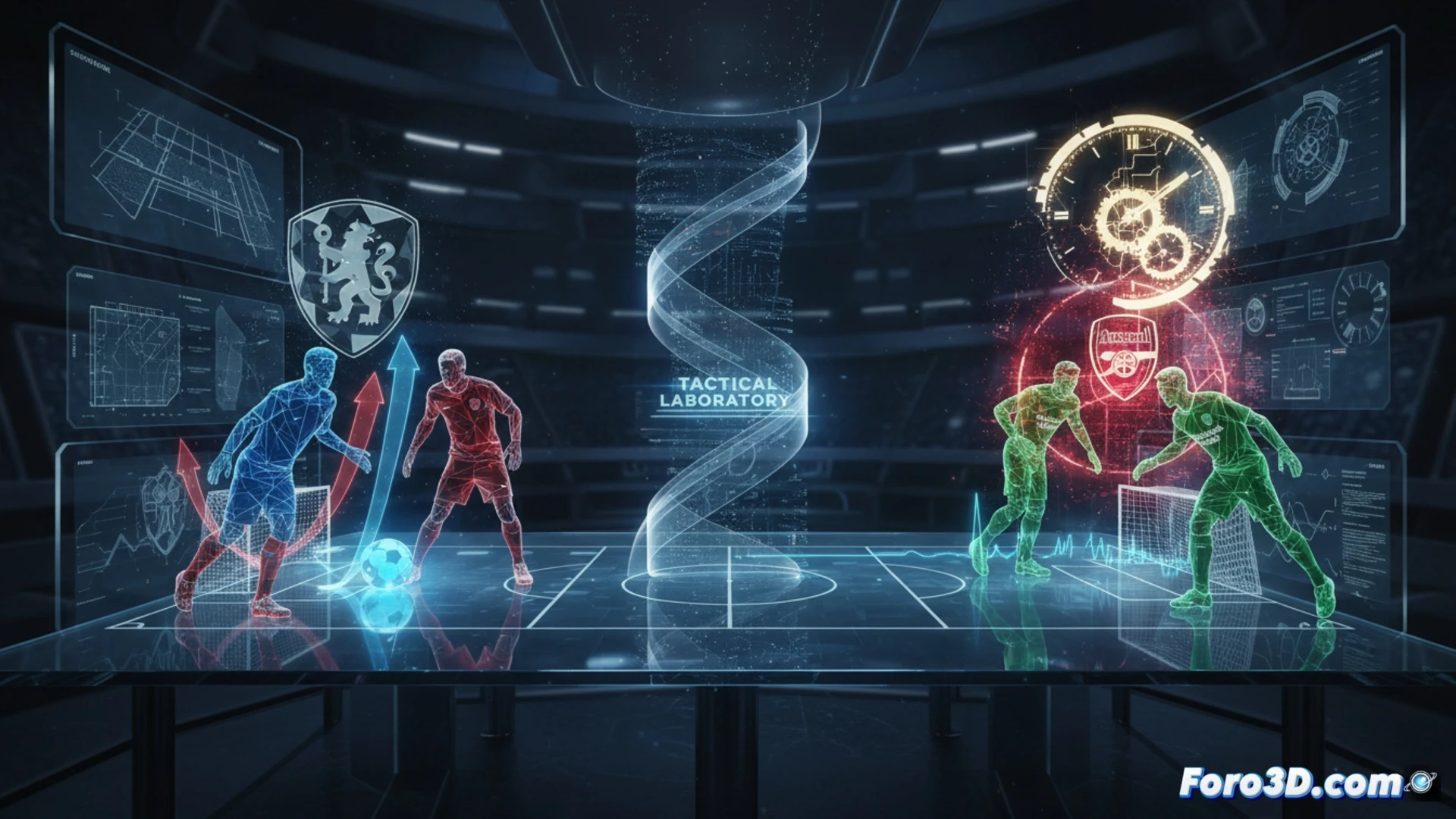
3D Reconstruction: Visualizing Tactical Reaction and Effectiveness 🎯
3D technology allows breaking down these plays beyond flat video. We could reconstruct in a volumetric environment how PSG's block reorganized after each Chelsea goal, analyzing distances between lines and coverage movements in real time. For Arsenal's penalty, a 3D simulation would show the exact ball trajectory, the defender's position, and Havertz's kick biomechanics, evaluating angle and pressure factors. Even Bodo/Glimt's goals could be studied to visualize unmarking patterns and generated spaces, offering an immersive perspective impossible with traditional methods.
Beyond the Result: Simulation as a Tool for the Future 🚀
This technological approach transcends mere illustration. For coaching staffs, these 3D simulations are decisive tools for post-match analysis and preparation against future opponents, allowing recreation of scenarios and testing tactical responses in a virtual environment. For media and fans, it democratizes deep tactical understanding, making complex concepts visible. Sports reporting evolves toward interactive analysis where 3D technology becomes the definitive bridge between what happens on the field and our total understanding of the game.
How can 3D modeling and vector data analysis quantify and visualize the tactical resilience shown by teams like PSG and Arsenal in the decisive phase of the Champions League?
(PS: player tracking is like following your cat around the house: lots of information and little control)