The recent attack on Imam Hosein University, the main academy of the Iranian Revolutionary Guard, goes beyond the mere headline. According to Israel, the targets were critical facilities such as wind tunnels for missiles and research centers. In our niche, this event is an ideal case study for applying 3D modeling and photogrammetry, allowing the reconstruction of these specialized infrastructures and the technical evaluation of the strategic impact of the reported bombings.
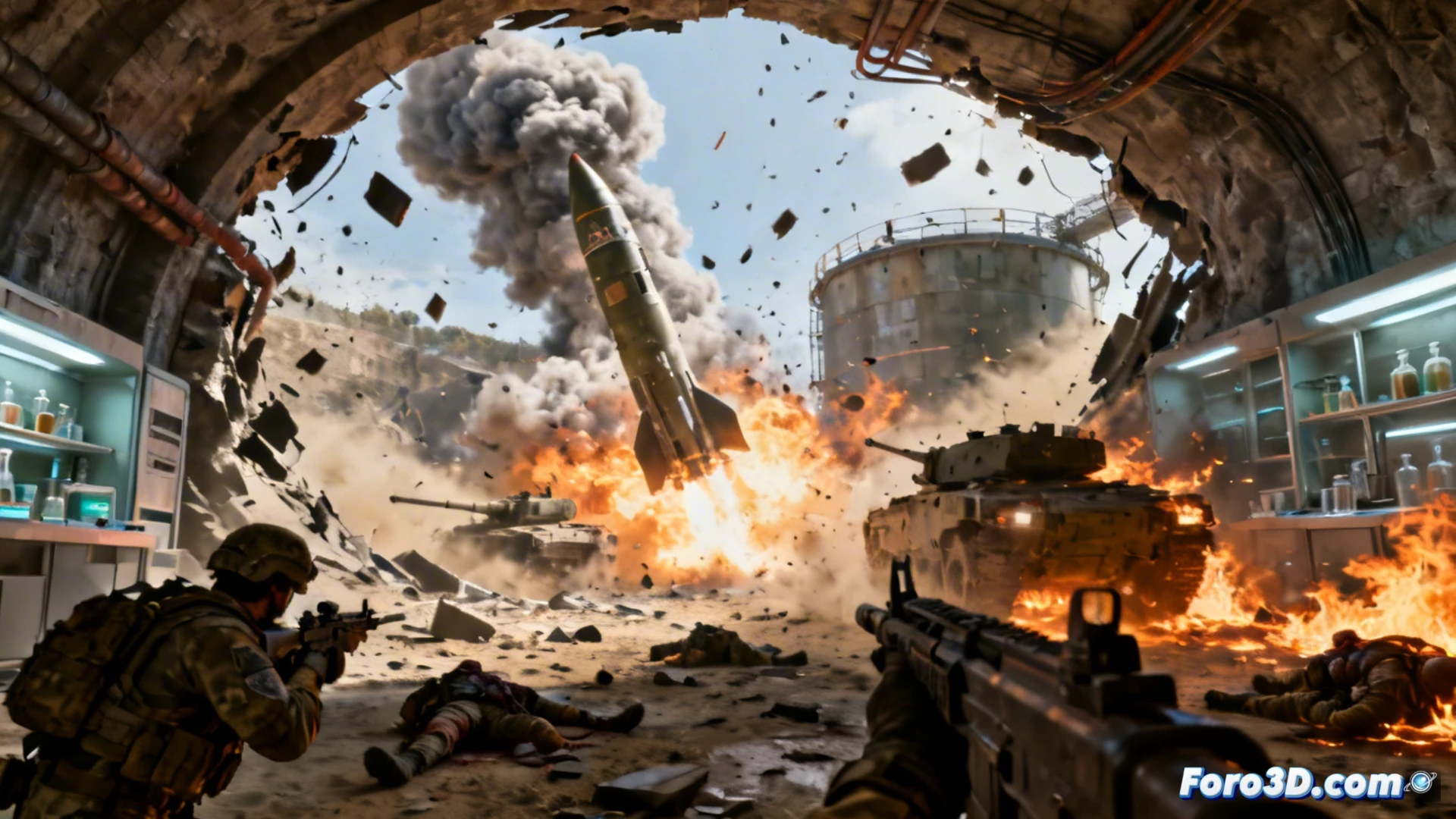
3D Reconstruction of Critical Infrastructures: Wind Tunnels and Damage 🏗️
The claim of destroying underground wind tunnels for missile testing is key. These complex and expensive facilities can be modeled in 3D to understand their scale and function. Using photogrammetry on pre- and post-attack satellite images, a point cloud and a textured model can be generated to reveal topographic changes, debris, and possible structural damage. Similarly, a chemical weapons research center requires a volumetric representation to analyze its distribution and the risks of an attack, creating a technical visualization that goes beyond photography.
3D Simulation as a Tool for Geopolitical Analysis 🗺️
The integration of these models into an interactive 3D cartographic environment transforms the understanding of the conflict. It allows visualizing the dispersion of targets, their relationship with urban areas, and the logistics of a precision attack. This spatial approach turns abstract data into an objective visual narrative, essential for rigorous analysis. 3D technology thus stands as a bridge between the military event and its technical understanding, offering clarity amid complexity.
What software do you recommend for simulating the impact of projectiles on infrastructures?