The highly anticipated debut of Carlos Alcaraz at Indian Wells against Grigor Dimitrov is not just a tennis match; it's a perfect stage for technological analysis. 3D technology allows us to break down this matchup beyond statistics. We can visualize in three dimensions the trajectories of the shots, court coverage, and tactical effectiveness, offering an unprecedented perspective on the game of the world number one and his undefeated record in 2026.
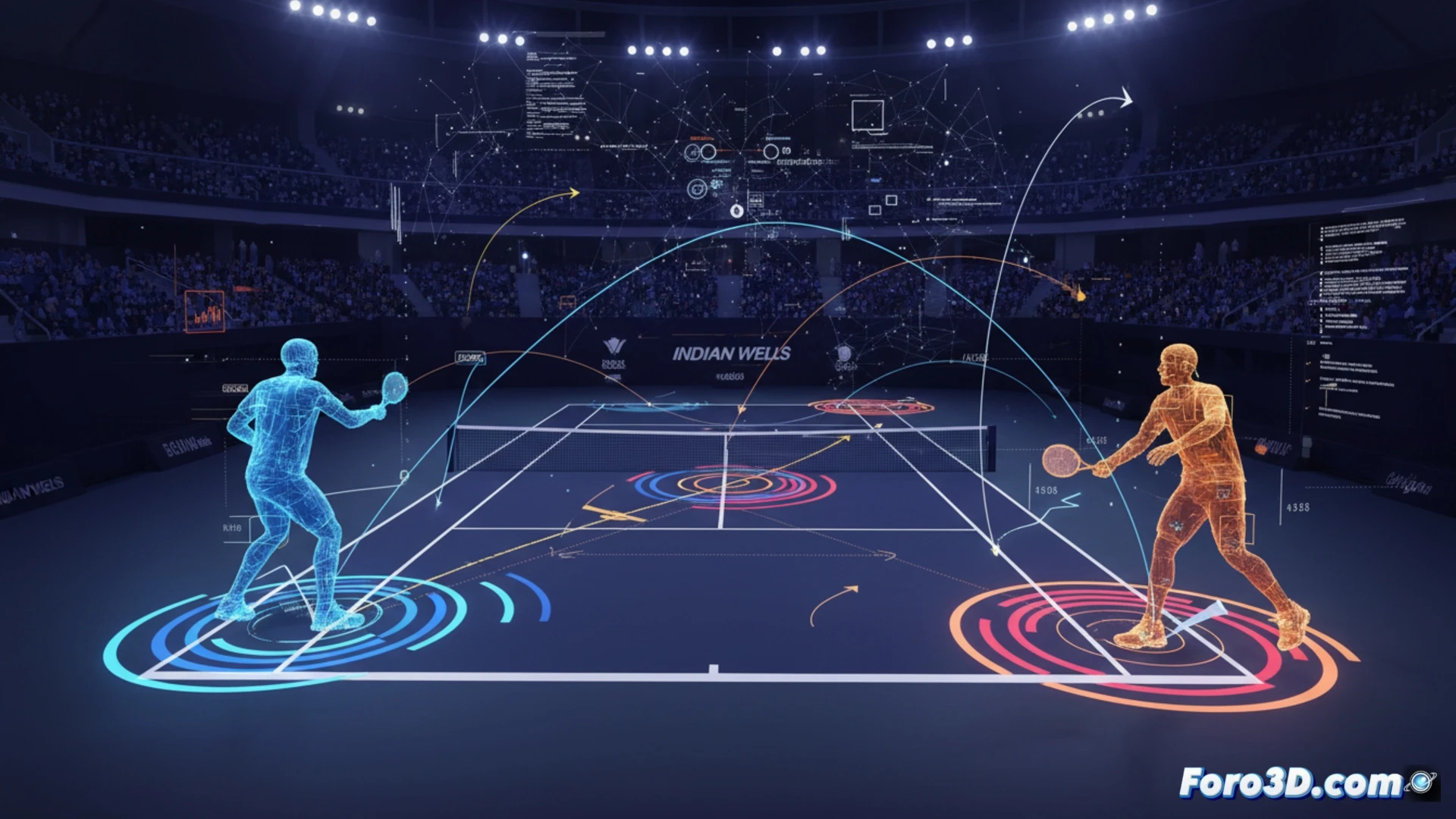
Tactical simulation and reconstruction of key points in 3D 🎯
Imagine an interactive model that simulates Alcaraz and Dimitrov's strategies, based on their 4-2 head-to-head history. The technology would allow recreating in 3D the decisive points from their previous encounters, analyzing shot angles and court positioning. For the tournament draw, an interactive 3D model could visualize Alcaraz's path, highlighting a possible clash with Djokovic in the semifinals. Even Bautista's tight victory or the debuts of Jódar and Mérida could be studied through volumetric reconstruction to analyze technical errors and successes.
The revolution in sports analysis with volumetric models 🚀
This approach goes beyond mere news, projecting how 3D technology transforms the understanding of sports. It's no longer just about knowing who wins, but understanding the how and why of each point with millimeter precision. The implementation of these systems in tactical analysis and training marks the future, where data and spatial visualization merge to reveal the secrets of elite play.
How can 3D analysis of biomechanics and ball trajectory reveal the tactical keys of the Alcaraz-Dimitrov duel at Indian Wells?
(P.S.: at Foro3D we know that a 3D simulated penalty always goes in... unlike in real life)