The recent warning from the Minister of Defense about the limit of Spanish troops deployed, given the pace of Iranian attacks, goes beyond mere news. From the 3D conflict analysis perspective, this scenario is perfect for a technical simulation. A digital twin of the theater of operations would allow visualizing and quantifying the real pressure on our units, transforming political statements into tangible spatial and logistical data.
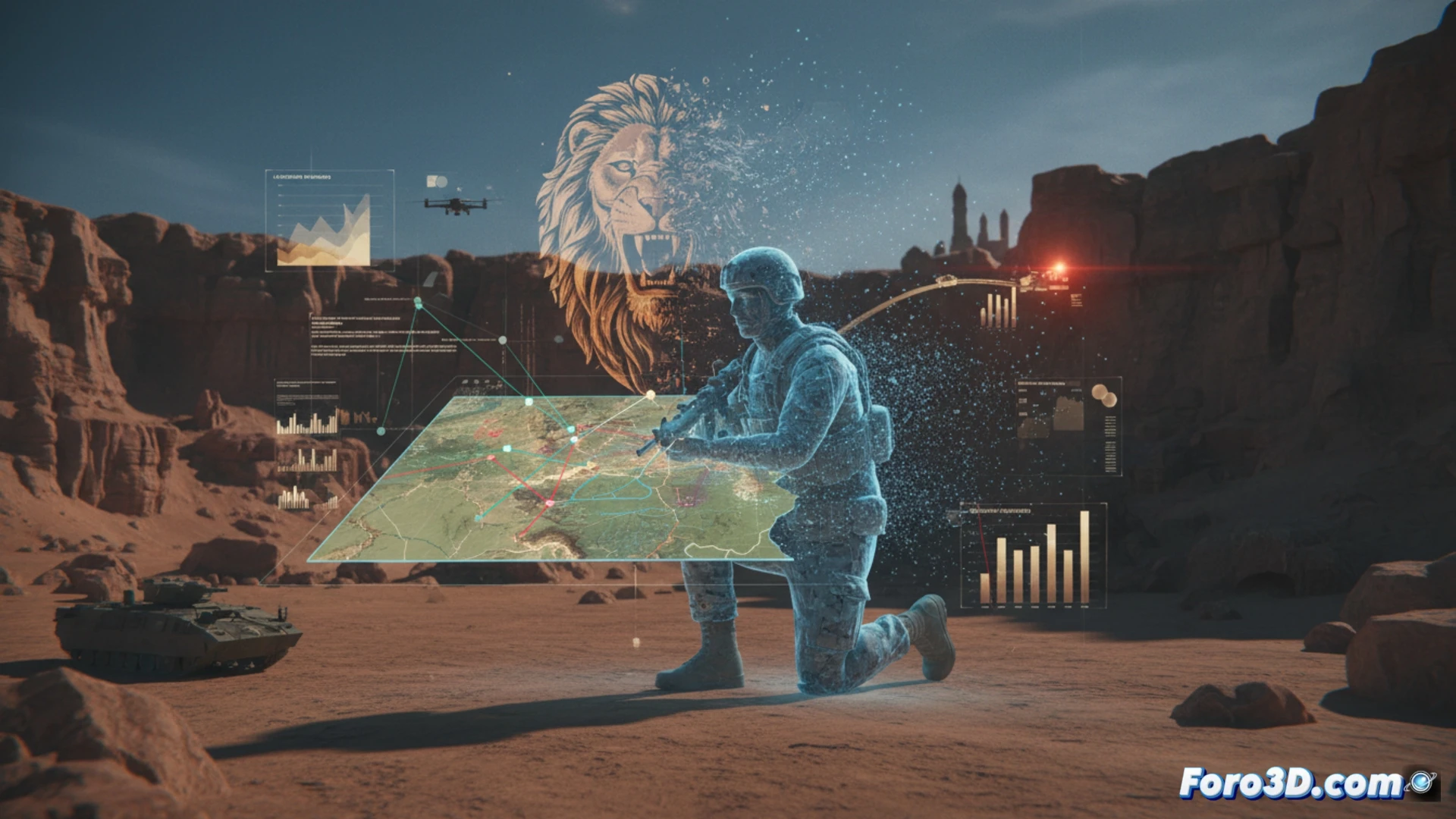
Digital twin of the theater: visualizing tactical saturation 🎯
A geo-referenced 3D model would integrate multiple layers of information. First, the disposition and density of Spanish positions, revealing extended supply lines and weak points. Second, the 4D mapping of Iranian attacks, showing frequency, attack vectors, and temporal patterns. By cross-referencing this data, the simulation could calculate unit fatigue indices and response times, objectifying why current personnel are at their limit. It would even allow testing escalation scenarios, modeling the impact of reinforcements or increased hostility.
From visualization to logistical forecasting 📊
The power of 3D analysis here is not just illustrative; it is predictive and justificatory. By visualizing operational saturation, it provides an irrefutable technical argument for the need for more personnel. This model would become a key tool for strategic planning, enabling the optimization of reinforcement deployment and anticipating logistical bottlenecks before the situation, as the minister fears, deteriorates further on the real battlefield.
How can 3D modeling and computational simulation quantify the operational and logistical wear of a military unit in an asymmetric conflict scenario, such as that of Spanish troops deployed under pressure from Iranian attacks?
(P.S.: 3D conflict simulation will never replace peace, but it helps understand the magnitude)