The Spanish national team defeated Serbia 3-0 in a key friendly match. Mikel Oyarzabal, with a brace in the first half, and the debutant Víctor Muñoz, with his first international goal, were the architects. Beyond the result, this match is a goldmine of data for technical analysis. In the niche of Sports and 3D Technology, we propose a digital reconstruction of the plays to extract tactical and biomechanical lessons for the upcoming World Cup.
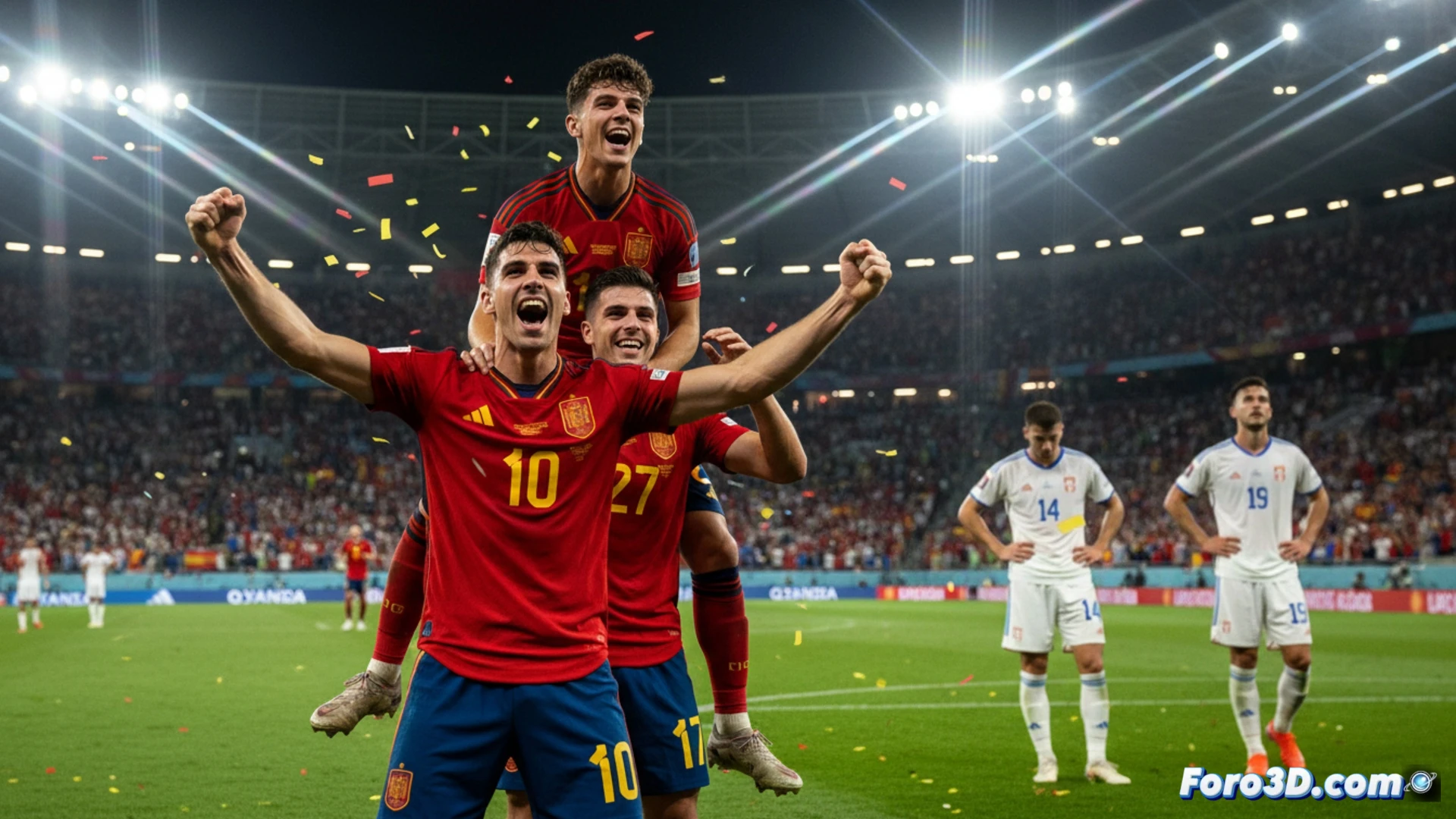
3D Reconstruction of Key Plays: Positioning and Trajectories 🎯
3D technology allows breaking down the goals into analyzable variables. For Oyarzabal's brace, a 3D model of the field would show his intelligent positioning in the box, synchronized with the crosses' trajectories. In Muñoz's goal, his run from midfield and the precise angle of his shot could be simulated. These reconstructions provide Luis de la Fuente and his technical staff with an objective tool to evaluate the effectiveness of tactical movements, space occupation, and players' decision-making in fractions of a second.
3D Biomechanics and Tactical Simulation for the World Cup Team ⚙️
The analysis doesn't end with the play. 3D biomechanics can study the striking technique of the debutants, optimizing gestures to prevent injuries. Additionally, match data feeds 3D tactical simulation engines, where De la Fuente can virtually test different lineups or systems against specific opponents. This technological approach transforms a match report into a scientific report, grounding decisions for the final World Cup squad with visual data and advanced metrics.
How can the 3D analysis of Oyarzabal's movements and Muñoz's position in his debut optimize tactics and talent detection in football?
(PD: player tracking is like following your cat around the house: lots of information and little control)