Thefts in subway, train, and airport stations follow a clear pattern: they take advantage of seconds of distraction when boarding or alighting, with luggage as the target. To combat this crime, traditional forensic analysis is limited. 3D digital reconstruction of these spaces emerges as a decisive tool, allowing investigators to immerse themselves virtually in the crime scene, analyze dynamics, and unravel methodologies with a level of detail previously unattainable.
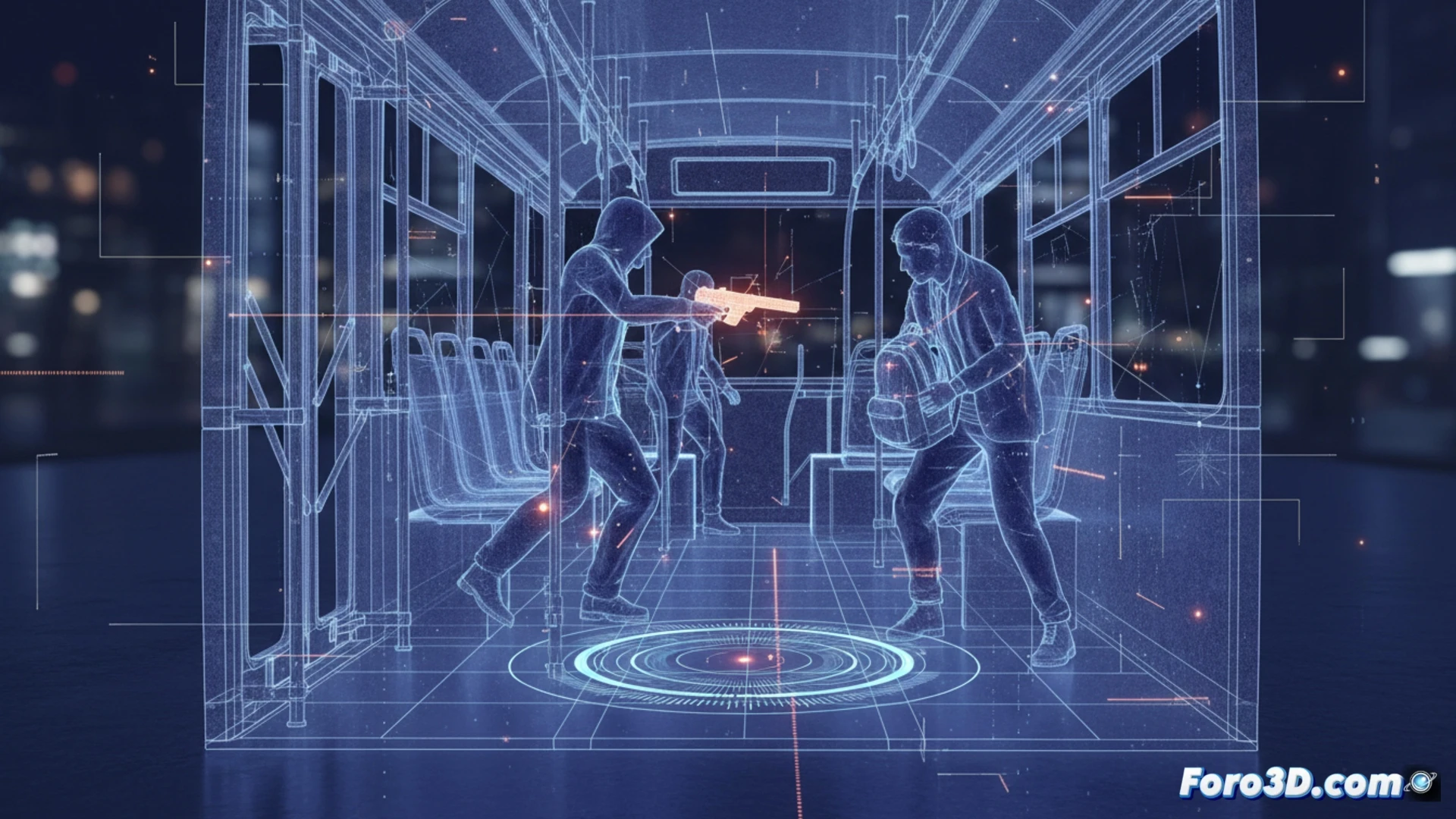
Photogrammetry and game engines: technical recreation for investigation 🕹️
The foundation is a faithful capture of the environment using photogrammetry with drones or cameras, or with laser scanners that generate millimetric point clouds. This 3D model is imported into engines like Unreal Engine or Unity, transforming it into an interactive space. Here, analysts can recreate the exact event: position avatars of victim and suspect, simulate escape trajectories, evaluate security camera sight angles, and study peak-hour crowd flows to identify blind spots and higher-risk areas where the criminal operates.
Beyond recreation: proactive prevention and training 🛡️
The ultimate value of these models goes beyond the specific case. They serve as powerful communication tools for prosecutors and juries, and as simulators for training police and security personnel. By visualizing and experiencing the criminal methodology in a controlled environment, more effective deterrent measures can be designed, vulnerable infrastructures modified, and the public educated, transforming reactive analysis into a proactive security strategy.
How can forensic 3D analysis identify and demonstrate patterns of movement and critical blind spots in public transportation thefts? 🔍
(P.S.: In scene analysis, every scale witness is an anonymous little hero.)