The inaugural Formula 1 2026 race in Melbourne left a masterclass in strategy. While Ferrari led with Leclerc, a Virtual Safety Car changed the fate. Mercedes, with Russell and Antonelli, pitted and gained a decisive advantage that Ferrari, more conservative, could not counter. This turning point, beyond the narrative, is a perfect scenario for analysis with 3D technology, allowing visual breakdown of the decision that granted the double podium to the German team.
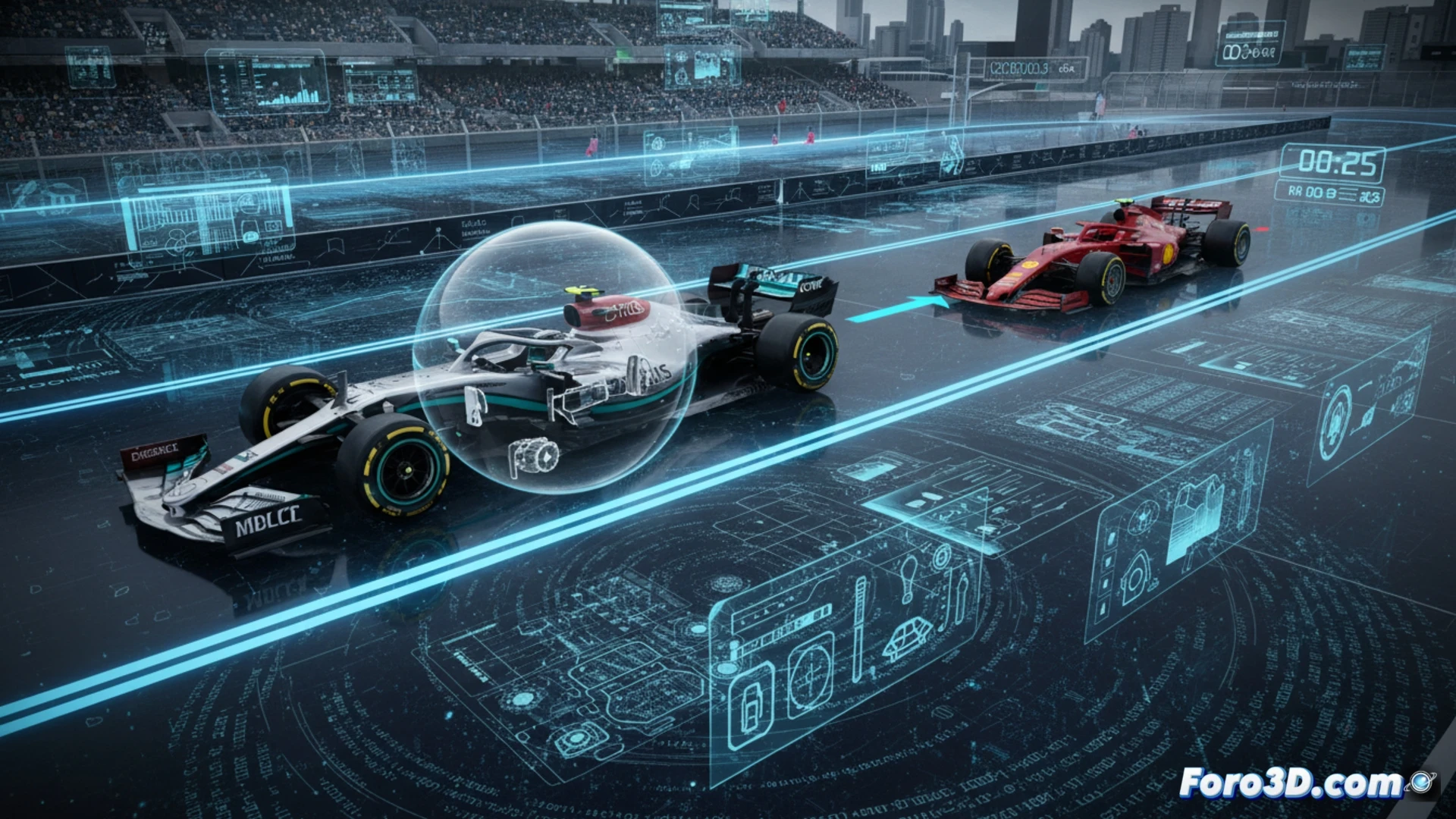
3D Simulation: Visualizing the Strategic Advantage 🏁
The key can be modeled in an interactive 3D environment of the Albert Park circuit. An accurate model would allow simulating the exact positions of the cars at the moment of the VSC, recreating the trajectories and pit entry times of Mercedes and Ferrari. By visualizing both scenarios in simulated time, the graphical advantage of seconds that Russell gained over Leclerc by circulating at reduced speed while the Ferrari driver stayed on track would be appreciated. Additionally, aerodynamic models of the cars could be overlaid to analyze their behavior in different sectors, explaining the pace mentioned by Russell. These tools are used by teams for decision-making and by broadcasts to enrich the analysis.
Beyond the Result: The New Visual Narrative 📊
This case demonstrates how 3D technology transcends engineering to become the definitive language of tactical analysis. It is no longer enough to describe the strategy; now it can be experienced, from the perspective of the pit wall or the driver, the decision that won the race. For fans in forums like this, it represents an opportunity for debate based on visual data and objective simulations, democratizing the understanding of a sport where millimeter details and seconds decide the podium.
How did the 3D analysis of Mercedes' strategy in Melbourne 2026 reveal the critical tire wear points that Ferrari overlooked?
(P.S.: reconstructing a goal in 3D is easy, the hard part is making it not look like it was scored with the leg of a Lego doll)