The past day at the Masters 1000 in Miami brought mixed news for Spanish tennis. While young Rafael Jódar achieved a historic victory that places him in the Top 100, Paula Badosa and Alejandro Davidovich were eliminated. Beyond the result, these matches are a perfect case study for sports analysis with 3D technology, allowing the dissection of the technical and tactical keys of each performance.
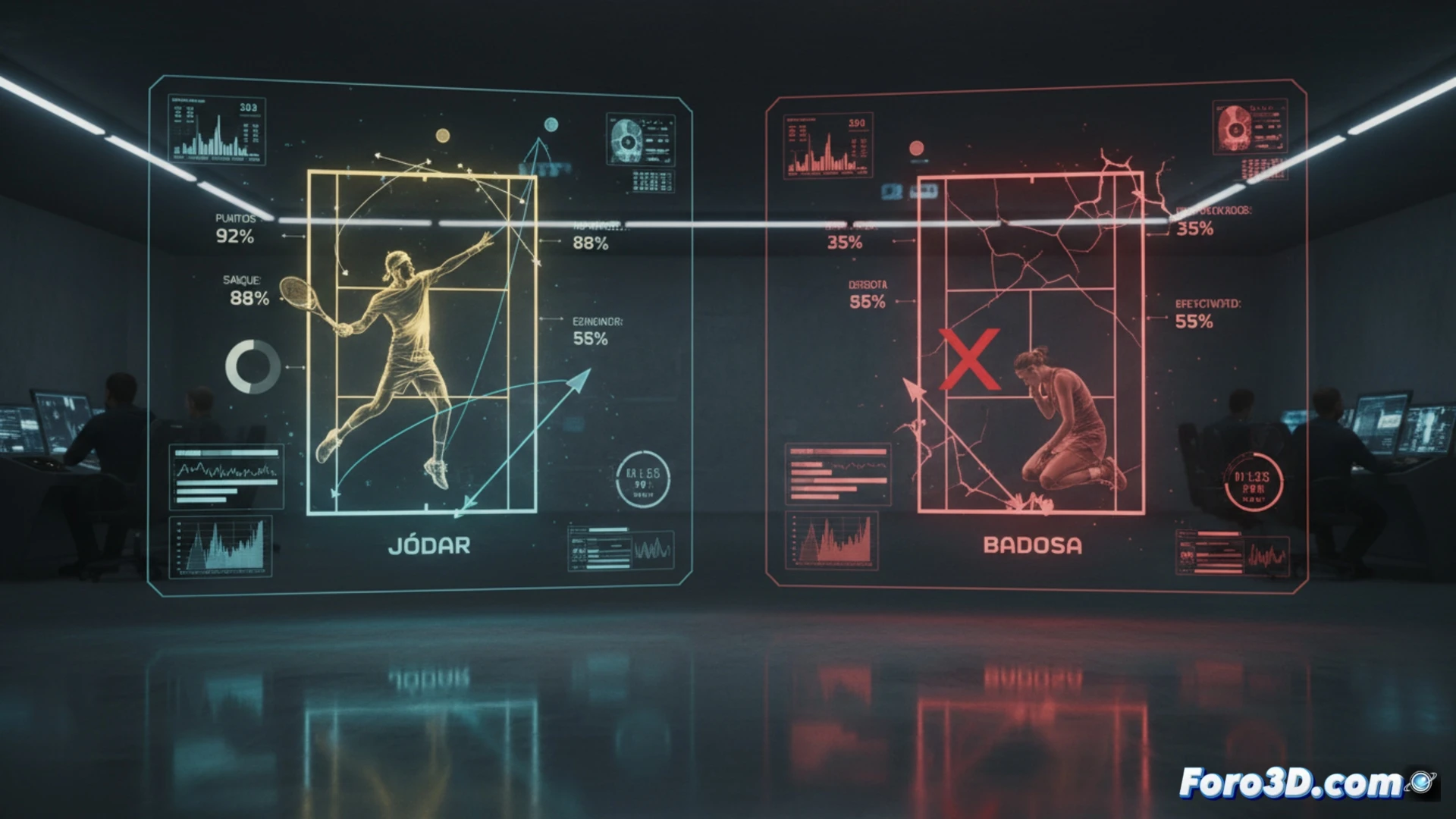
3D Visualization: Keys to Jódar's Success and Exposed Weak Points 🎯
A motion capture and 3D reconstruction system of Jódar's match would reveal crucial data. The trajectory and spin of his shots could be visualized, showing how he deepened into the back of the court against Vukic. A 3D model of the biomechanics of his backhand could analyze its efficiency. For Badosa and Davidovich, a 3D heat map of their unforced errors would indicate pressure zones. 3D tactical simulation would allow contrasting the location of their shots with optimal patterns, identifying failures in point construction.
Beyond the Scoreboard: The Future of Tennis Analysis 🚀
These tools not only explain what happened, but are the future for preparation. A player like Jódar could study in a 3D virtual environment the playing patterns of his next rival, Etcheverry or Bergs. Technology transforms the sports anecdote into a set of actionable data, where every shot, every movement, and every tactical decision can be measured, visualized, and improved, taking tennis training and understanding to a new dimension.
How can 3D biomechanical analysis explain and prevent injuries like Paula Badosa's fall, contrasting it with Rafael Jódar's efficient technical gesture?
(PS: 3D VAR: now with replays from angles that didn't even exist)