Authorities frequently warn about distraction thefts, a modus operandi where an accomplice simulates an emergency or asks for help while another steals belongings. Analyzing these dynamic and ephemeral scenes is a challenge. This is where digital forensic analysis and 3D recreation offer a powerful tool, allowing for precise documentation, reconstruction, and study of these incidents to improve prevention and police training.
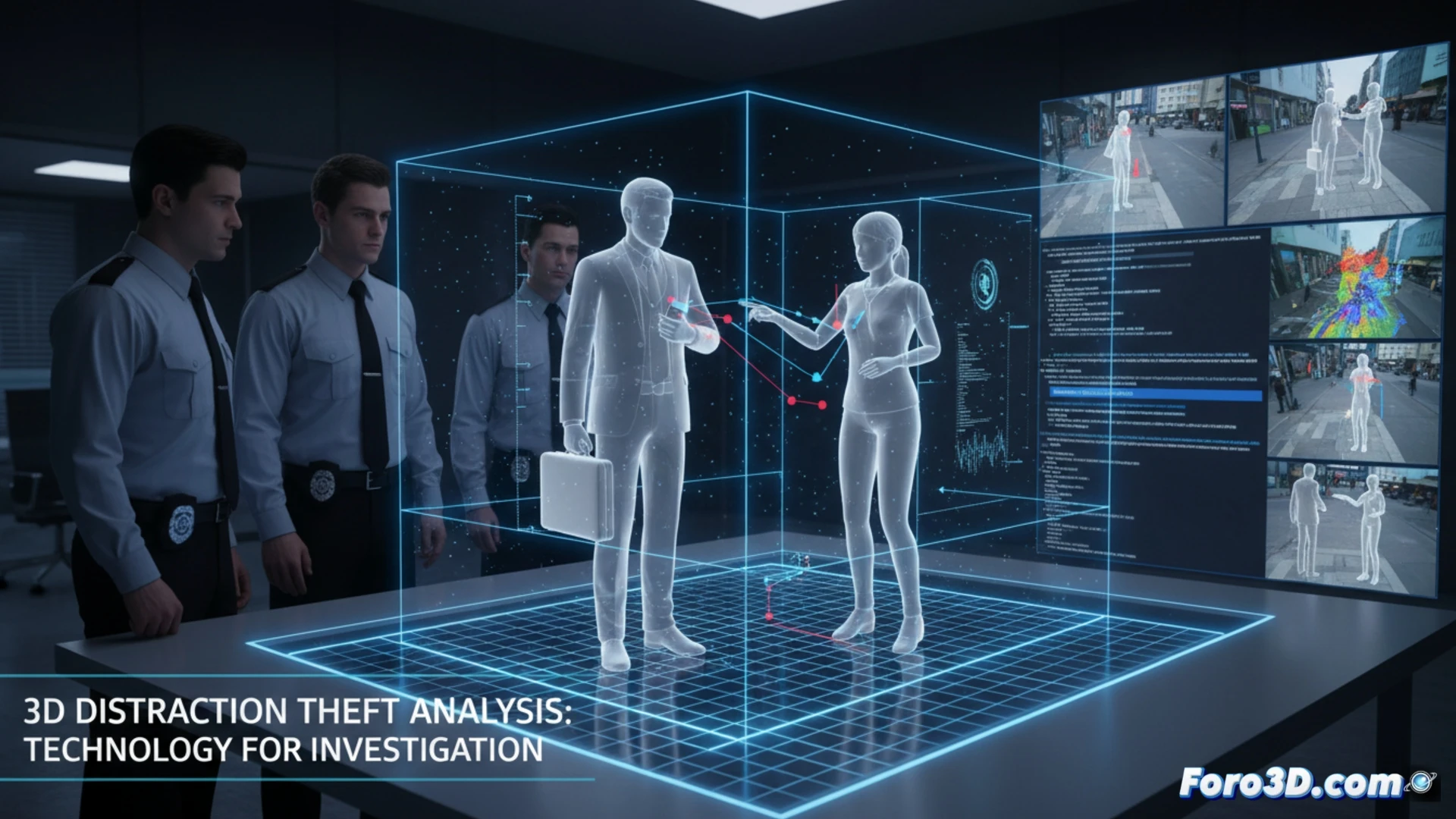
Digital forensic reconstruction: from the scene to the interactive model 🔍
Documentation begins with capturing data from the real scene using photogrammetry or laser scanning, generating an accurate point cloud. This model is imported into a game engine or 3D software, where the environment is reconstructed and the actors are animated. Digital avatars representing the victim and thieves can be placed, programming their movements according to witness statements. This allows simulating the crime sequence from any angle, calculating distances, analyzing blind spots and reaction times, and evaluating how environmental factors facilitated the theft.
Beyond recreation: proactive training and awareness 🎯
The ultimate value of these 3D models goes beyond isolated investigation. They become crucial training material for agents, showing recurrent patterns and distraction tactics. For the public, an interactive simulation is more impactful than a warning text, clearly visualizing how the crime occurs. Thus, 3D technology not only helps understand the crime but stands as a pillar for prevention and citizen security.
How can 3D analysis of urban scenarios reconstruct and evidence the spatial and temporal dynamics of a distraction theft gang to strengthen the chain of evidence?
(P.S.: In scene analysis, every scale witness is an anonymous little hero.)