Marc Cucurella's recent statements, focused on his performance to complicate the national team selector's decision, go beyond the anecdotal. In the niche of sports and technology, his case is perfect for applying 3D tools. These would transform his subjective desire to convince into an objective and visual analysis of his contribution in the friendly against Egypt, the last test before the World Cup.
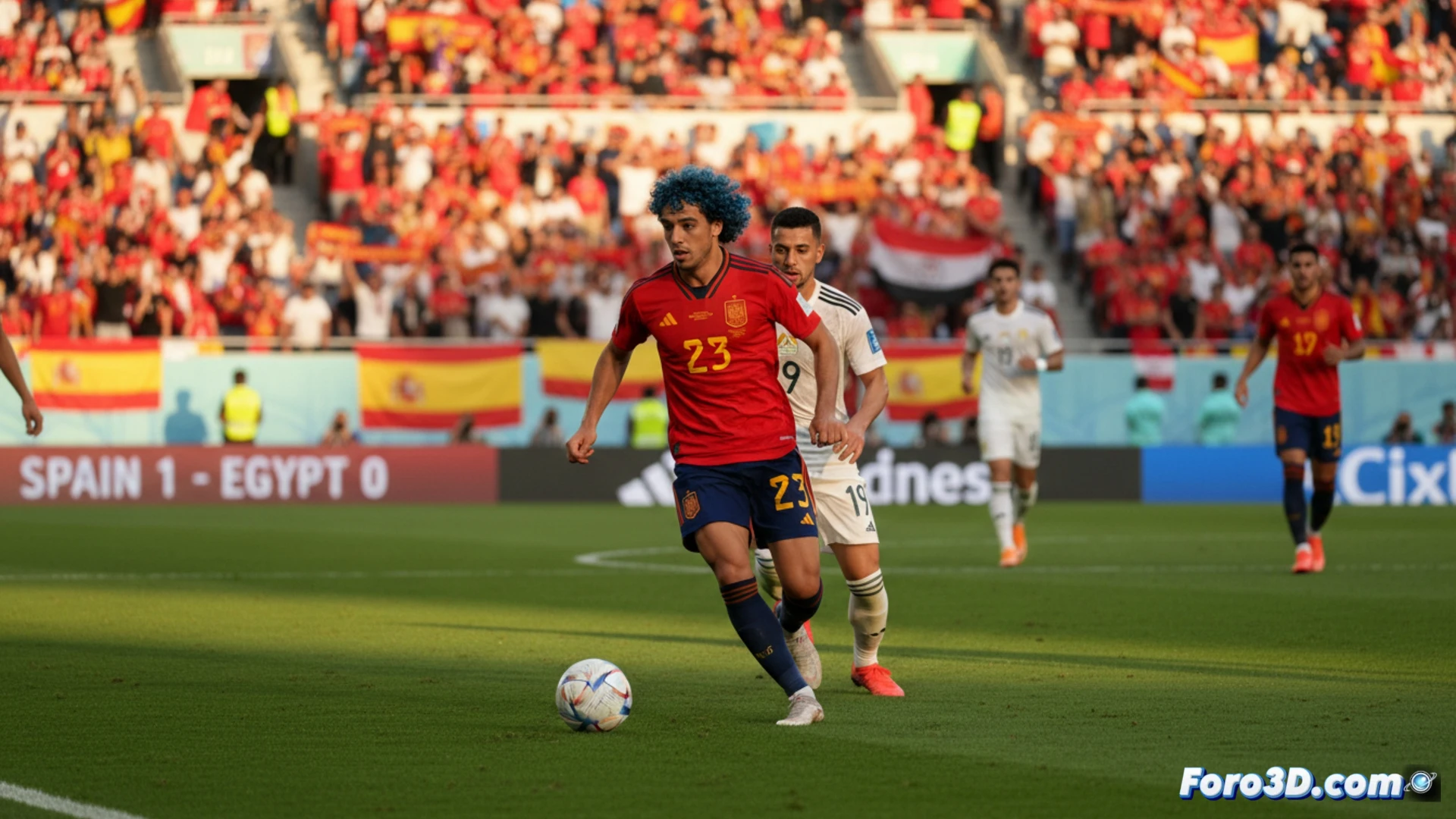
Tactical and Biomechanical 3D Visualization: Beyond the Human Eye 🧠
To analyze Cucurella, 3D technology is key. First, through camera systems and tracking, his defensive positioning, distance to the line, and coverages can be reconstructed in 3D, contrasting them with ideal tactical models. Second, a 3D biomechanical analysis of his movements (tackles, lateral displacements) would evaluate efficiency and injury risk. Third, simulating alternative plays in a 3D environment would quantify his decision-making, offering De la Fuente a layer of data impossible to obtain at a glance.
From Words to Data: The Technical Decision in 3D 📊
Cucurella's phrase about complicating the decision encapsulates the challenge of any selector. Here, 3D technology acts as a disambiguator. By creating comparative 3D models of several candidates for the same position, overlaps, covered spaces, and unique contributions are visualized. This does not decide for the coach, but turns a choice based on impressions into one founded on spatial evidence and reproducible metrics, elevating football analysis to a new literal and figurative dimension.
How can 3D analysis of biomechanics and movement quantify Marc Cucurella's real improvement to argue for his call-up to the national team?
(P.S.: At Foro3D we know that a 3D simulated penalty always goes in... unlike in real life) ⚽