The statistics are clear: during periods like Holy Week, thefts in commercial areas and tourist zones skyrocket, concentrating nearly 19% of annual retail robberies. This recurring pattern, linked to crowds, demands innovative responses beyond traditional surveillance. The documentation and 3D reconstruction of these crime scenes emerges as a powerful tool to shift from reaction to proactive prevention, transforming data into actionable visual models.
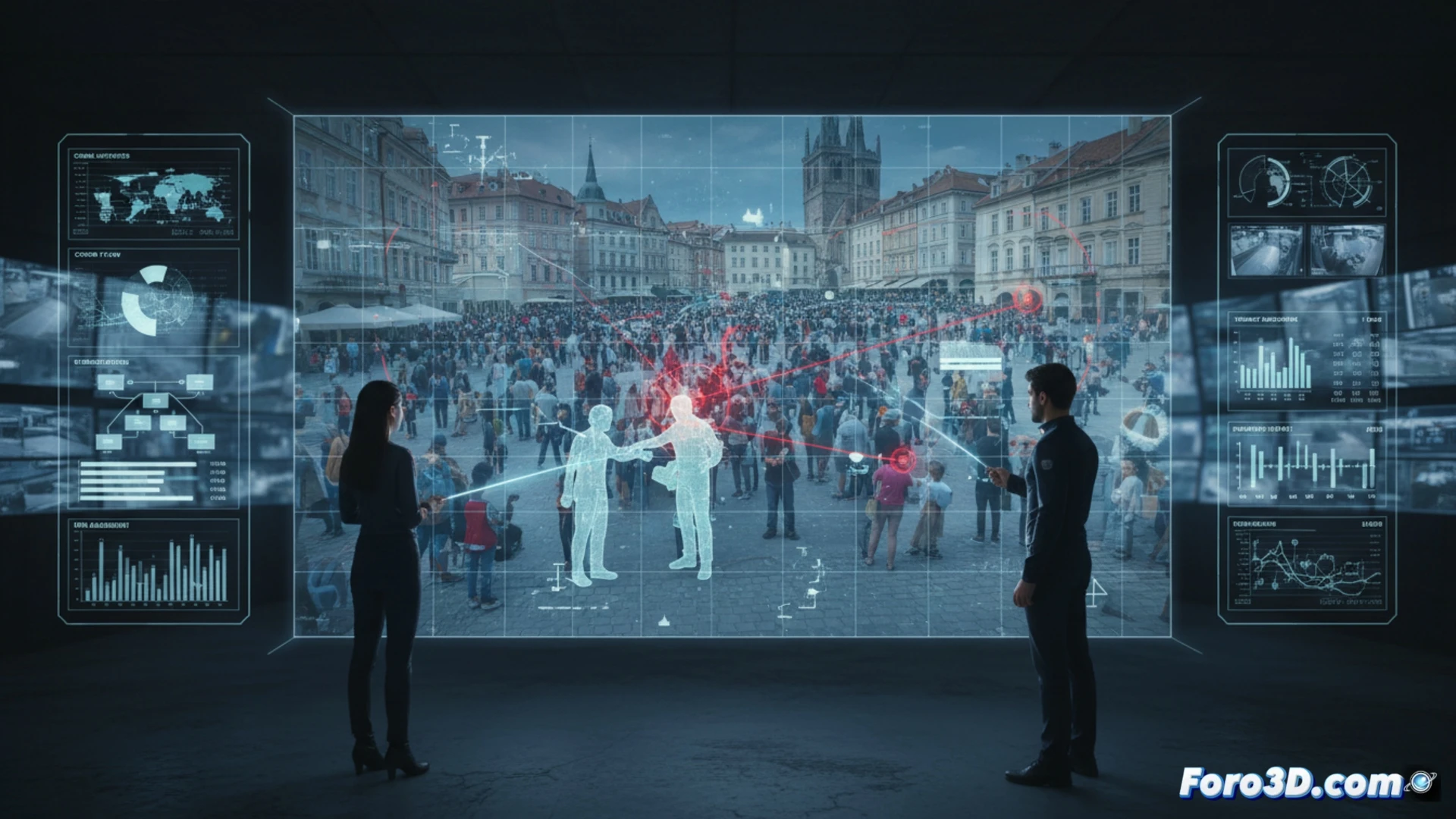
Technologies for the forensic capture and reconstruction of commercial environments 🔬
Photogrammetry from video surveillance and mobile laser scanning allow documenting the scene with millimeter precision after a crime, preserving a state that will soon be altered. Beyond mere documentation, this data is integrated into digital twins of the commercial or tourist space. This interactive 3D model enables analyzing blind spots, simulating crowd flows in different congestions, and virtually testing the effectiveness of deterrent measures, such as staff redistribution or the installation of physical barriers, before implementing them in reality.
From the crime scene to predictive simulation 🧠
The true value lies in its predictive capability. By accumulating and comparing 3D models from multiple incidents, complex patterns and common structural vulnerabilities can be identified. These recreations are also an exceptional training tool for security forces, allowing training in hyperrealistic scenarios without risks. 3D technology thus turns the crime scene into a living laboratory for security, anticipating criminals who exploit the chaos of crowds.
How can 3D analysis of robbery scenes optimize police resource allocation in tourist areas during peak influx periods?
(P.S.: In scene analysis, every scale witness is an anonymous little hero.)