FC Barcelona earned three hard-fought points against Rayo Vallecano thanks to a solitary header goal from Ronald Araujo. However, the true protagonist was goalkeeper Joan García, whose decisive interventions, especially one in added time, secured the victory. This match is a perfect case study for applying 3D visualization technology, transforming key actions into analyzable data that explains the result beyond traditional journalistic narrative.
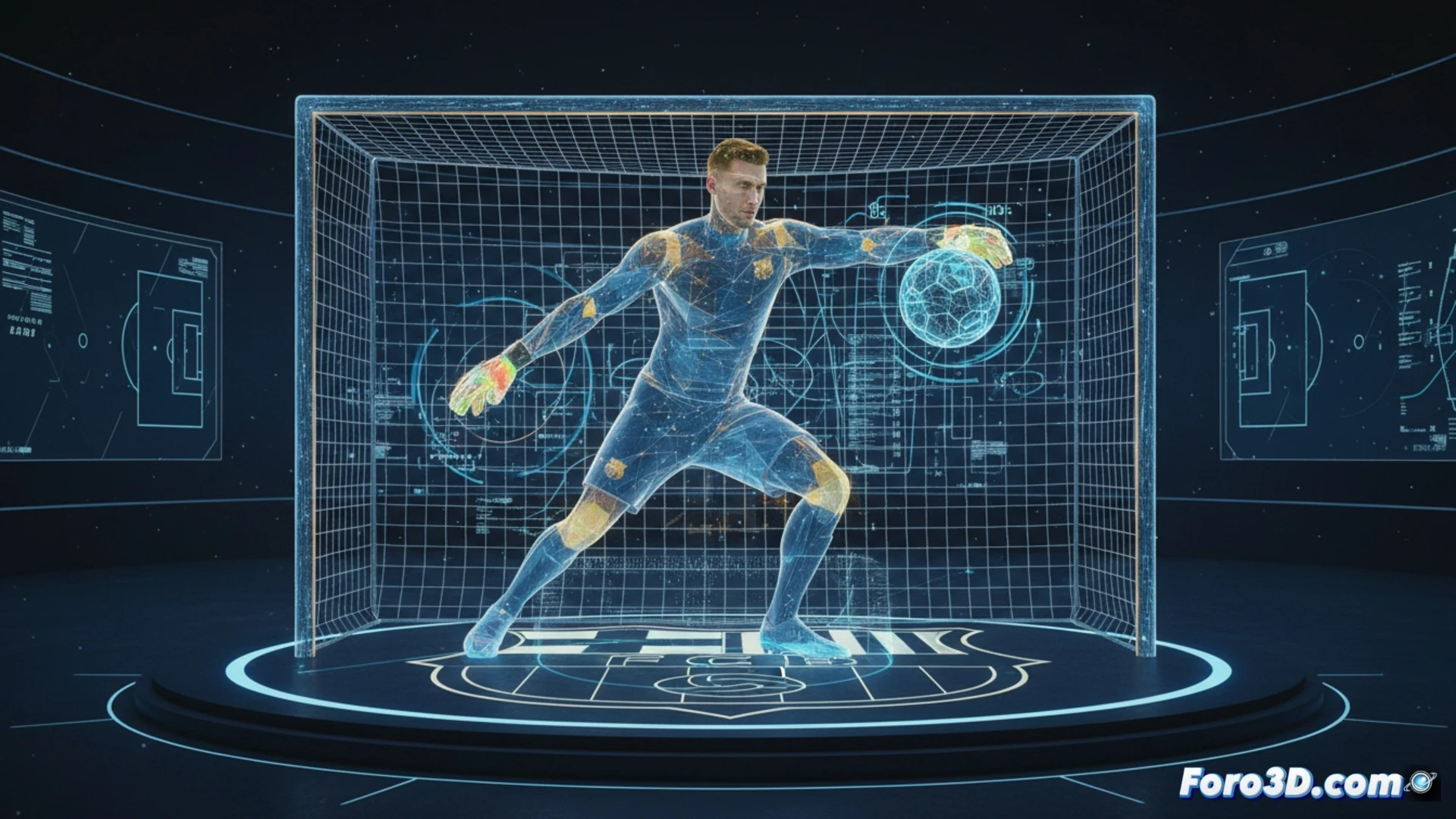
3D Reconstruction: Biomechanics and Angles of the Decisive Interventions 🧠
3D technology allows breaking down García's saves and Araujo's goal. For the goalkeeper, a volumetric model of the area can be created and the ball's trajectory simulated in the Espino play, calculating García's line of sight angle, reaction time, and the biomechanics of his stretch. For the goal, a 3D model would reconstruct the players' positions in the corner kick, Araujo's jump trajectory, and the point of impact with the ball. These simulations provide objective metrics on positioning, movement effectiveness, and defensive errors, vital information for post-match tactical analysis.
Beyond the Result: Simulation as a Tool for Improvement 📈
The true power of this analysis lies not in illustrating what happened, but in projecting improvements. A 3D model of the team's irregular performance can simulate tactical variants and alternative positionings. Coaches can use these recreations to correct errors and optimize strategies with the players, turning a hard-fought victory into a precise and visual lesson. Technology transforms the anecdote into science applied to sports performance.
How can the 3D analysis of Joan García's saves reveal tactical patterns and areas for improvement for FC Barcelona's goalkeeping?
(P.S.: at Foro3D we know that a 3D simulated penalty always goes in... unlike in real life)