Fernando Alonso's challenging session in the Australian free practice, with a Honda unit issue and a time five seconds off the leader, is not just a bad session. It is the symptom of the serious performance problems suffered by Aston Martin. This scenario is where 3D technology demonstrates its value, transforming slow lap times and telemetry into visual models that allow diagnosing faults and seeking solutions precisely and quickly.
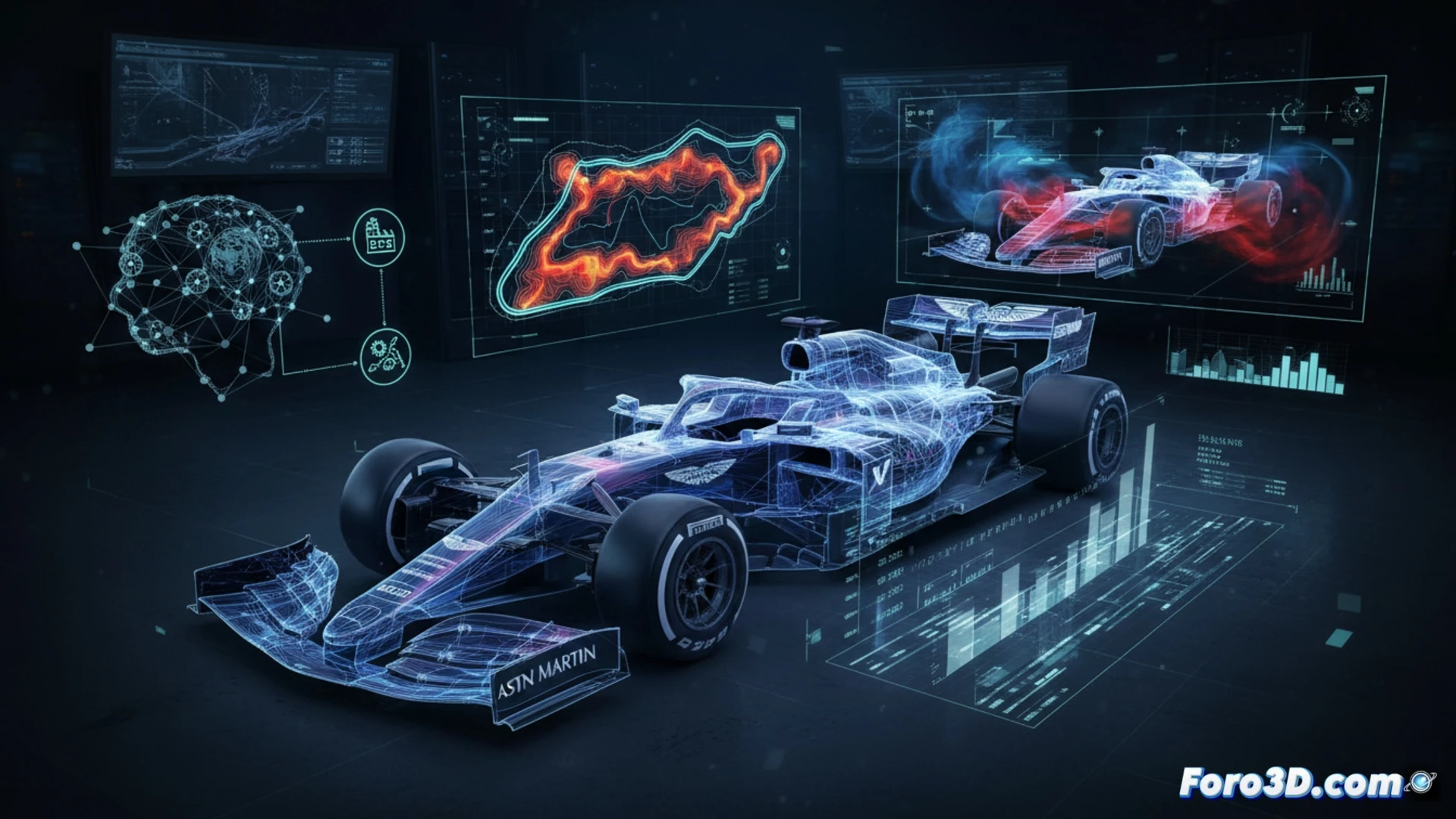
Digital twins and 3D telemetry: diagnosing the problem 🛠️
Teams like Aston Martin use digital twins, exact 3D virtual replicas of each component of the single-seater. Every telemetry data from Alonso's and Stroll's cars is projected onto this model. Thus, engineers can visualize in real time the thermal stress on the power unit, the aerodynamic efficiency in each corner, or the suspension behavior. The five-second loss is not an abstract number; it breaks down into visualizable losses on straights, due to lack of power, or in corners, due to lack of grip, allowing to isolate the technical or setup origin of the deficit.
Simulation as the only path to recovery 🚀
With limitations on real track testing, 3D simulation becomes the crucial tool. Before manufacturing any part, they are tested in the virtual circuit environment, calculating their impact in milliseconds. For Aston Martin, the priority is to use these environments to simulate solutions to the power and aerodynamics problem, seeking the optimal setup they couldn't find in free practice. Without this analysis and virtual prototyping capability, closing the gap with the leaders would be impossible.
What biomechanical metrics would be relevant to analyze in soccer players?