Davide Tardozzi, Ducati's director, has publicly acknowledged Aprilia's enormous progress in MotoGP, estimating that his rival has gained up to one second per lap. In the face of this improvement, Ducati's progress has been more modest. At the same time, Tardozzi pointed out that Marc Márquez is not at his physical peak, limiting his performance. This scenario, with asymmetric technical developments and human variables, is perfect for analysis using simulation and 3D visualization technologies, key tools in modern competition. 🏍️
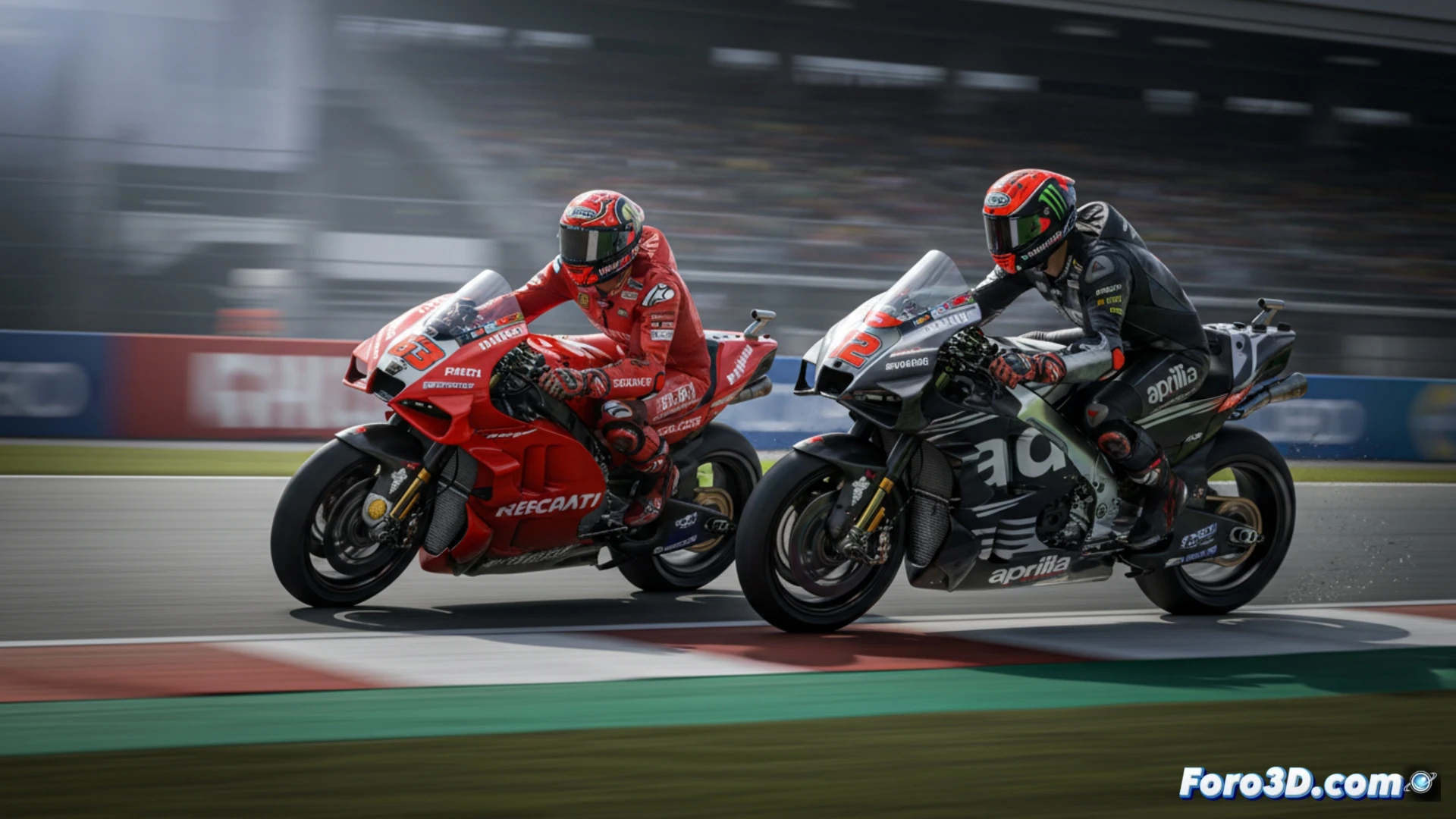
Digital twins: measuring the one-second advantage 💻
The claim that Aprilia gained one second per lap is not a random estimate. Teams like Ducati use digital twins, 3D virtual replicas of their bikes and each circuit. By inputting the new aerodynamic, chassis, or engine data from the Aprilia into the model, they can simulate its behavior and compare it with previous seasons and their own bikes. This 3D visualization allows isolating variables, understanding in which sectors more time is gained, and recreating optimal lines to precisely quantify that performance leap, thus guiding their own technical development.
Visualizing the human factor: beyond the machine 👤
3D technology is also crucial for analyzing riders' conditions. By integrating Márquez's biomechanical data with 3D models of his position on the bike, engineers can visualize arm angles, pressure on the handlebars, or braking movements, comparing them with his ideal parameters. This objective visualization helps understand how a non-optimal physical condition translates into lost tenths on the track, reminding us that in MotoGP the boundary between man and machine dissolves in the virtual world.
How can 3D analysis of bike dynamics quantify Aprilia's technical leap and its impact on riders like Márquez's performance in MotoGP?
(P.S.: 3D tactical simulation never fails, the players on the track do)