Carlos Alcaraz's unbeaten streak at Indian Wells ended in the semifinals against Daniil Medvedev. The 6-3, 7-6(3) defeat invites a deep analysis beyond basic statistics. This is where 3D technology becomes a fundamental tool, allowing the breakdown of the technical and tactical factors that decided the match, offering a perspective inaccessible to the human eye in real time.
Biomechanical modeling and trajectory simulation 🎯
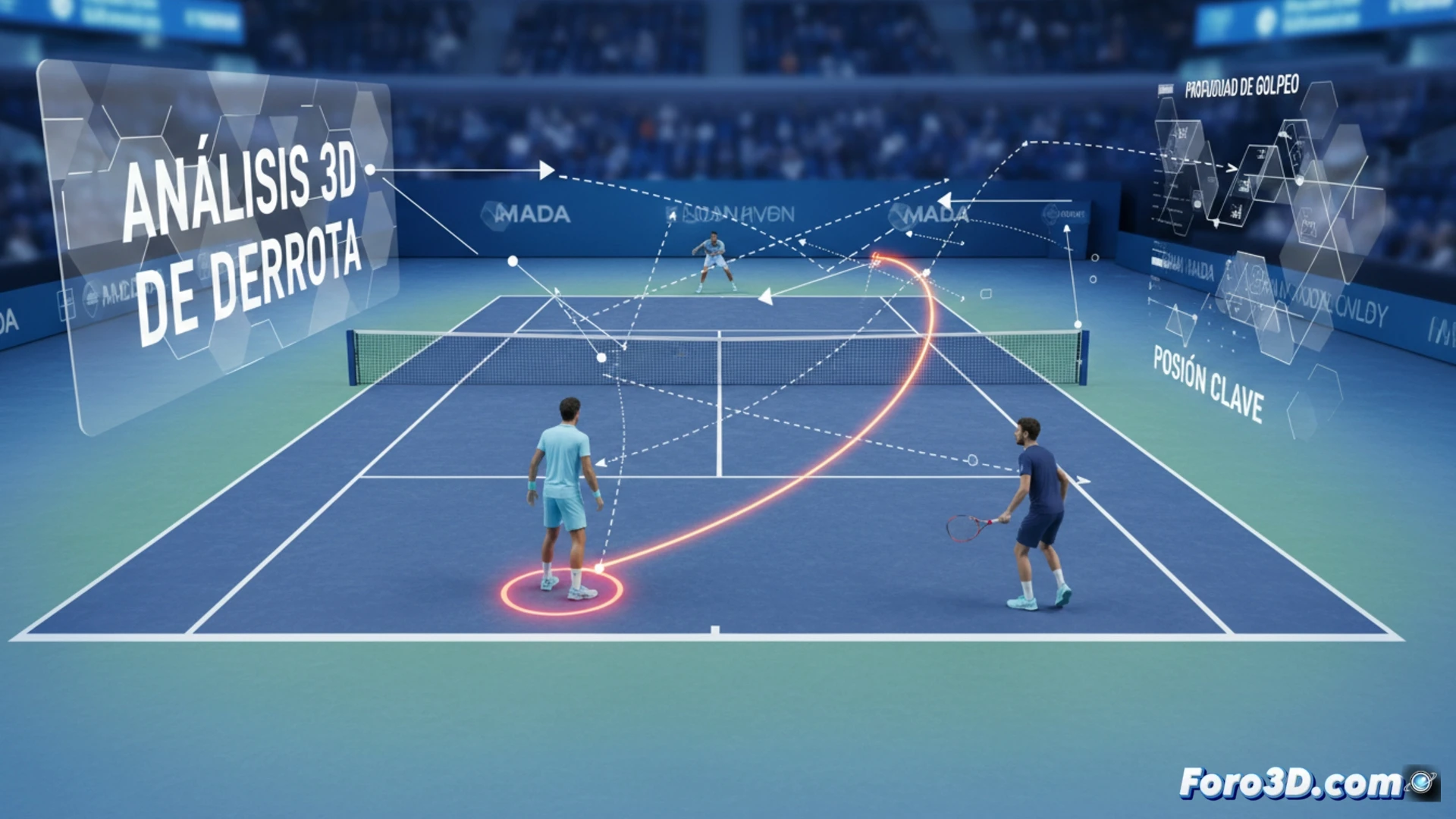
Through the 3D recreation of the match, we can analyze the biomechanics of the strokes. A model of Medvedev's serve would reveal the extreme precision and spin on the serve that complicated Alcaraz's return. Simultaneously, the simulation of ball trajectories in the tie-break would show how Medvedev optimized the angle and depth, pushing Alcaraz into defensive positions. This technology allows isolating key movements, such as the Spanish player's forehand preparation in moments of pressure, to evaluate efficiency and possible technical errors.
Tactical visualization as a learning tool 🗺️
The defeat is an ideal case study. An interactive 3D tactical map of the match would illustrate how Medvedev exploited repetitive patterns, something a flat analysis might overlook. For coaches and fans, these visualizations transform the understanding of the game, turning each point into a structured lesson on positioning, shot selection, and decision-making under stress, laying the foundation for continuous improvement.
How does the 3D analysis of strokes and movements reveal the tactical keys that Medvedev used to break Alcaraz's game at Indian Wells?
(P.S.: 3D VAR: now with replays from angles that didn't even exist)