The Cursa Patrimoni de Eivissa has written a historic page with absolute records despite the torrential rains. Dismas Yego and Mercy Chepwogen set exceptional times in the 10K. This unique scenario raises a fascinating question: how could 3D technology help us analyze and visualize these feats? Tools like environmental simulation or biomechanical modeling would allow us to dissect performance in adverse conditions.
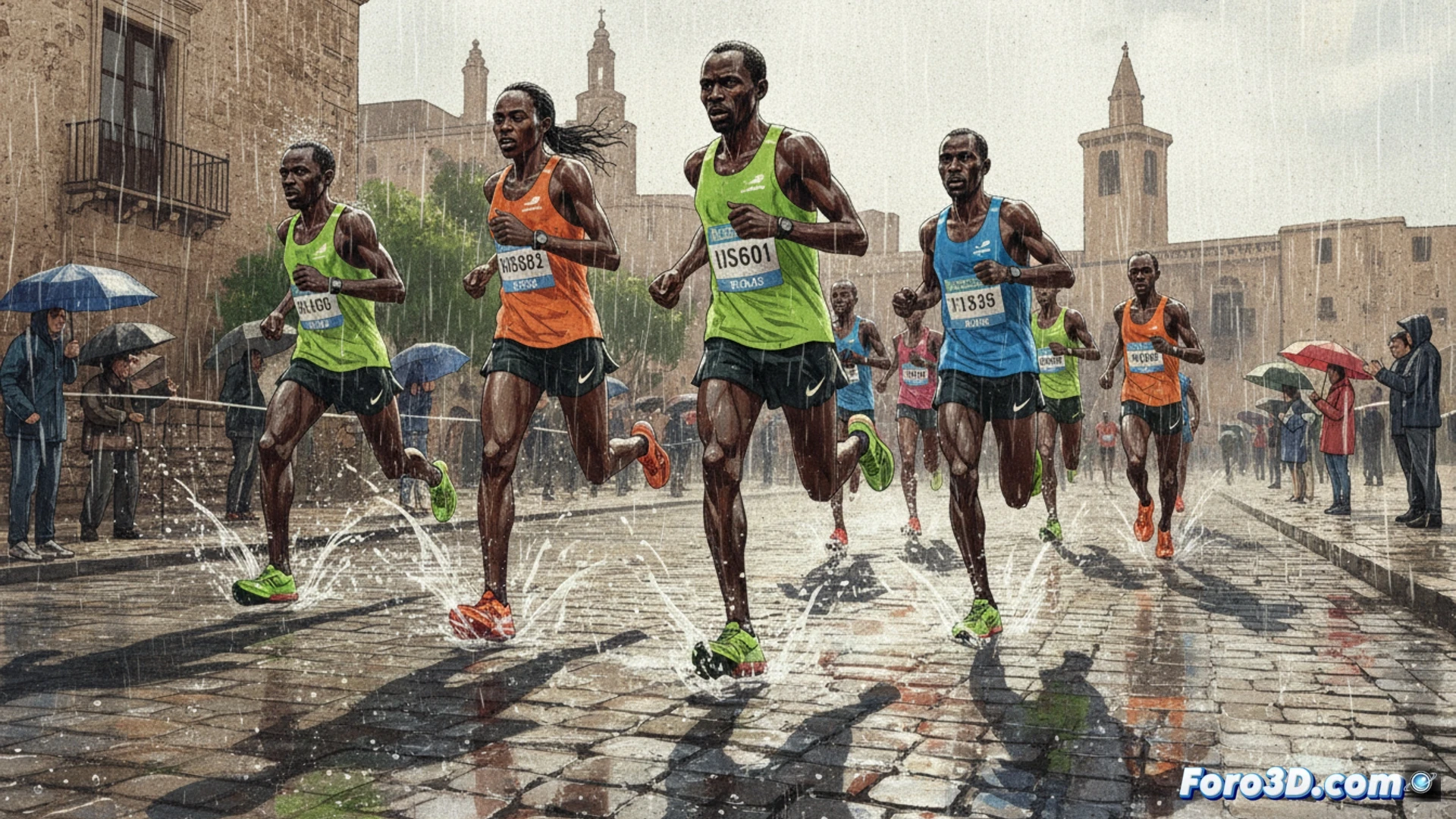
Photogrammetry and LiDAR: Recreating the patrimonial scenario and the race 🗺️
Imagine an interactive 3D model of the patrimonial route, created with LiDAR scanning and photogrammetry. Over this, we could overlay the trajectories and paces of Yego and Chepwogen, visualizing their pace changes on each hill and curve. The technology would allow simulating the same race in ideal weather conditions, offering an objective comparison of the real impact of the rain. Additionally, using sensors and 3D video, digital avatars of the athletes could be generated for a detailed biomechanical analysis of their stride and efficiency.
Beyond the stopwatch: Simulation as a training tool 🏃♂️
These 3D models go beyond post-race analysis. They could become simulators for future participants, allowing virtual training on the exact circuit. Studying the champions' strategy in a controlled 3D environment opens new frontiers for preparation. Technology not only explains the records but also offers a digital testing ground to inspire and forge the next winners in patrimonial races.
How can 3D analysis of athletes' biomechanics explain the optimization of performance in adverse conditions, such as the torrential rains that prevailed during the records of the Cursa Patrimoni de Eivissa?
(PS: 3D tactical simulation never fails, the players on the ground do)