The recent homage to Francisco Tenamaxtli, a 16th-century Caxcan leader, revives the foundational debate of the Valladolid Controversy on indigenous rights. This commemorative act transcends the historical to become a powerful gesture of activism in the present. In our niche, this raises a crucial question: how can digital tools and 3D serve not only to represent the past, but to activate critical awareness about struggles for dignity and justice? The answer lies in creating immersive experiences that make this legacy tangible.
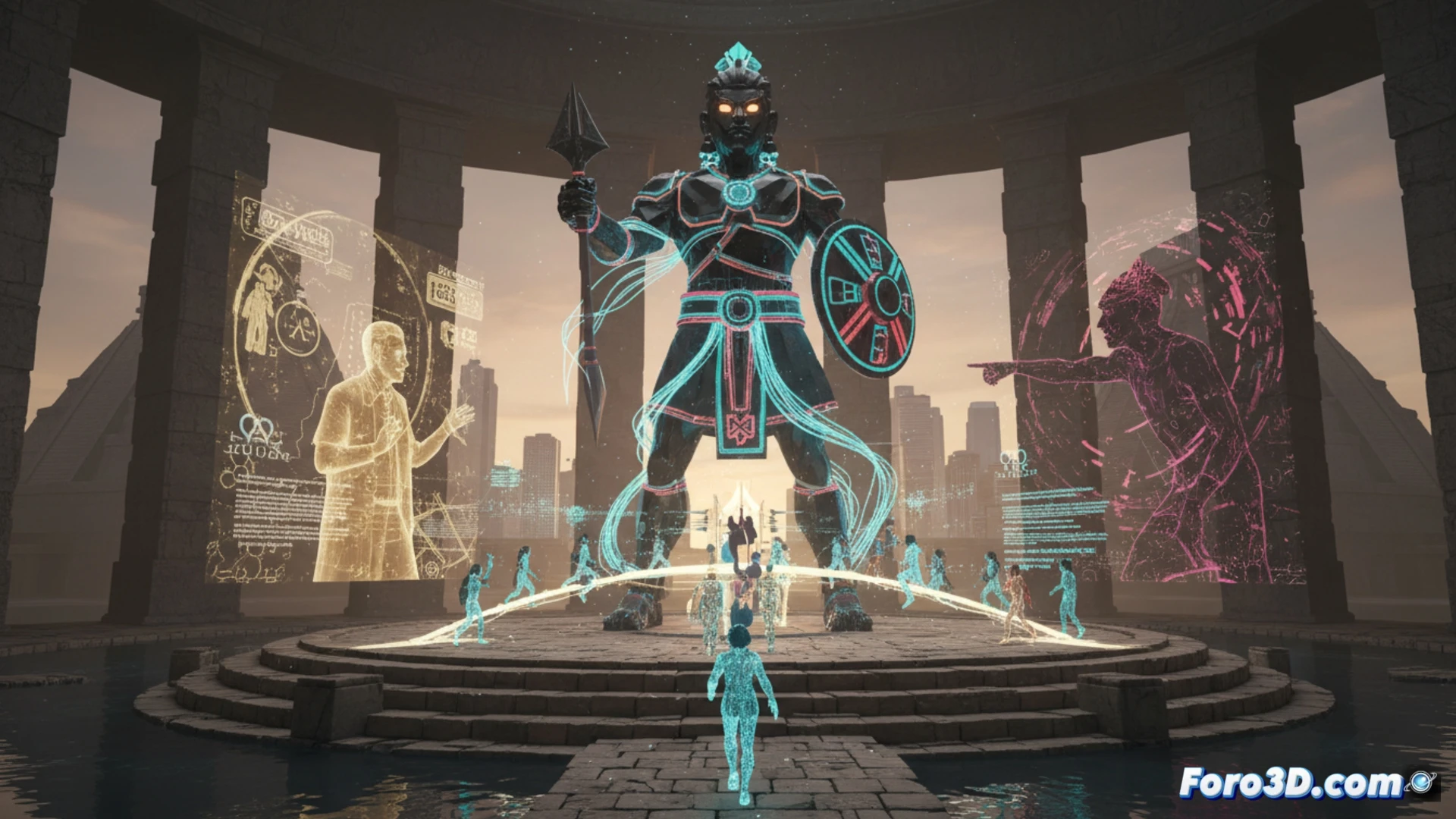
Technical proposal: an immersive historical memory experience 🗺️
We propose the development of a realtime 3D or virtual reality experience that reconstructs a key moment in this history. Imagine a rigorous 3D model of Tenamaxtli, based on historical research and consultation with communities, not as a mere asset, but as an interactive character. The environment could be a dual space: on one hand, Valladolid of the debate between De las Casas and Sepúlveda, with archives and voice-overs of their arguments. On the other, the Caxcan territory, showing the impact of colonial policies. The technology would allow the user to connect abstract discourses with concrete human consequences, using interactivity to foster empathy and understanding.
3D as a tool for justice and critical pedagogy ⚖️
This project would not be just an archaeological reconstruction. It would be a tool for digital activism. A well-documented 3D model of Tenamaxtli rescues him from iconographic anonymity, giving him presence and agency. An interactive experience on the Controversy transports a 16th-century theoretical debate into a 21st-century sensory experience, questioning hegemonic narratives. In forums, museums, or classrooms, this use of 3D serves to educate, make forgotten struggles visible, and ultimately, intervene in the present, demonstrating that technology is the perfect canvas for painting new memories.
How can 3D modeling and digital recreation of historical figures like Tenamaxtli transform collective memory and serve as a tool for cultural activism in the present?
(PD: at Foro3D we believe that all art is political, especially when the computer freezes)