In 1998, Nintendo released The Legend of Zelda: Ocarina of Time in Spain without a single line of text in Spanish. The dialogues came in English, French, and German. So that players wouldn't miss the story, the company included a 152-page guide with all the conversations translated, organized by character. You had to constantly pause the game to consult it.
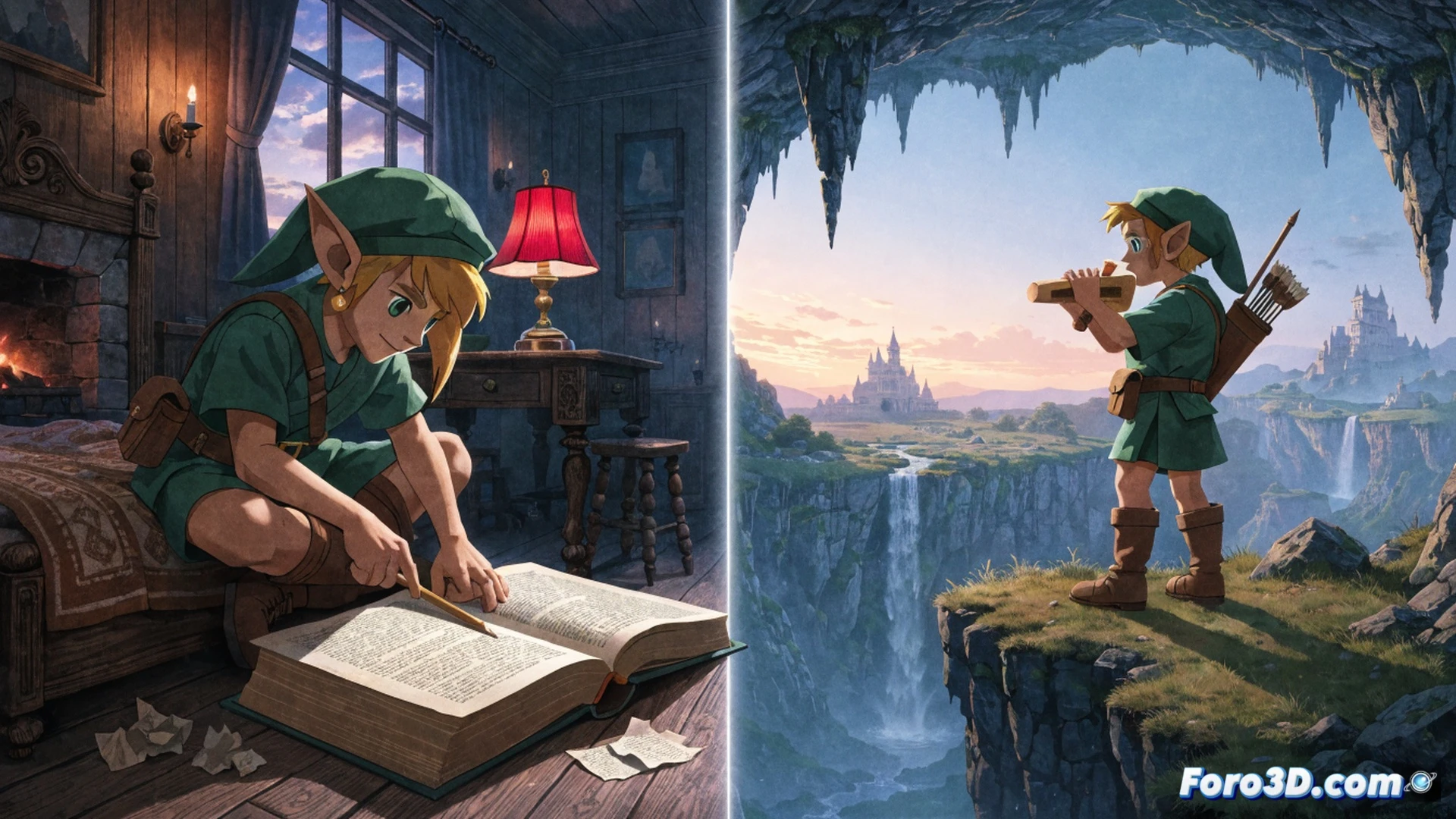
Offline translation: a paper guide as a technical patch 📖
Nintendo's solution was eminently practical: a 152-page manual with the dialogues translated into Spanish, structured by characters and events. The player had to locate the character they were interacting with and read the corresponding text. This involved pausing the game, searching the index, reading, and then resuming the game. It was a functional but slow system that broke the game's pace and required patience. Today, any digital localization patch is much more agile.
The manual that turned Link into an English teacher 📚
The 152-page guide not only served to follow the plot, but unintentionally became an intensive English course for many young people. Some took the opportunity to learn vocabulary while saving Hyrule. Others directly memorized the lines to pretend they understood the original. In the end, the game required two skills: handling the controller and handling a book. A rarity that brings smiles today.