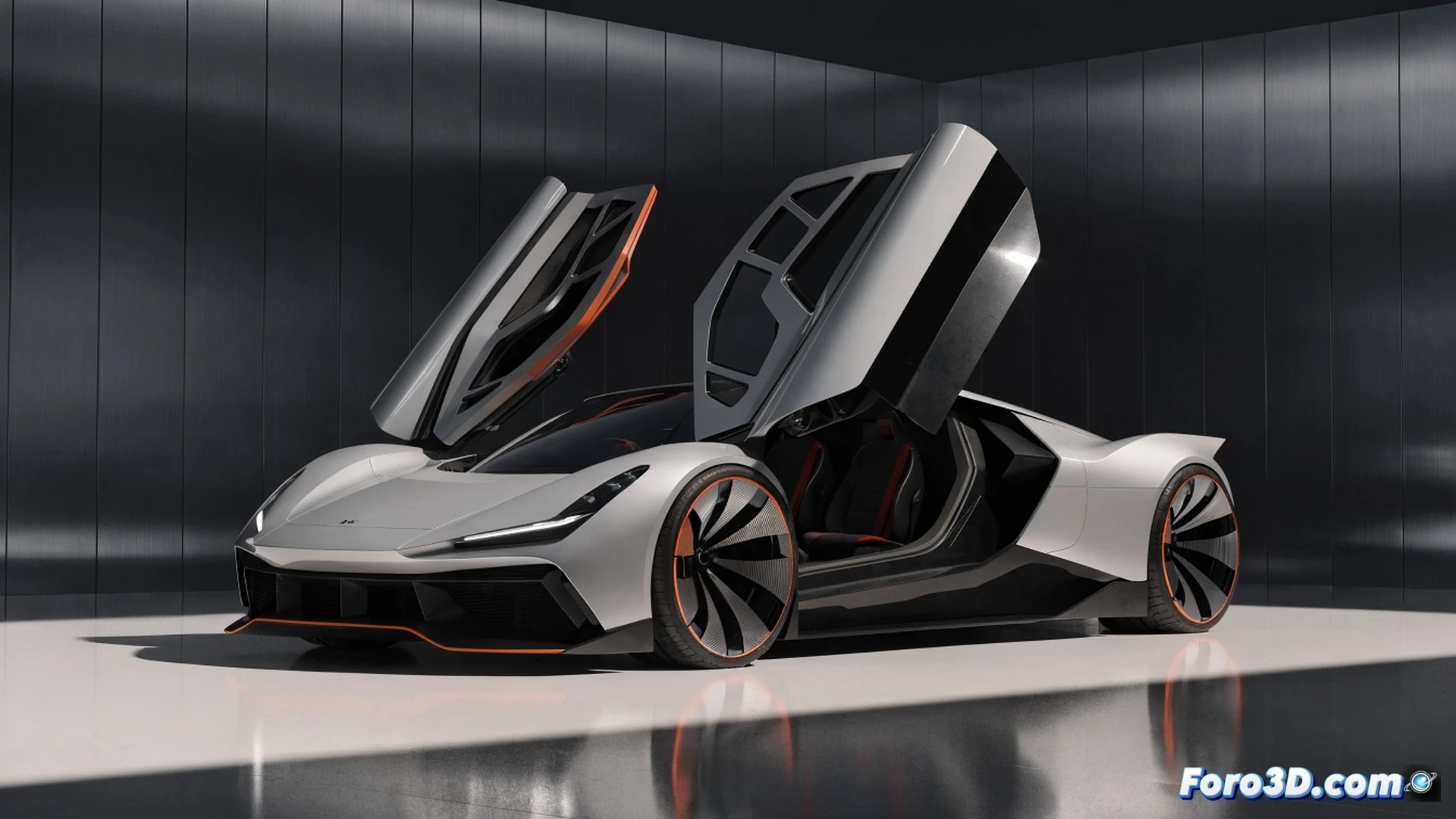
3D design has been trapped in a silent dictatorship for years: aerodynamic optimization as the ultimate goal. But the Zeekr 7GT arrives to prove that beauty doesn't have to be predictable. Its gull-wing doors respond not to a functional need, but to a deliberate act of visual poetry. It's a reminder that form can challenge function without losing meaning.
How 3D simulation enables controlled chaos 🌀
The Zeekr 7GT's design process didn't ignore physics, but used it as a starting point. Engineers modeled surfaces that generate controlled turbulence instead of avoiding it. The gull-wing doors, far from being a whim, required complex stress and kinematic analysis to ensure their opening in tight spaces. The result is a vehicle where every irregular line responds to a calculated decision, not an accident.
Perfect aerodynamics won't get you a date 💔
When a 3D designer spends hours polishing an aerodynamic coefficient of 0.20, the Zeekr 7GT arrives with doors that look like drunk gull wings. And it works. Because in the end, no one stops to admire a sedan that cuts through the wind like a knife. People turn their heads when they see something they don't fully understand. Like that friend who is always late but has the best stories. Perfection is boring; the unpredictable is captivating.