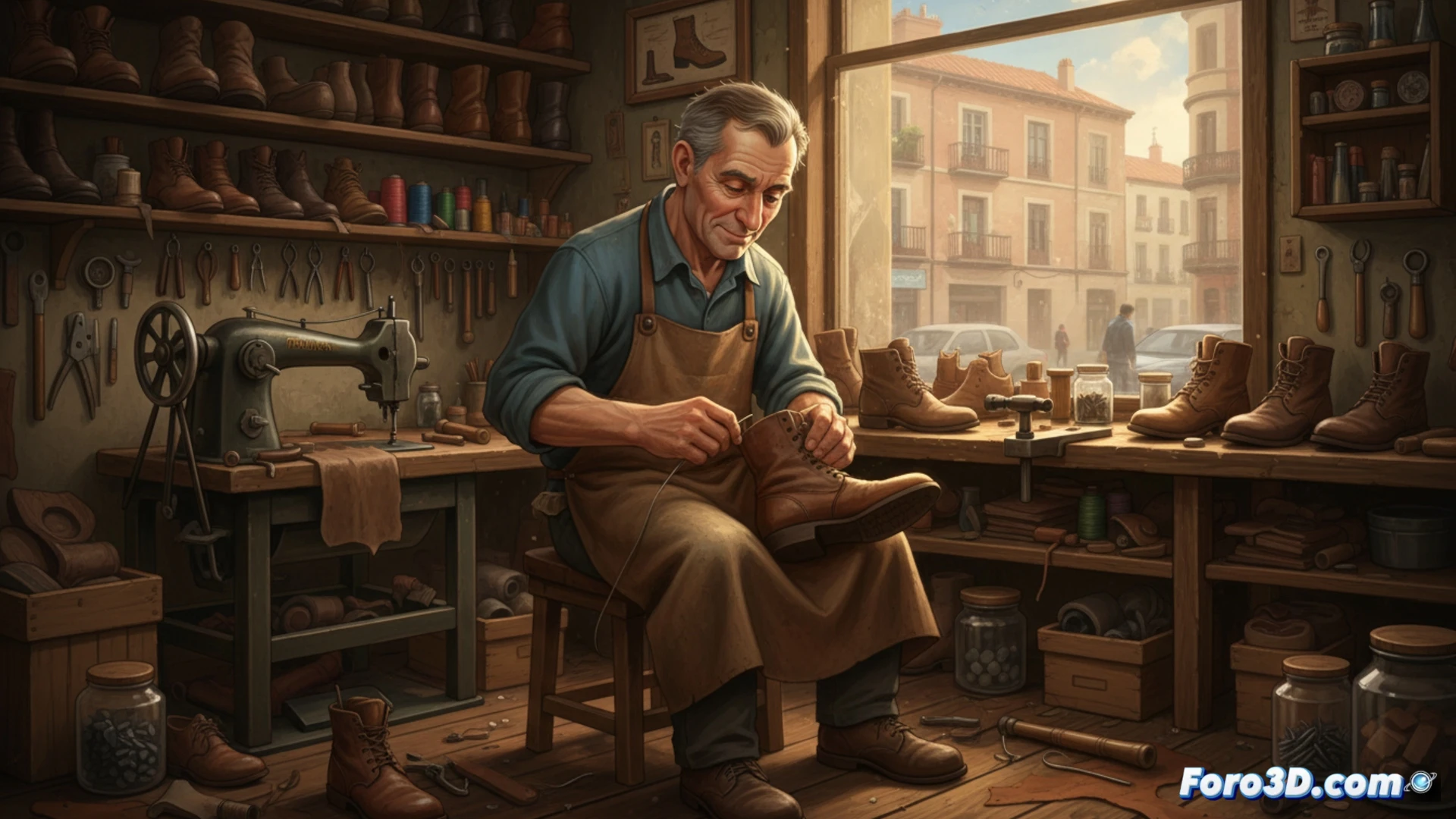
Juan Carlos Romeo has spent four decades repairing footwear and bags in the Delicias neighborhood with an artisanal approach. His workshop is an example of a trade in danger of extinction. Romeo himself estimates that within two years, most of these establishments will have closed. For residents, this means losing an economical and sustainable service that extends the life of everyday products, affecting both their wallets and responsible consumption.
The technology of mending: how a sewing machine saves more resources than an algorithm 🛠️
In the face of planned obsolescence, Romeo's work uses basic tools like lasts, waxed threads, and industrial sewing machines. Each repair avoids buying a new product, reducing waste and consumption of raw materials. While the industry drives rapid replacement cycles, the cobbler extends the life of footwear by three to five years using manual techniques. This artisanal process competes with market logic, where repairing is cheaper than buying new.
Goodbye to the cobbler: now it's time to buy disposable shoes 👟
When the last cobbler disappears, the solution will be to buy new footwear every two months. Since plastic and cheap rubber cannot be repaired, we'll have to congratulate the industry for selling to us faster. And if the sole comes off, maybe a YouTuber will teach us to glue it with superglue while the cobbler closes the workshop. Progress, they call it.