Israeli company XJet has announced a partnership with German firm 3D-Werk Black Forest to commercialize high-precision ceramic and metal 3D printing. The agreement targets sectors such as aviation, defense, and medical devices, with a testing center partially funded by German public funds. The NanoParticle Jetting technology promises complex parts with millimeter tolerances.
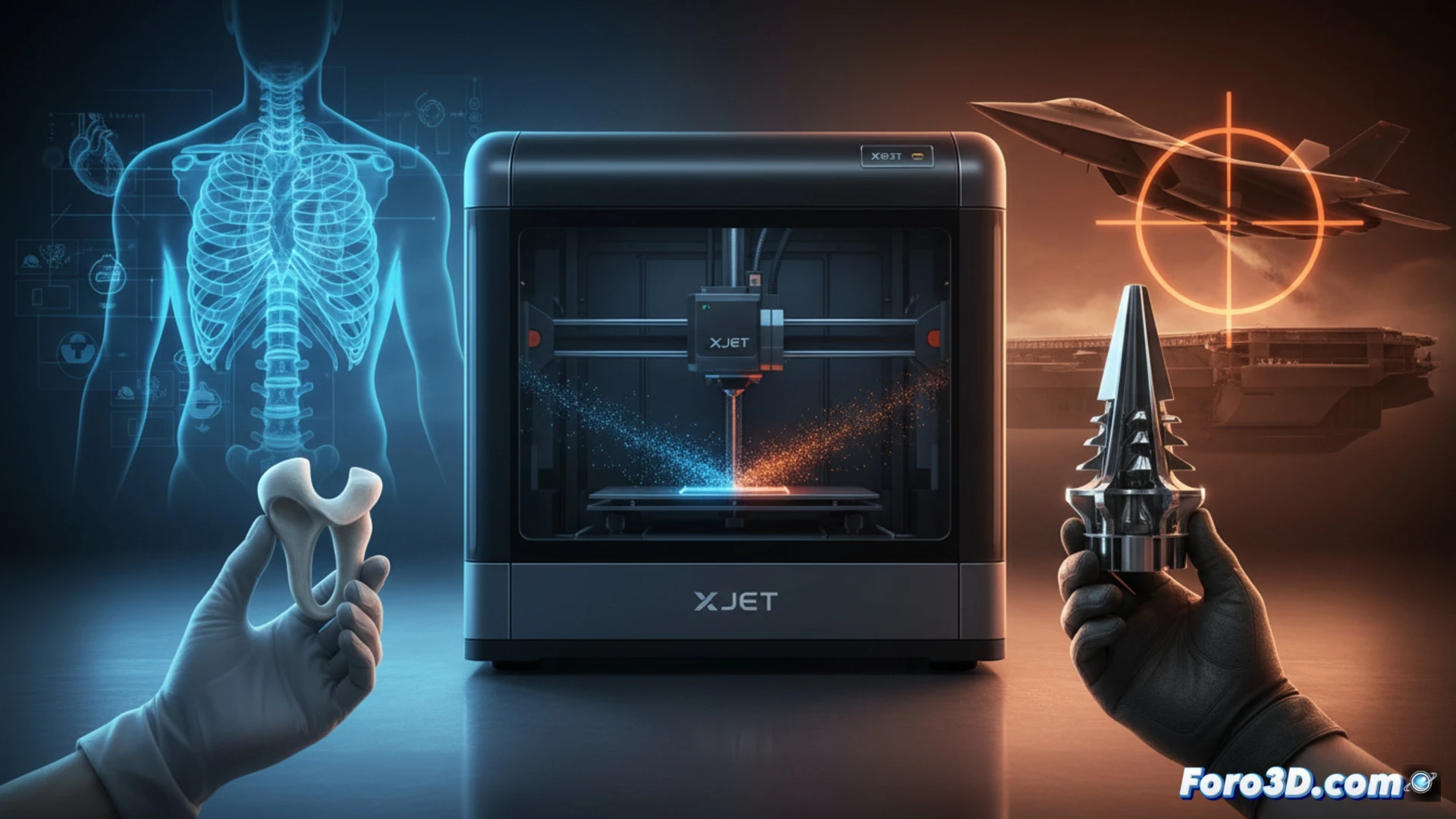
NanoParticle Jetting: Extreme Precision for Critical Components 🚀
The process uses nanoparticles suspended in a liquid that are deposited layer by layer, eliminating the need for thermal post-processing in some cases. XJet machines, with prices exceeding one million euros, are capable of manufacturing turbine blades, bone implants, and components for guidance systems. The resolution reaches 10 micrometers, a level of interest to both surgeons and missile manufacturers.
Germany Invests in Precision: The Citizen Pays, the Military Industry Uses 💰
The curious thing is that the German taxpayer funds a testing center so that a foreign company can sell machines worth over one million euros. So, while the average citizen saves up for a latte, large military corporations are vying to print parts for fighter jets. At least, if a war breaks out, the tanks will have some stunning finishes.