The recent summit between Xi Jinping and Kim Jong Un in Pyongyang left a notable void in the official agenda: North Korea's nuclear program. Sources close to the matter indicate that China, historically a mediator, has opted for strategic silence. This reflects a shift in stance where Beijing no longer pushes for denuclearization, assuming it is an unattainable goal under current global tensions.
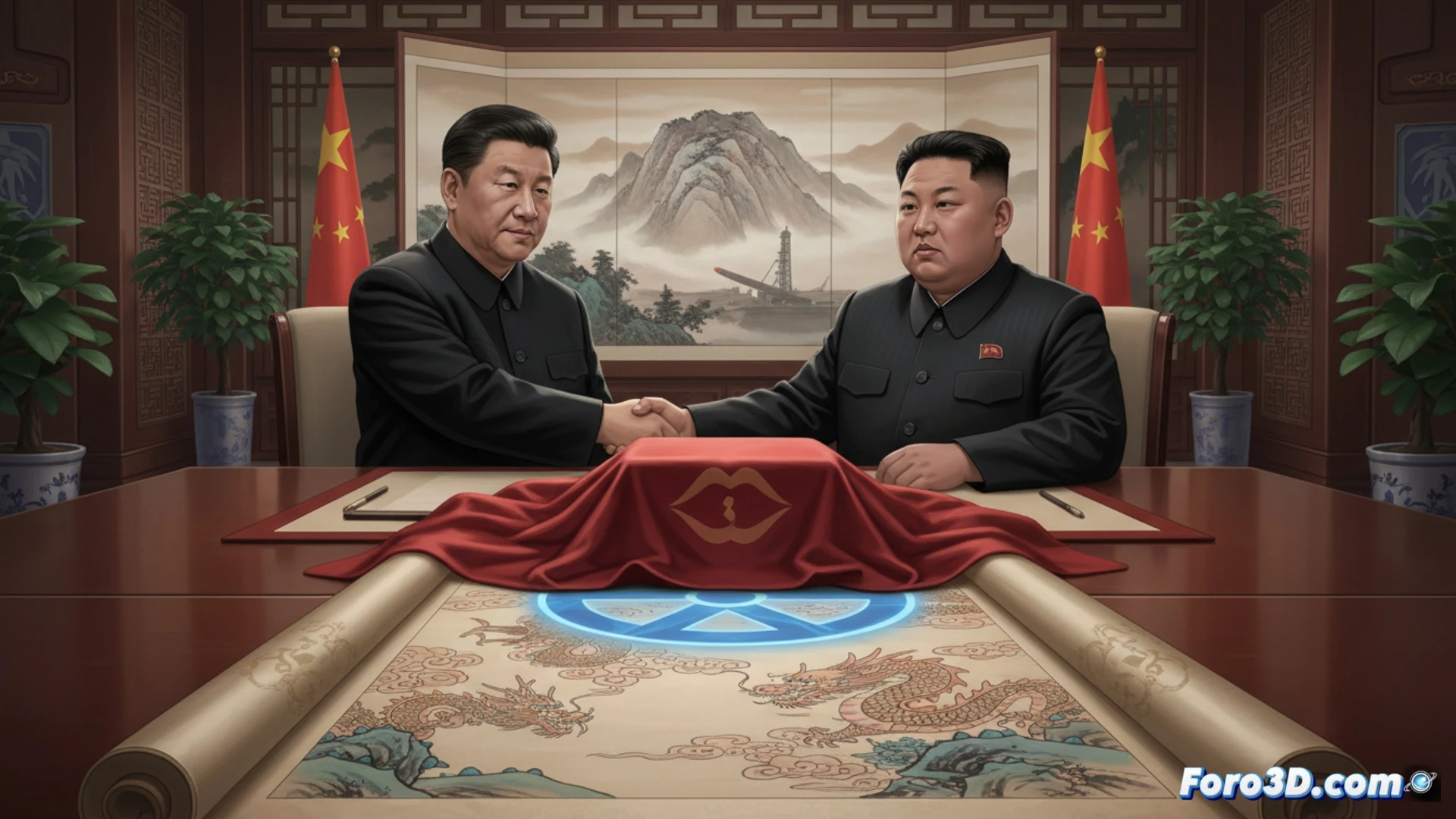
Missile technology: the engine accelerating diplomatic silence 🚀
North Korea has consolidated its technological capability with solid-fuel missiles and multiple reentry vehicles. These advances, documented in its recent tests, reduce the interception margin and increase its deterrent power. For China, insisting on denuclearization clashes with the reality of a program that has already surpassed critical stages. Diplomacy surrenders to rocket engineering.
The UN calls for denuclearization; Kim calls for more missile fuel 🛢️
While diplomats draft statements condemning the tests, North Korean engineers perfect their engines. The summit was an example of Asian courtesy: no one mentions the missiles, but everyone knows they keep flying. It's like asking a teenager to put down their phone; you know they won't, but at least you pretend to try. Kim's tie was more eloquent than any statement.