Scientists have detected the winds from our galaxy's black hole, Sagittarius A*, thanks to the ALMA and Chandra telescopes. The finding reveals a cone devoid of cold gas, evidence of these winds that were previously hidden by radio interference. A cosmic marvel that, for now, has no practical application for your daily life. 🌌
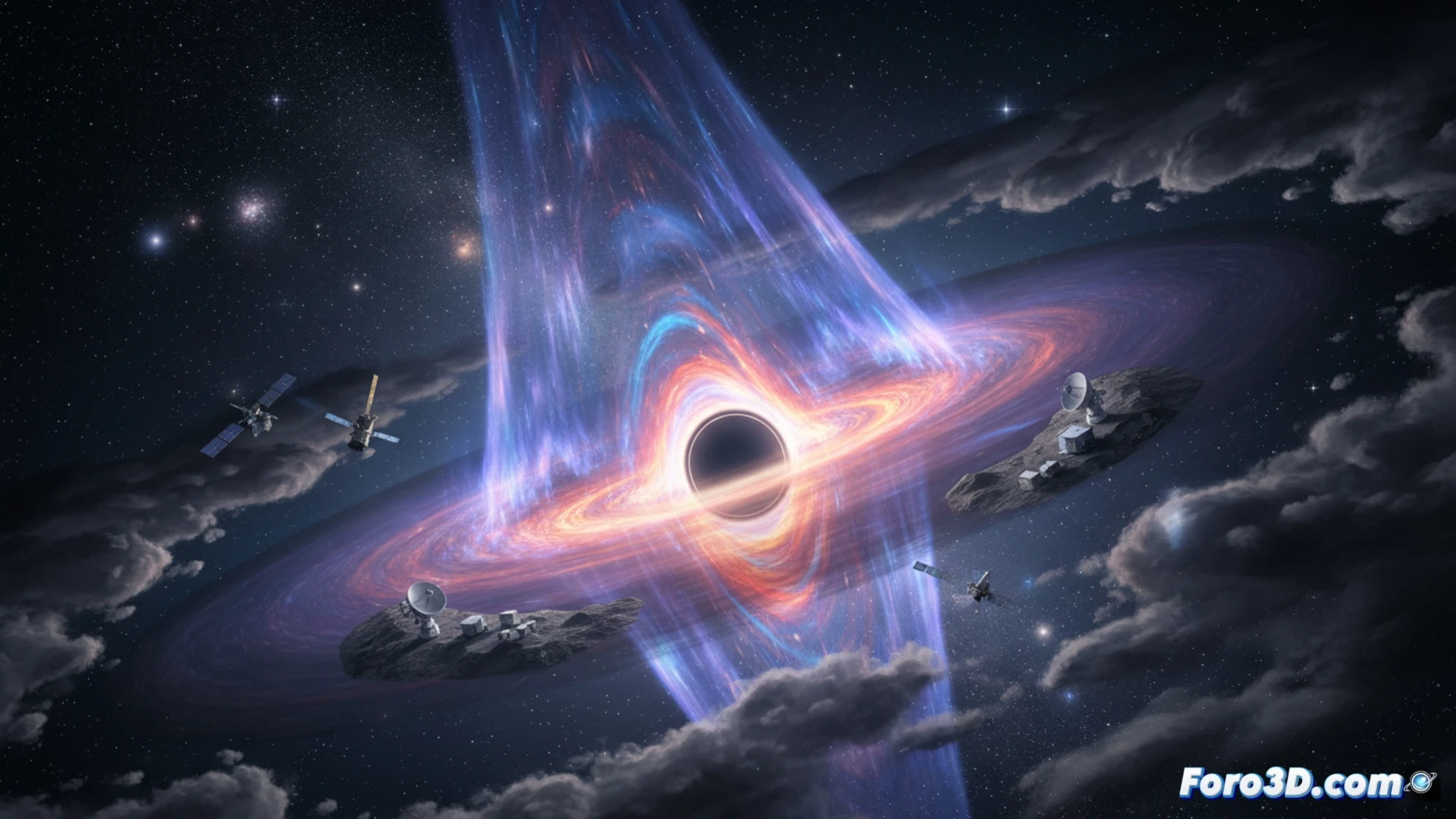
The cost of staring into the void with elite technology 💸
The ALMA and Chandra radio telescopes are elite facilities, with observation time assigned to a handful of scientists. This discovery confirms decades-old theories about black hole winds, but it is sold as a novelty. Meanwhile, public funding allocated to these projects could have gone to medical or energy research. The social return is questionable.
Black hole: the headline that always works 📰
The citizen reads "black hole" and marvels, but their quality of life does not improve one bit. Astrophysicists justify these studies with the argument of understanding the universe, but the truth is that black holes are an academic niche that generates headlines to attract more funding. Meanwhile, cuts in education and healthcare continue. At least, the winds of Sagittarius A* won't ask you to pay the rent.