Excessive vibration in hospital centrifuges not only generates annoying noise but also compromises the integrity of biological samples. When the rotor loses balance, uneven centrifugal forces can lyse cells, precipitate unwanted components, or mix serum phases, ruining critical analyses such as coagulation tests or viral counts. In a clinical setting, this translates into misdiagnoses and costly repetitions.
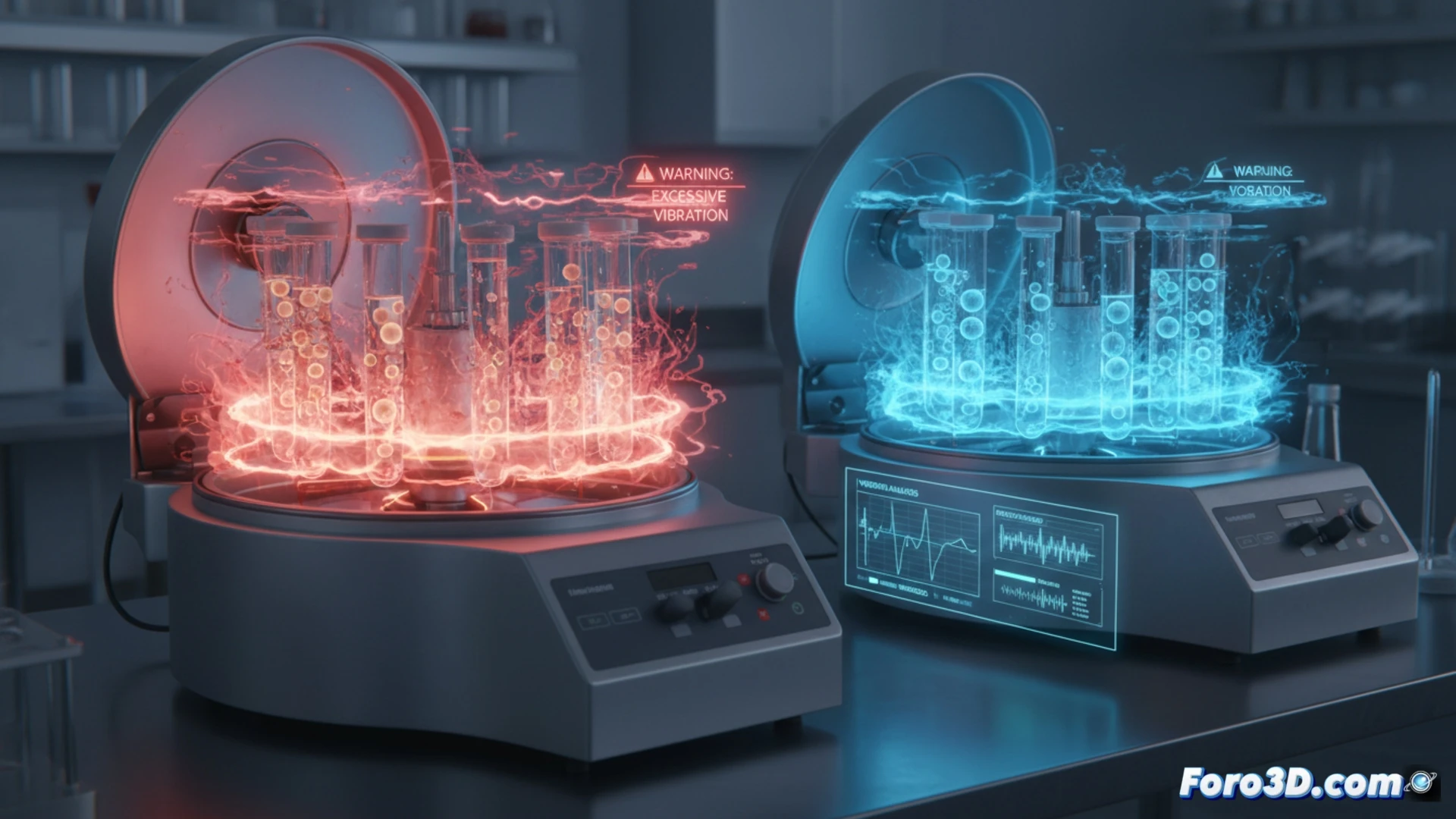
3D Simulation for Dynamic Rotor Balancing 🌀
3D digital twin technology allows precise modeling of the rotor's geometry and mass distribution along with the sample tubes. Through finite element analysis, the amplitude and frequency of vibrations can be predicted before they occur. By virtually simulating the placement of counterweights or the redistribution of tubes, clinical engineers optimize balance without stopping the equipment. This approach reduces residual vibration below 0.5 mm/s, a safe threshold for the integrity of sensitive samples such as DNA or labile proteins.
Towards Predictive Maintenance in the Laboratory 🔧
Implementing digital twins not only improves diagnostic accuracy but also transforms maintenance into a predictive task. By recording the evolution of vibrations in the 3D model, wear on bearings or rotor deformations can be anticipated. The next step is to integrate IoT sensors that feed these models in real time, enabling automatic adjustments. 3D biomedicine not only designs prosthetics; it also optimizes the mechanical heart of the laboratory: the centrifuge.
How can a 3D digital twin of a centrifuge predict and correct in real time the vibration patterns that compromise the integrity of biomedical samples?
(PS: If you 3D print a heart, make sure it beats... or at least that it doesn't cause copyright issues.)