The Spanish labor market faces the summer of 2026 with a fixed snapshot: over 1.3 million workers in cleaning and hospitality. 86% of cleaning staff are women, while foreign workers reach a record 30%. Temporality and precariousness mark these positions, essential for the summer economy but with little presence from other productive sectors.
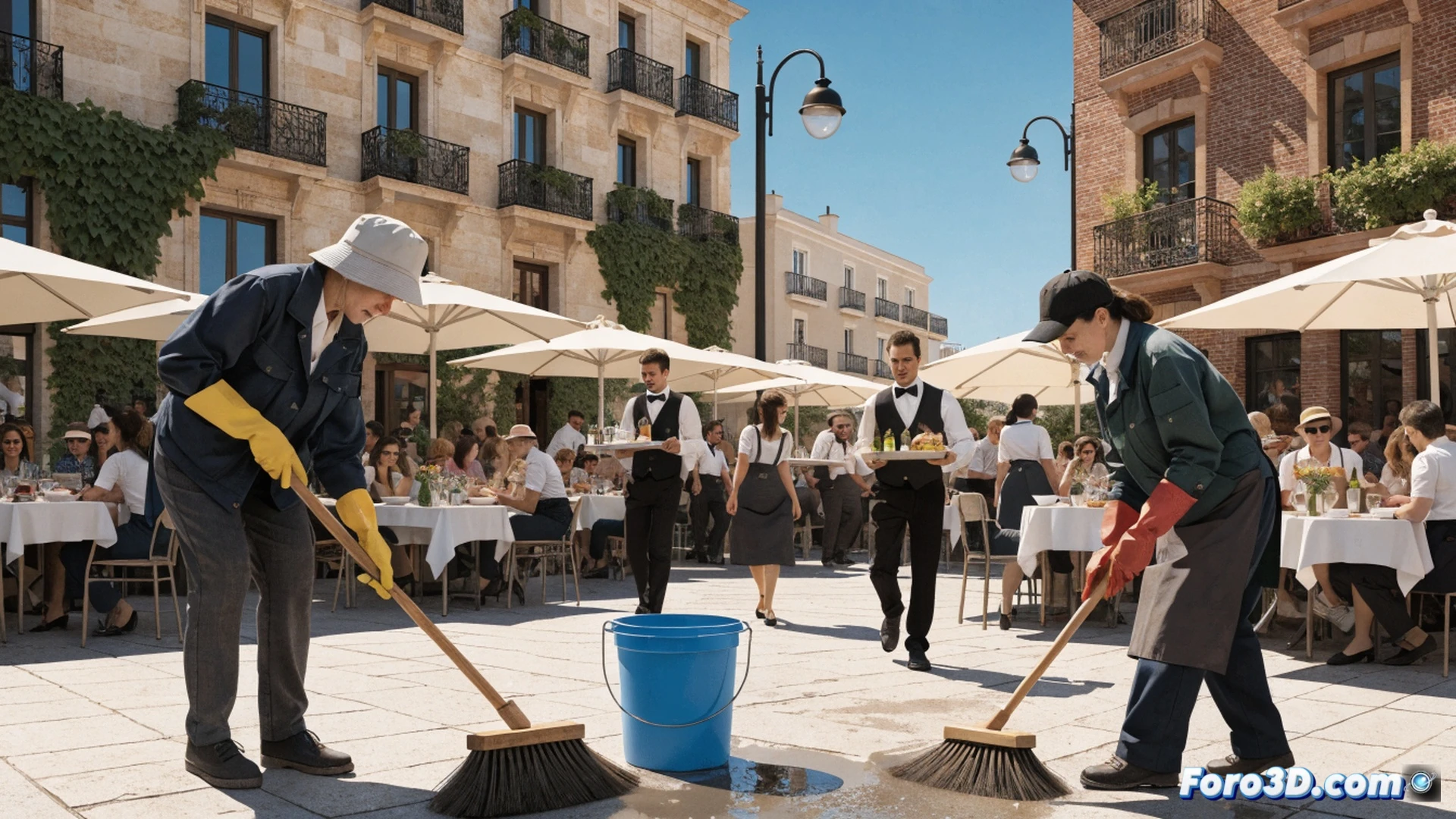
Selective automation: robots that mop, but don't serve drinks 🤖
Technological development advances in specific niches: cleaning robots in hotels and digital ordering systems reduce operational load. However, the complexity of customer service and the flexibility of schedules in hospitality slow down mass automation. Shift management platforms and express hiring apps are the most adopted digital tools, optimizing processes without eliminating dependence on the human factor in non-standardized tasks.
The drama of having a degree and ending up washing dishes with honors 🍽️
While data confirms that washing dishes and waiting tables are the jobs of the summer, many higher education graduates discover that their master's degree does not exempt them from the mythical question: with or without ice?. Precariousness is the social glue: everyone, from the engineer to the philosopher, shares the same job uncertainty. At least, cleaning experience prepares you for any crisis: you know the floor can always be mopped more.