The Emergency Department of the Hospital Clínico de Zaragoza is experiencing a critical situation with nearly a hundred patients in hallways and waiting rooms. Many are waiting in wheelchairs or on stretchers, and almost twenty admissions are pending a bed. For citizens, this translates into endless waits and a lack of space to receive urgent care. The conclusion is that the public healthcare system cannot cope, directly affecting the health and well-being of patients.
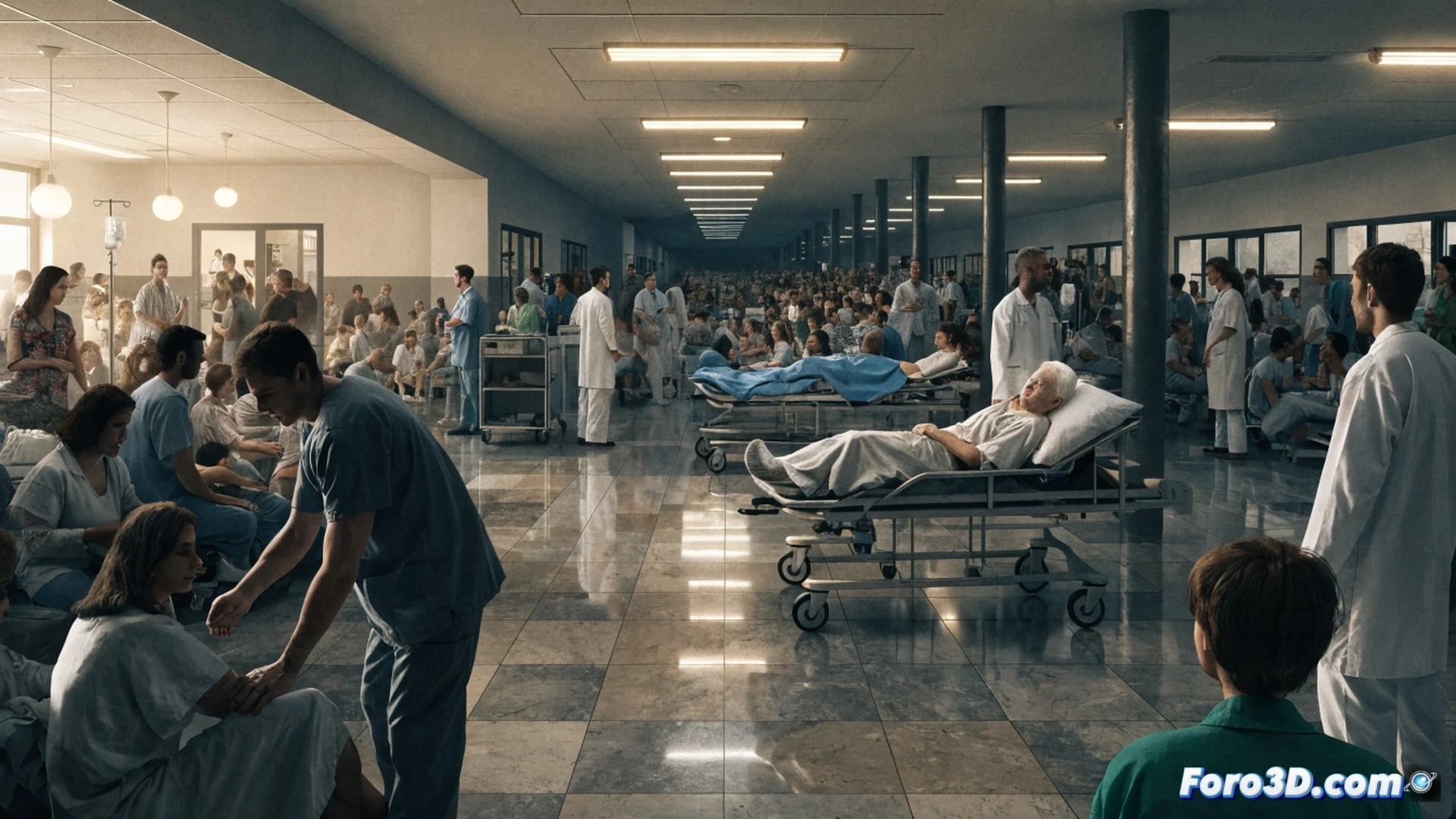
Flow management: technology to unclog the hallways 🏥
Faced with the collapse, patient flow management using advanced triage software could alleviate the pressure. Systems such as the prioritization algorithm based on machine learning allow classifying emergencies in seconds, reducing waiting times at admission. A real-time bed tracking app, connected to the hospitalization floors, would facilitate the assignment of admissions. Telemedicine for non-critical cases would also free up space in emergency rooms, preventing mild patients from occupying stretchers for hours.
The technological solution: a GPS to find your bed 📍
The definitive solution would be to install a GPS on each patient to locate them among the hallways. Thus, doctors could use an Uber-like app to know if the patient in the red chair is still in the third row or has moved to the elevator. Meanwhile, those waiting on stretchers could request a premium service with a USB charger and wifi, because if you have to wait eight hours, at least let it be with entertainment and phone battery.