The E. coli K1 bacterium, harmless in adults, becomes lethal for newborns during childbirth. Swiss researchers have developed a treatment that uses a virus to force the bacterium to shed its protective layer. This allows the baby's immune system to eliminate it without antibiotics. The breakthrough aims to prevent meningitis in the most vulnerable. 🧬
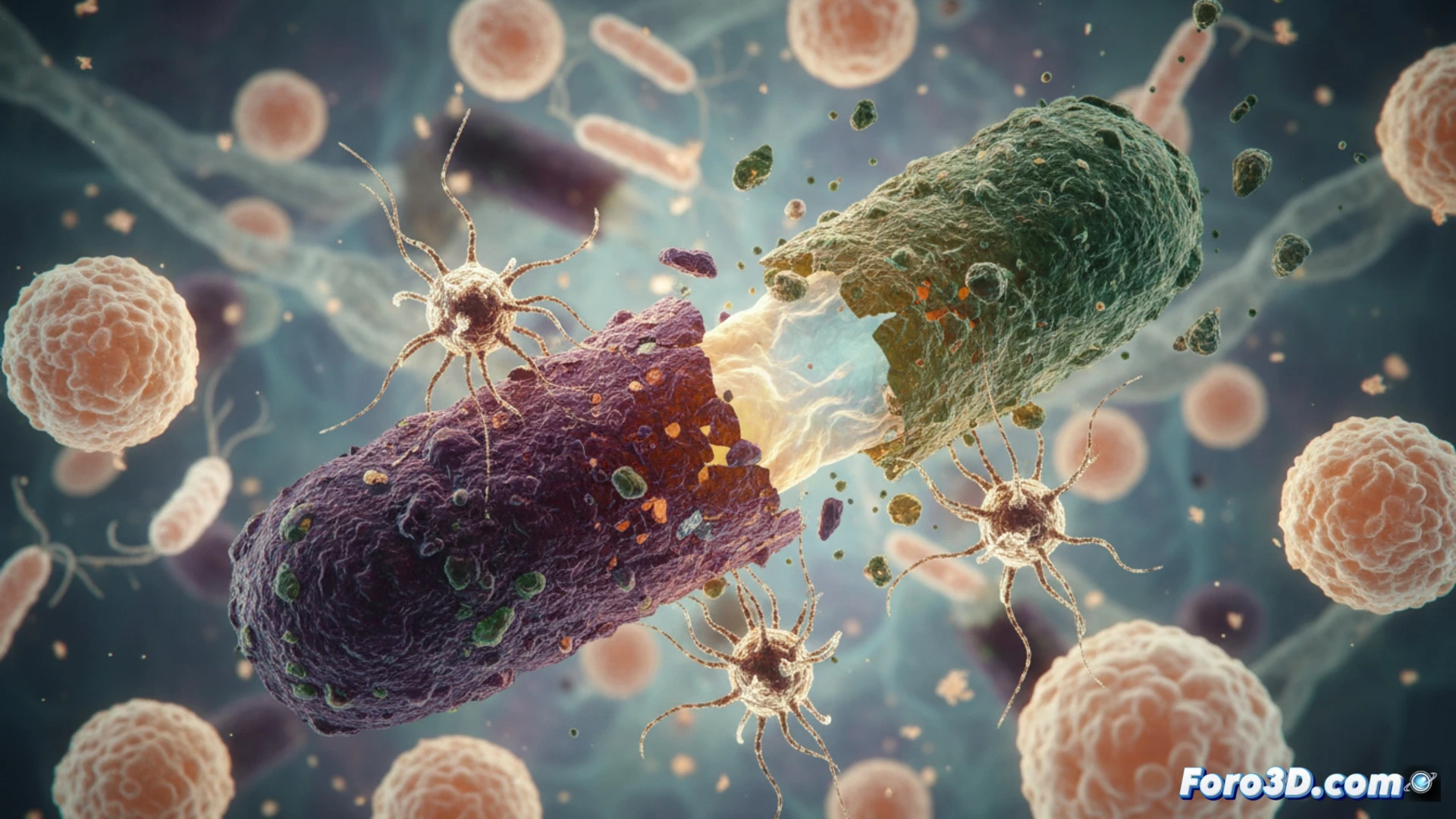
How a phage strips the bacterium and leaves it defenseless 🦠
The team at the Swiss Federal Institute of Technology (ETH Zurich) designed a bacteriophage that recognizes the coating of E. coli K1. Upon infecting it, it forces the bacterium to produce enzymes that degrade its own polysaccharide layer, leaving it exposed. Without this armor, the bacterium becomes vulnerable to the neonatal immune system. Tests in cultures and animal models showed a significant reduction in infection. The treatment would be administered to carrier mothers before childbirth, preventing transmission to the baby.
The bacterium, naked and without armor: this is how it faces its end 😈
E. coli K1 thought it was clever carrying its polysaccharide shield everywhere. But a Swiss virus arrived with orders to strip it and leave it bare before the baby's defenses. Now the bacterium rushes to shed its layer, not because of heat, but because a phage forces it. Good thing there are no mirrors in the gut, because the shame would be worse than meningitis.