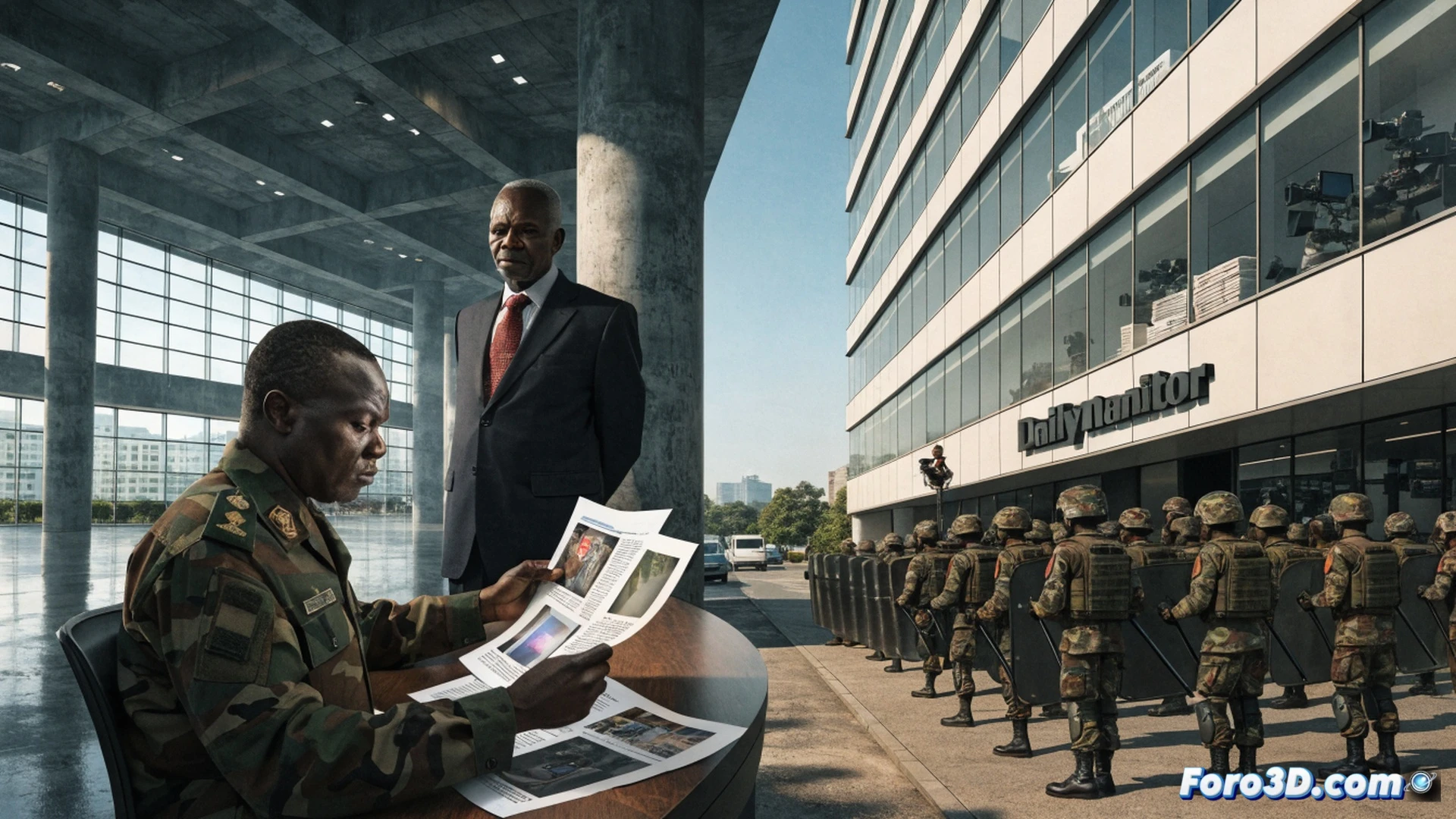
Ugandan military chief Muhoozi Kainerugaba ordered the closure of the Daily Monitor newspaper and NTV, arguing that he does not believe in a free press. The measure, backed by his father President Museveni, leaves citizens without access to independent information and reinforces information control in the country, reducing critical voices.
The technology of silence: digital censorship and networks under surveillance 📡
The closure of traditional media is complemented by growing technological control. Authorities have intensified surveillance on digital platforms, using monitoring tools to track journalists and activists. The lack of access to truthful information pushes citizens to rely on social networks, where censorship and misinformation are commonplace. Without an independent press, transparency weakens and freedom of speech becomes a luxury for the few.
Free press: the new public enemy number one 😅
It seems that in Uganda, the free press competes with mosquitoes on the regime's enemy list. If you shut down one outlet, people find out through another; if you shut down all of them, people find out through market gossip. But of course, it's easier to silence journalists than to answer uncomfortable questions. In the end, the only headline that survives is the one they write themselves.