Donald Trump stated that Israel and Hezbollah agreed to stop fighting, but Israeli Prime Minister Benjamin Netanyahu contradicted the announcement by warning they will attack Beirut if the Lebanese group continues its attacks. Citizens face uncertainty about regional security, with potential impacts on energy prices and travel. The peace agreement is not firm and violence could resume, affecting stability in the Middle East.
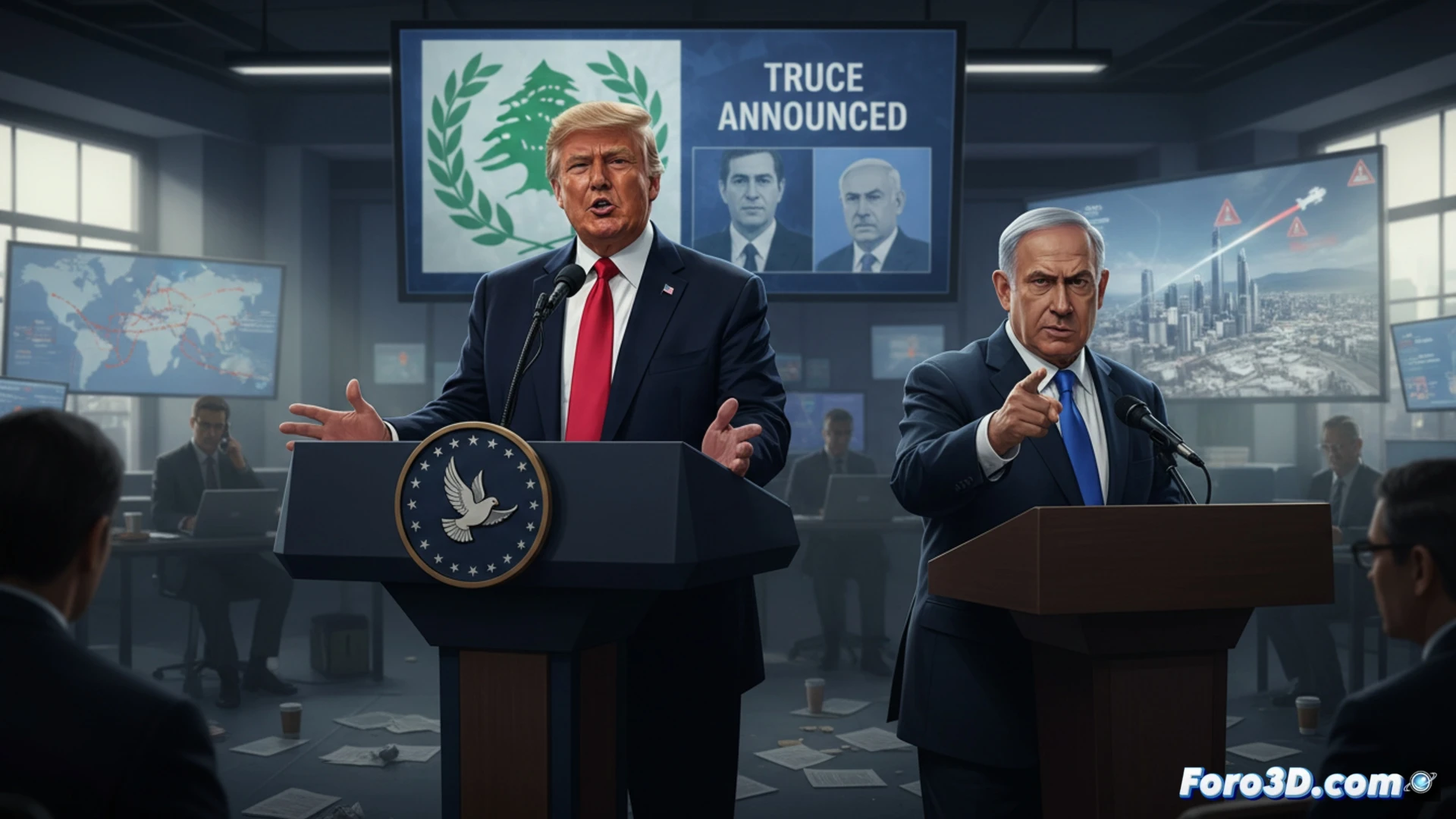
How instability in the Middle East affects travel and energy technology 🛢️
Uncertainty in the region directly impacts the development of air navigation systems and commercial flight routes. Airlines are already evaluating detours that increase fuel consumption, raising operational costs. In the energy sector, volatility in crude oil prices forces trading software companies to recalibrate prediction algorithms. The lack of a solid ceasefire delays technology infrastructure projects in the area, such as fiber optic networks and data centers.
Peace is like a mobile phone battery: it lasts a short time and drains quickly 📱
While Trump was toasting with virtual champagne for peace, Netanyahu was already sharpening pencils to draft new threats. It seems the ceasefire agreement has the same consistency as a WiFi network in the middle of the desert: it promises a connection, but as soon as you take a step, it cuts out. Citizens only hope that the next round of negotiations does not include a debate over who pays the bar tab where the supposed armistice was signed.