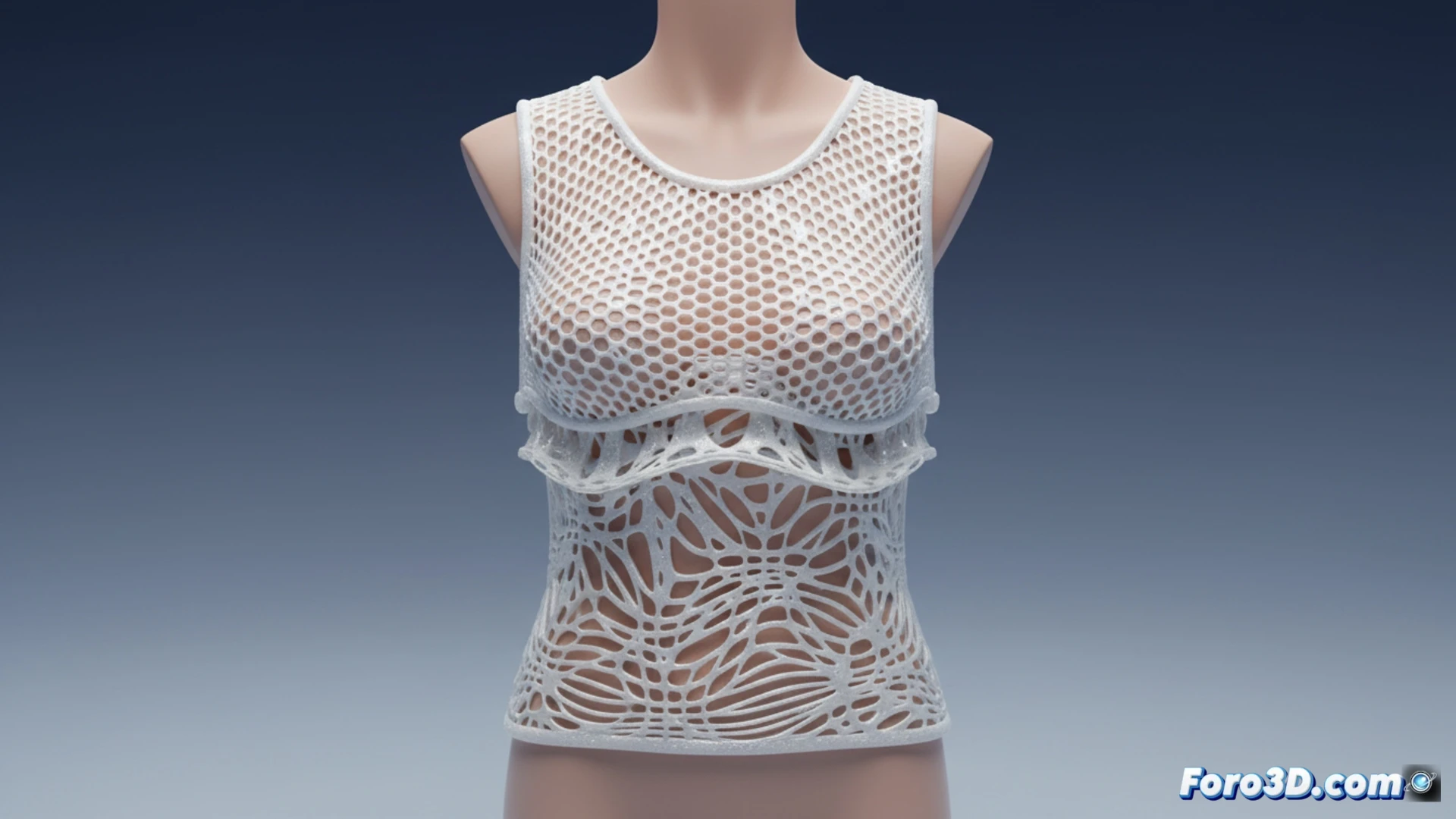
3D printing applied to fashion is breaking molds, and the latest example is a sleeveless top designed to combat summer heat. This garment, manufactured in a single piece, combines an outer hexagonal mesh layer with an inner undulating lattice. The secret lies in the airtight air chambers generated between the two layers, creating a passive insulation and ventilation system that keeps the skin cool without sacrificing structure.
Parametric design and technical workflow 🔧
To achieve this complex geometry, the process begins in parametric modeling software. Rhino 3D with Grasshopper is the ideal choice for generating the outer hexagonal mesh using equation-based patterns, while the inner undulating lattice is designed with sinusoidal curves that maximize airflow. Blender also works with its wireframe modifier and remeshing. The key is to fuse both layers by sealing the edges to create airtight air chambers. Regarding materials, TPU with a hardness of 85A or Filaflex 70A is recommended for the outer layer, and a softer TPU (90A) for the inner layer, ensuring that the print seams are airtight. Printing parameters should include a layer height of 0.12 mm and 100% flow on the joining walls.
Active breathability against extreme heat 🌡️
What makes this top innovative is not just its aesthetics, but its thermal functionality. The air chambers trapped between the mesh and the lattice act as a thermal cushion: sweat evaporates in the inner layer, while the outer hexagonal mesh allows wind circulation, creating a chimney effect. Unlike conventional fabrics, this structure does not soak through, does not stick to the skin, and allows for constant passive cooling. It is a clear example of how additive manufacturing can overcome the limitations of traditional textiles in hot climates.
How is it achieved that the hexagonal mesh and undulating lattice in a double-layer 3D printed top provide breathability and structural support without compromising the flexibility necessary for wearing comfort?
(PS: Designing fashion in 3D has the advantage that you never have to sew a button.)