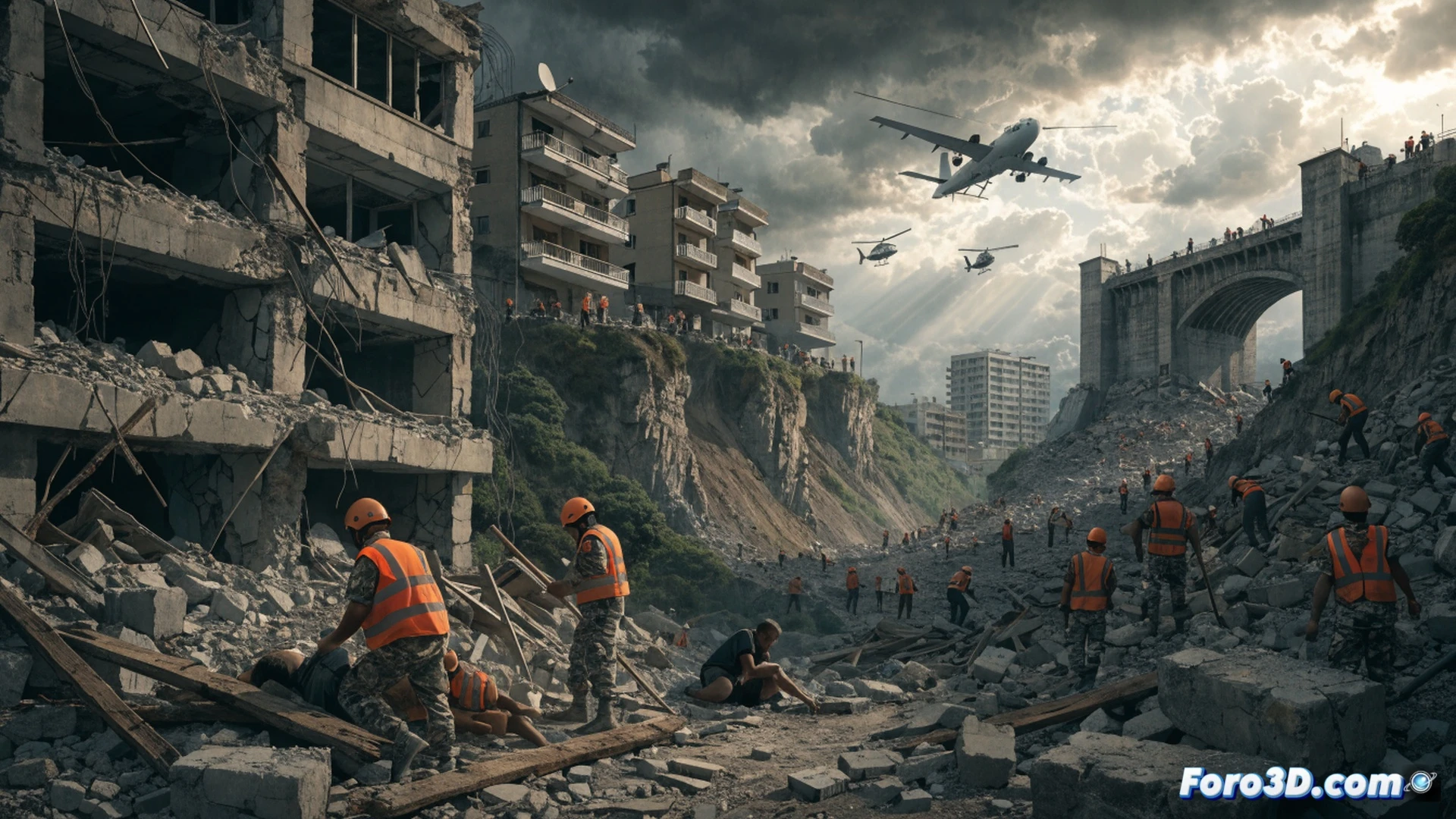
Two earthquakes of 7.2 and 7.5 magnitude devastated Venezuela, leaving 920 dead, 3,360 injured, and thousands missing. Over 520 rescuers from the European Union and the United States are searching for survivors among the rubble of buildings, hospitals, and shopping centers. International aid is trying to save lives, but the magnitude of the destruction hinders recovery. The priority is to rescue those trapped, although the impact on housing and services will be enormous.
Seismic technology: failures in early warnings 🚨
Venezuela's seismic alert systems did not issue warnings with sufficient advance notice. Motion sensors on active faults detected the first tremors, but the communications network collapsed before spreading the alarm. Experts point out that the monitoring infrastructure requires more robust sensors and redundant transmission protocols. Without these adjustments, future events could repeat the lack of prevention. Investment in detection and mass alert technology is an urgent need to reduce casualties.
New buildings: seismic guarantee until the first tremor 🏚️
Local builders assured that their buildings could withstand any earthquake. After the earthquakes, those same buildings look like houses of cards after a kick. The rubble does not distinguish between marketing promises and reality. At least the rescuers have guaranteed work for weeks. Next project: houses that don't fall down at the first sneeze of the earth. Or at least leave a gap to breathe between the bricks.