A new technology allows any standard mobile phone to connect directly with low-orbit satellites, eliminating the need for special antennas or additional hardware. This solves the problem of lack of coverage in remote areas, during natural disasters, or in isolated rural regions. For users, it means being able to send text messages and share their location from anywhere on the planet. Although it is a temporary solution before satellite 5G, it already offers a concrete improvement in emergencies and areas without signal, bringing global connectivity closer without extra costs on the device.
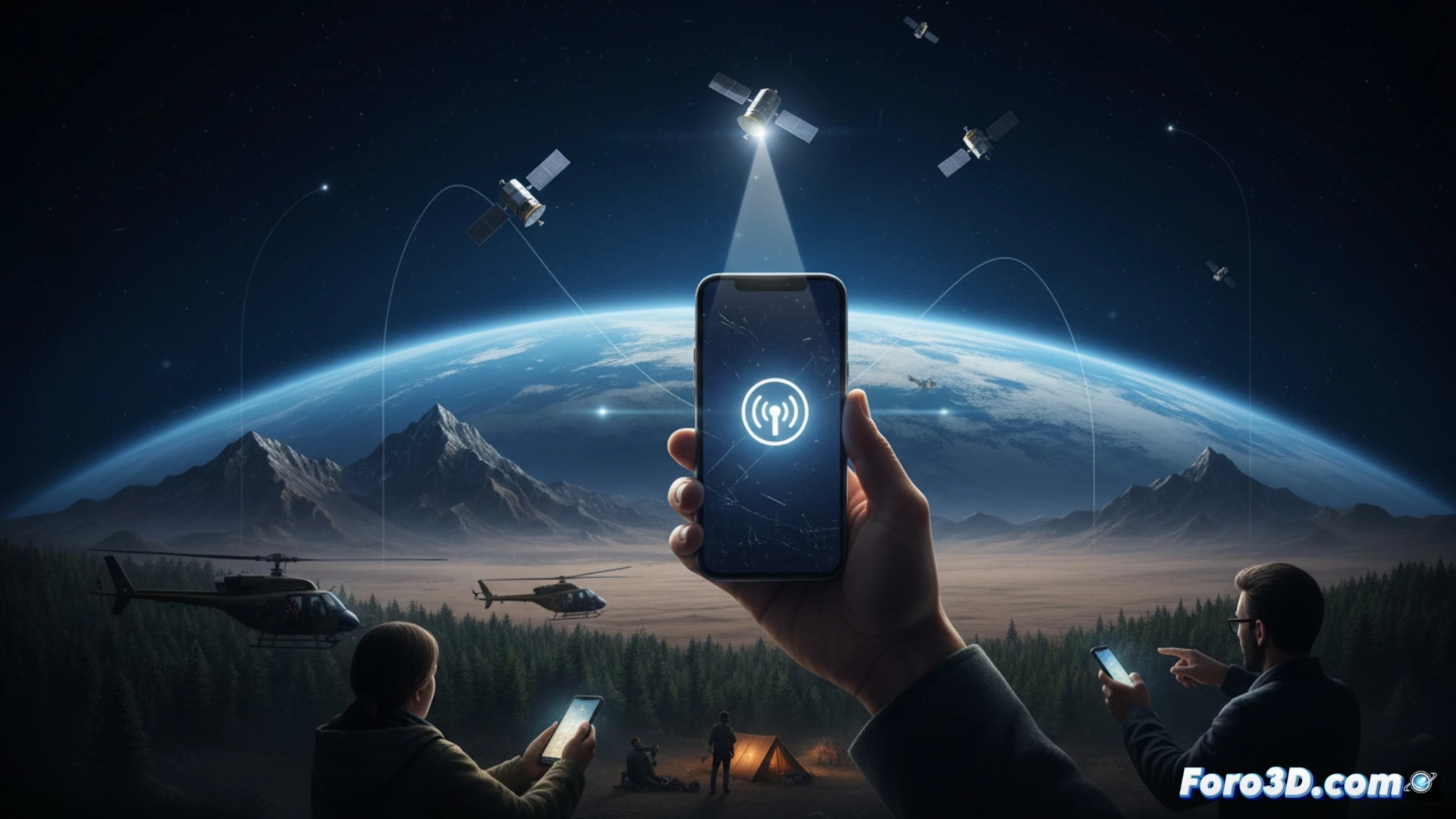
How the direct link between mobile and satellite works 📡
The key lies in a new communication protocol that adapts the radio signals of current phones so they can be received by low-orbit satellites, such as those from the Starlink or Iridium networks. These satellites act as repeaters, capturing the mobile signal and retransmitting it to ground stations. It does not require installing special apps or changing the chip: the phone's own operating system manages the connection when there is no mobile network available. The speed is low, barely enough for SMS and location data, but it fulfills its purpose in areas without coverage. The technology is already being tested in regions of the United States and Europe.
Goodbye to the I have no signal excuse in the mountains 🏔️
Now hikers who get lost every weekend can no longer blame the lack of coverage. With this technology, sending a distress message from the mountain will be as easy as doing it from the couch at home. However, the fine print says that the service will be paid and that messages will take a few minutes to arrive. So, if you plan to get stuck in a cave, better do it with patience and prepaid mobile data. At least, rescue teams will stop hearing the classic I dropped my phone in the river as an excuse.