A team of scientists has achieved a significant breakthrough by cultivating human intestinal tissue in the laboratory. Using a 3D scaffold that fuses stem cells, this tissue developed its own nervous system. After being transplanted into rats, it grew up to eight centimeters and responded to stimuli like an adult intestine, opening the door to new treatments for intestinal failure.
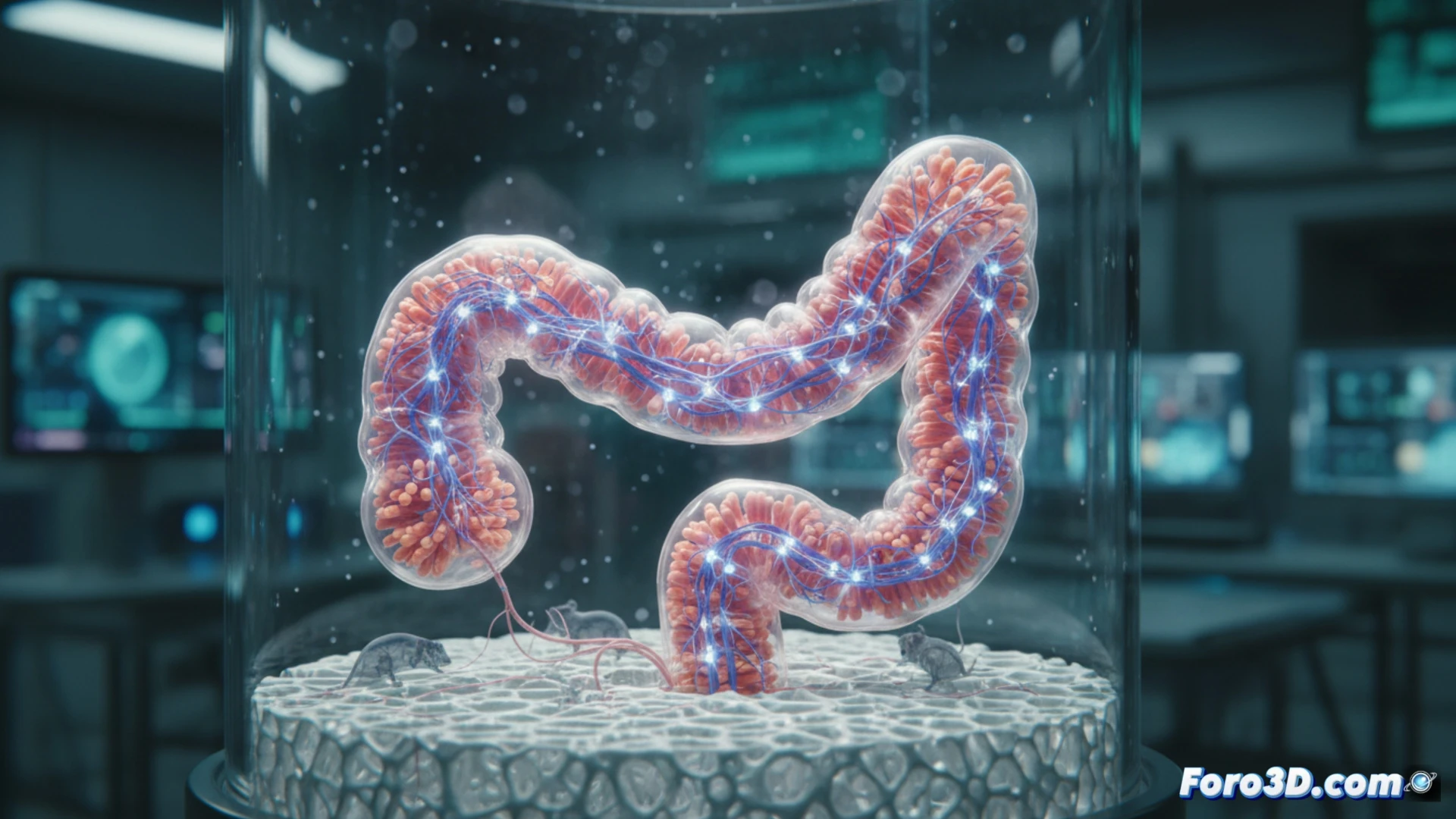
3D Scaffold and Stem Cells: The Key to Development 🧬
The method is based on a three-dimensional scaffold that guides the organization of stem cells. These cells differentiate and form not only the intestinal mucosa but also a functional neural network. When implanted into rodents, the tissue integrated with the host's circulatory system and showed peristalsis, the muscular contraction necessary to move food. Researchers observed that the graft reached a size comparable to a miniature adult human intestine, replicating its complex structure.
Goodbye to Boring Diets: The Intestine That Grows on Its Own 🧪
Now patients with intestinal failure can dream of a transplant that does not require waiting for a donor. Meanwhile, the laboratory rats already enjoy an eight-centimeter intestine they never even asked for. The next step will be to see if this tissue tolerates a whole pizza or if, like any serious intestine, it complains after an avocado. Science advances, and the tissue's nervous system already knows that not everything that glitters is fiber.