Systemd 261 brings a novelty that sounds like bureaucratic paperwork: system files now explicitly declare their dependencies. This allows Linux distributions to organize packages more precisely and avoid breakage. Behind this technical news lies a real change in the stability of the software you use daily without knowing it. Because systemd is that invisible engine that boots your desktop, manages services, and keeps everything in order. When it works, nobody mentions it. When it fails, you remember it with affection or with rage.
Dependencies in Sight: How It Improves Package Maintenance 📦
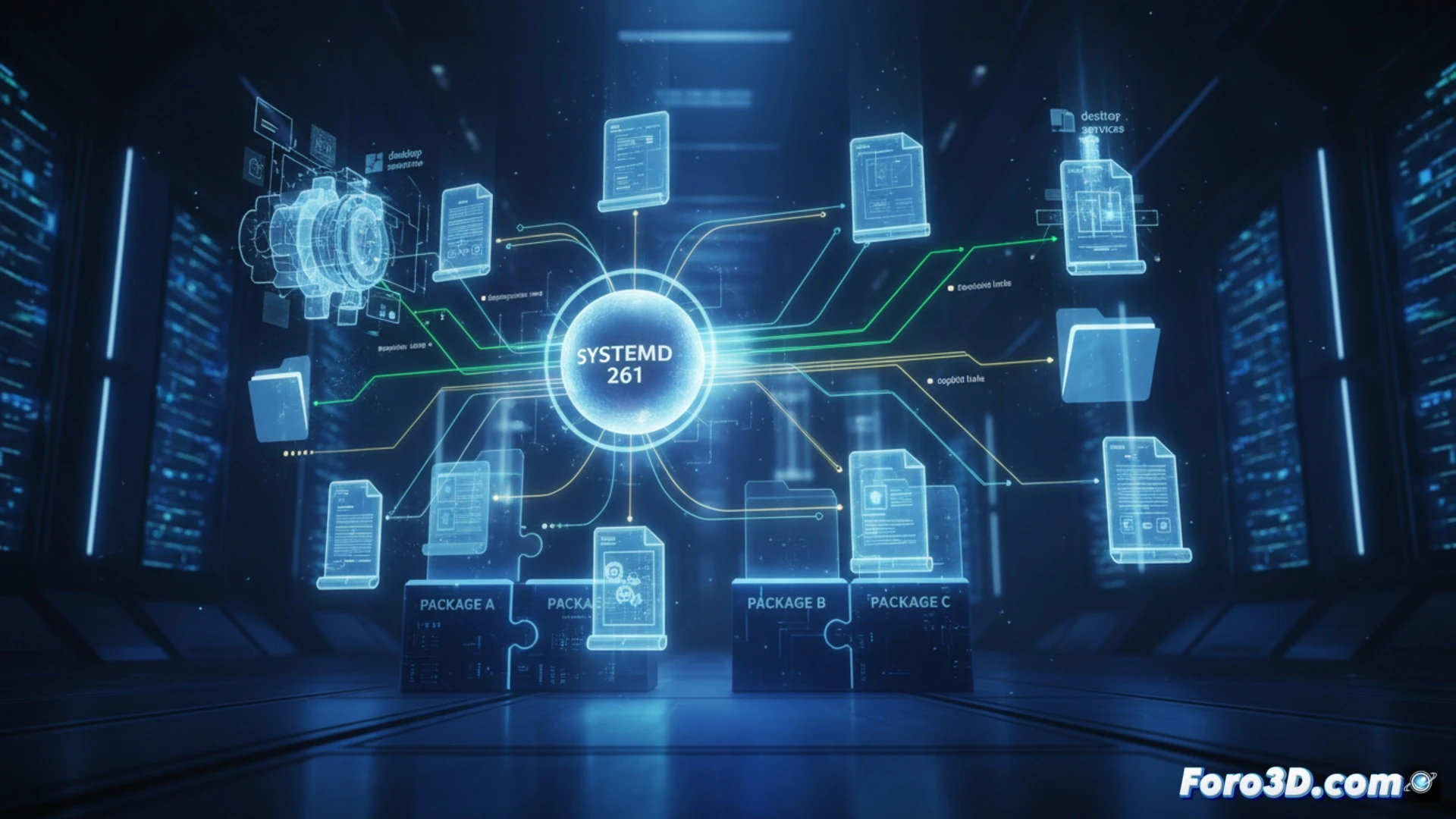
The key novelty of systemd 261 is that unit files (services, timers, targets) can now list their dependencies in a standard way within the file itself. Previously, these relationships were inferred implicitly or managed with external scripts. Now, tools like packagekit or dnf can directly read what each service needs to function. This reduces errors in updates, avoids orphaned packages, and simplifies the work of maintainers. It's not a spectacular change, but it's one of those that prevents your system from breaking during a routine update. And that, for the end user, is a silent blessing.
Systemd: The Glue Nobody Sees But Everyone Uses 🔧
The curious thing about systemd is that it sparks furious debates between those who hate it and those who defend it, while 99% of users don't even know it exists. It's like the plumber in your house: if everything goes well, you don't even remember him. But if one day the faucet drips or the pipe bursts, then you become an expert in plumbing and blame poor systemd for all your troubles. With version 261, the plumbers of free software will have a clearer blueprint of the pipes. You, meanwhile, keep enjoying that your computer boots up without asking questions.