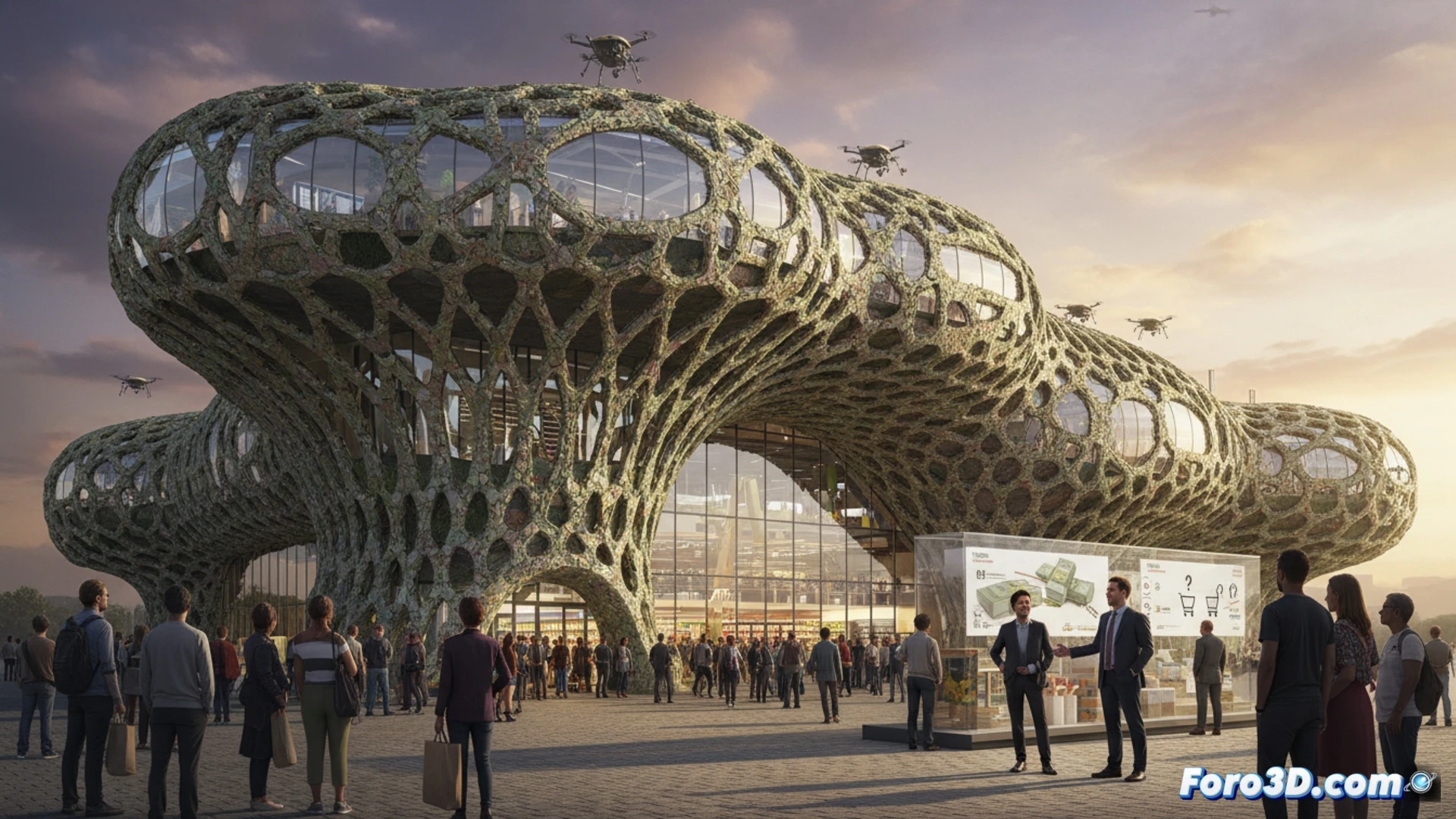
A 743-square-meter supermarket is 3D printed in less than six days. Recycled materials, reduced costs, and a technical record that amazes the industry. But behind the achievement, an uncomfortable question emerges: for whom is the cost reduction really intended. Because building cheaper does not mean selling cheaper. It means building more and earning more. 🏗️
The machine that builds: technical efficiency without ideology 🤖
3D printing of buildings uses recycled concrete and robots that dispense the material with millimeter precision. The process eliminates formwork, reduces waste, and accelerates timelines. In this case, the structure was erected in 140 continuous hours, with an estimated cost 30% lower than a traditional construction project. The technology is effective, but the savings are not automatically passed on to the consumer. Whoever controls the printer controls the margin. And the margin, in this sector, is rarely shared.
The checkout line, printed or not, is the same 🛒
The supermarket is already open. Customers queue up just like at any other. They pay the same. The difference is that the structure was built in six days, not six months. But the store owner is not thinking about lowering prices: they are thinking about opening a second one. And while construction workers glance sideways at their tools, the printer owners are rubbing their hands together. The revolution is technical. The receipt, the same as always.